5 charts that show the ecological footprint of America 

These five data-driven charts help illustrate the disproportionate ecological footprint Americans have on our planet.
These five data-driven charts help illustrate the disproportionate ecological footprint Americans have on our planet.Image: REUTERS/Robert Galbraith

The United States is the third most populous nation on Earth, with about 319 million inhabitants. So it's no surprise the country uses a lot of resources — and makes an incredible amount of waste.

Ecological footprint of America

Americans enjoy practically unlimited access to food, water, energy, and other resources that power a modern society. This makes US residents some of the most resource-intensive human beings on Earth.

The average person born in the US creates 13 times as much damage to the environment as someone born in Brazil, uses 35 times the resources of a typical person in India, and consumes about 53 times more products than people who live in China, according to Scientific American. Also, the lifestyle of Americans is second only to that of Canadians in generating the most greenhouse gases per person.

The following five data-driven charts, which Business Insider assembled for Earth Day, help illustrate the disproportionate ecological footprint Americans have on our planet.
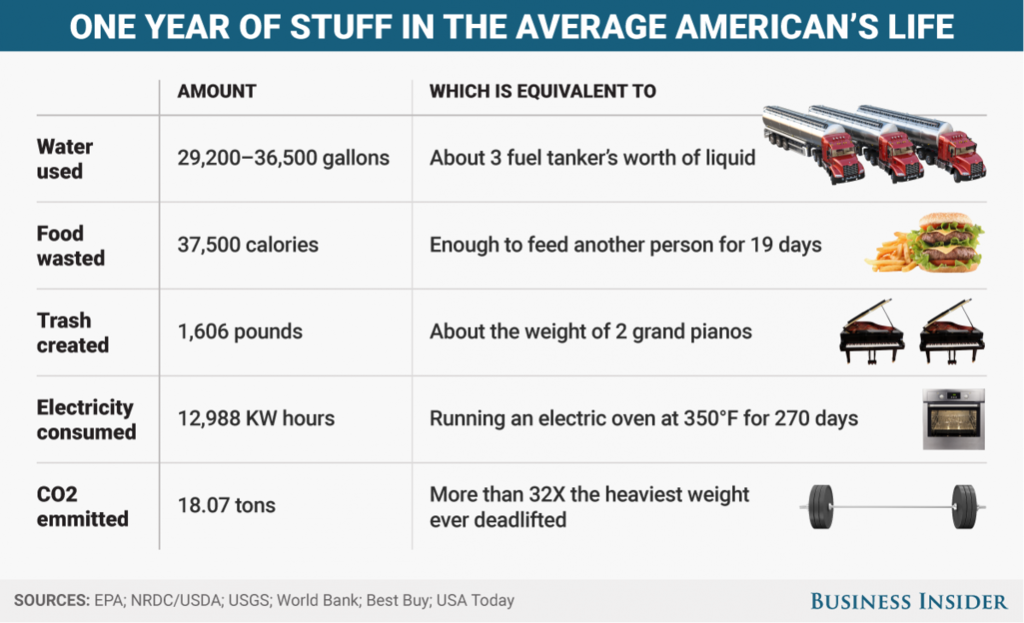
With a higher consumption pattern, Americans also leave behind a higher ecological footprint.Image: Skye Gould/Business Insider
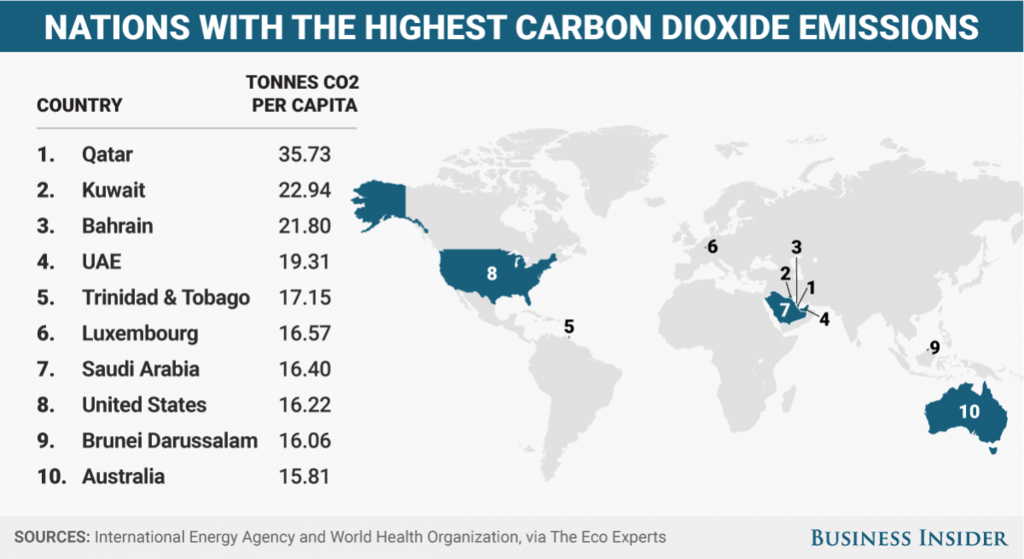
America is among the top 10 CO2 emitting countries in the world. Image: Skye Gould/Business Insider
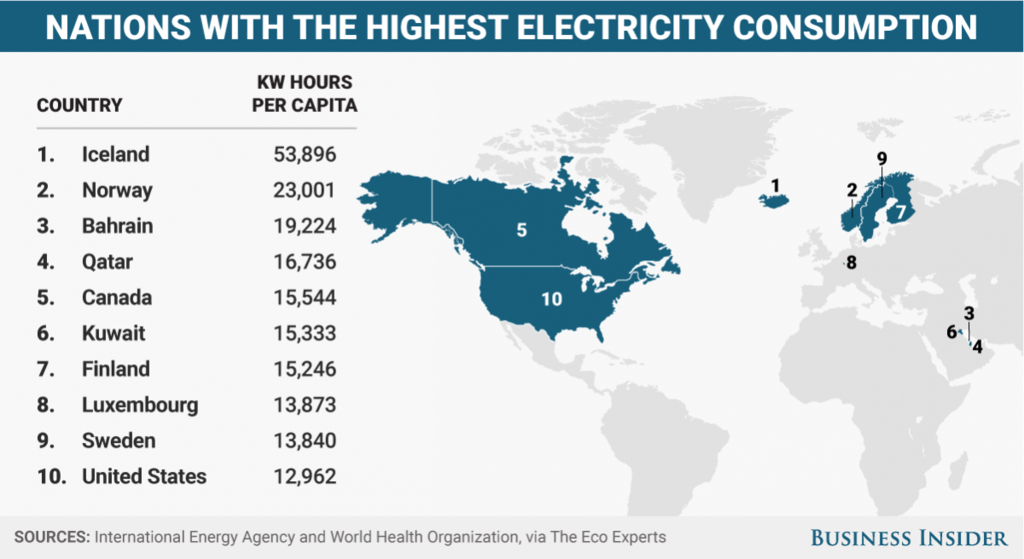
America is among the highest electricity consumers in the world, and also responsible for a bigger ecological footprint.Image: Skye Gould/Business Insider
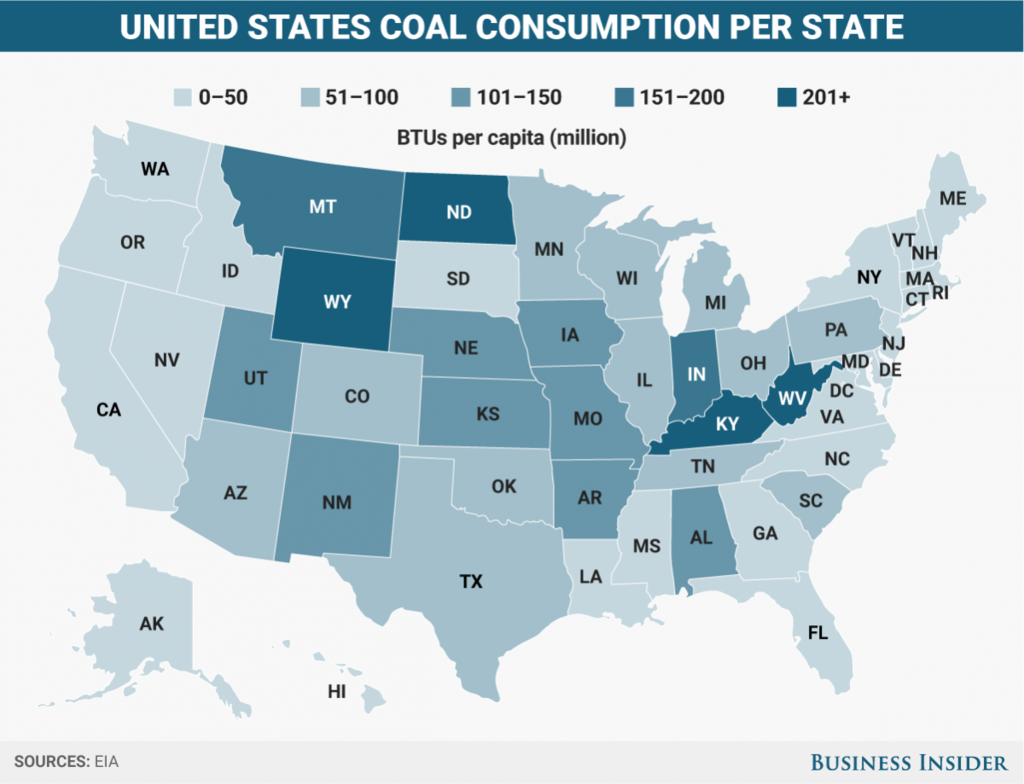
Coal features among the main source of energy in most American states. Image: Skye Gould/Business Insider
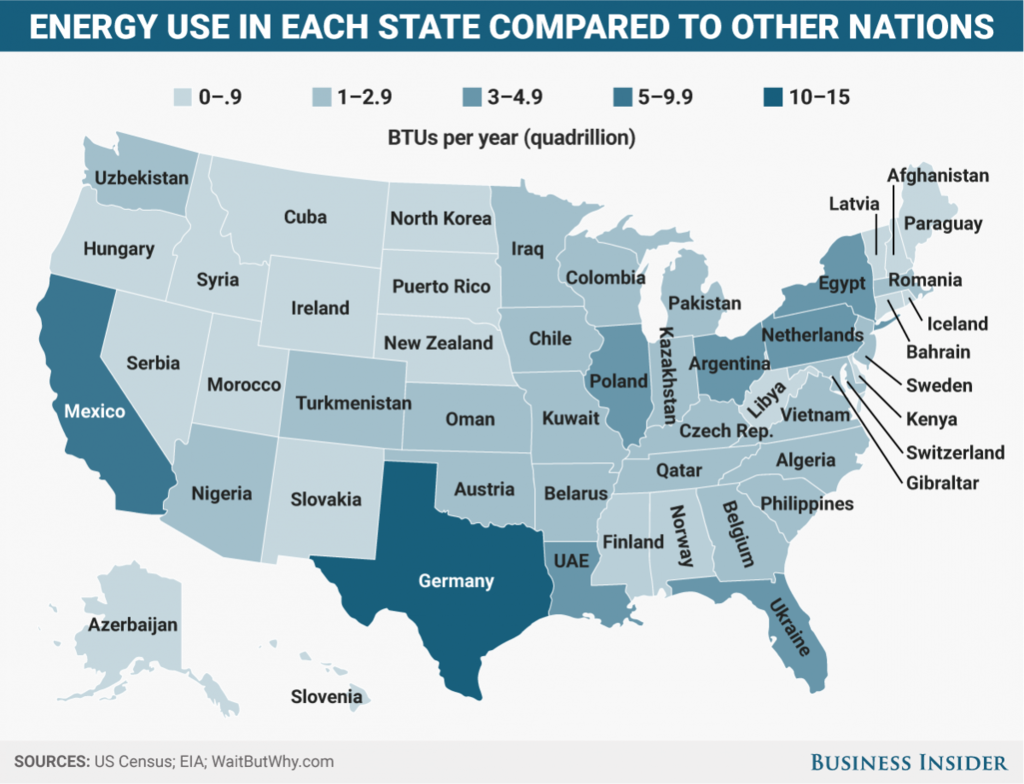
Energy use in each American state in comparison with other countries, highlights the high ecological footprint of the country.Image: Skye Gould/Business Insider
License and Republishing
World Economic Forum articles may be republished in accordance with the Creative Commons Attribution-NonCommercial-NoDerivatives 4.0 International Public License, and in accordance with our Terms of Use. The views expressed in this article are those of the author alone and not the World Economic Forum.