Researchers in Switzerland led an experiment to test how road users change their transport behaviour when considering the external, environmental costs.
One group was given information on the external costs of their trips, which caused them to make cost-reducing decisions.
Researchers concluded that price incentives in transport could be an effective instrument in reducing traffic and an important pillar for sustainable transport policy.
In the largest worldwide pricing experiment to date, researchers have demonstrated that road users change their behavior when they must pay for the social and environmental effects of their transportation. The study was led by researchers from the University of Basel, ETH Zurich and ZHAW.

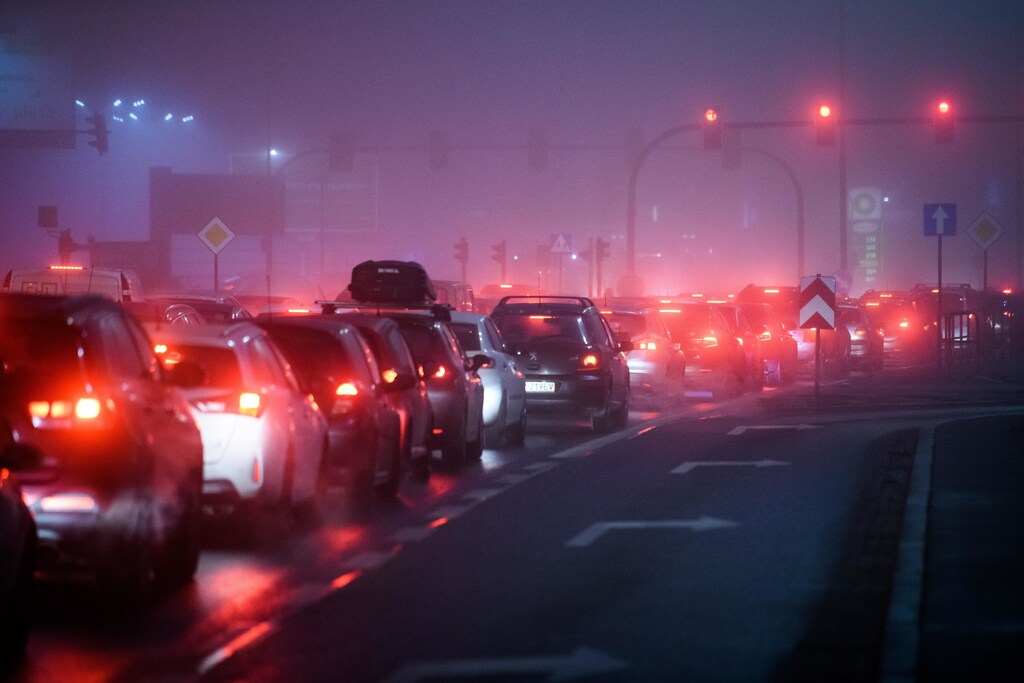
Transportation causes a variety of costs that individual road users do not have to pay themselves. These external costs include damage to health and the environment caused by pollution, infrastructure costs and time losses incurred by other road users due to congestion. In 2017, external costs of transport in Switzerland ran to more than CHF 13 billion.
One approach to reducing these substantial economic costs is the polluter-pays principle. A field experiment, in which about 3,700 people living in urban agglomerations in French- and German-speaking Switzerland participated, has now shown that this is both technically possible and effective. The study, conducted in 2019/2020, is the largest of its kind in the world.
Tracking via app
The participants in the experiment agreed to track their daily travel for eight weeks using a smartphone app. The app logged both the distances traveled and the mode of transport. The project team used this information to calculate the external costs per trip.
What is the World Economic Forum doing to promote sustainable urban development?
Cities are responsible for 75% of global greenhouse gas emissions and are home to over half of the world’s population—a number that will grow to two-thirds by 2050. By prioritizing cleaner energy, cities could contribute more than half of the emissions cuts needed to keep global warming to less than 2°c, which would be in line with the Paris Agreement.

To achieve net-zero and nature-positive cities and communities by 2050, the World Economic Forum is partnering with public and private sector stakeholders on initiatives that drive global ambition through local action. Here are just a few:
Davos Baukultur Alliance: Advancing high-quality planning, construction and management of buildings, infrastructure, and public spaces using principles based on climate resilience, sustainability and circularity in the built environment. Learn more.
Global New Mobility Coalition: Exploring new solutions to reduce congestion and emissions, enhance EV infrastructure and transform urban mobility and deliveries. Learn more.
Alliance for Urban Innovation: Connecting innovators and entrepreneurs to new markets and opportunities that reimagine and reshape quality of life and local economies. Learn more.
G20 Global Smart Cities Alliance: Accelerating intelligent, practical solutions to build climate resilience, enhance public well-being and tackle the most pressing challenges facing cities and local communities. Learn more.
Future of Travel and Tourism: Driving inclusive and sustainable economic growth while preserving cultural heritage and protecting natural ecosystems. Learn more..
Discover how you can be a part of our efforts to create more sustainable and livable cities and communities. Contact us here.
After four weeks, the study participants were randomly assigned to three groups: participants in the information-only group received a weekly summary of the external costs they had generated and tips on how to reduce them. Members of the pricing group received the same information, but in addition were given an individual transport budget from which external costs were deducted. The budget not spent was paid out to them at the end of the study. The third group was a control group and received neither additional information nor deductions.
Behavioral change reduces costs
A comparison of the pricing and control groups shows that the pricing and the financial incentive it provided led to a significant reduction in external costs of 5.1%. Participants adjusted their travel behavior and reduced costs by switching to different routes, changing departure times and using other modes of transport. However, the daily total distance traveled remained the same.
The researchers found no clear effect in the information-only group: the provision of information alone did not lead to a reduction of external costs.
For the study authors, these results show that transport pricing is technologically feasible and has the desired effect, namely to reduce the external costs of transport in respect to health, climate and congestion. "There are also a number of arguments suggesting that effects would be greater in the long term than in this eight-week experiment," says Beat Hintermann, an economist at the University of Basel who co-led the study with Kay Axhausen, a transport scientist at ETH Zurich. "These results also open up new avenues for transport policy in Switzerland," adds Kay Axhausen.
A final survey of the study participants also showed a positive trend towards accepting the internalization of external transport costs, depending on the use of the revenue generated. Fairly implemented, price incentives in transport could be an effective instrument in reducing traffic at peak hours and an important pillar of a sustainable transport policy, say the study authors.