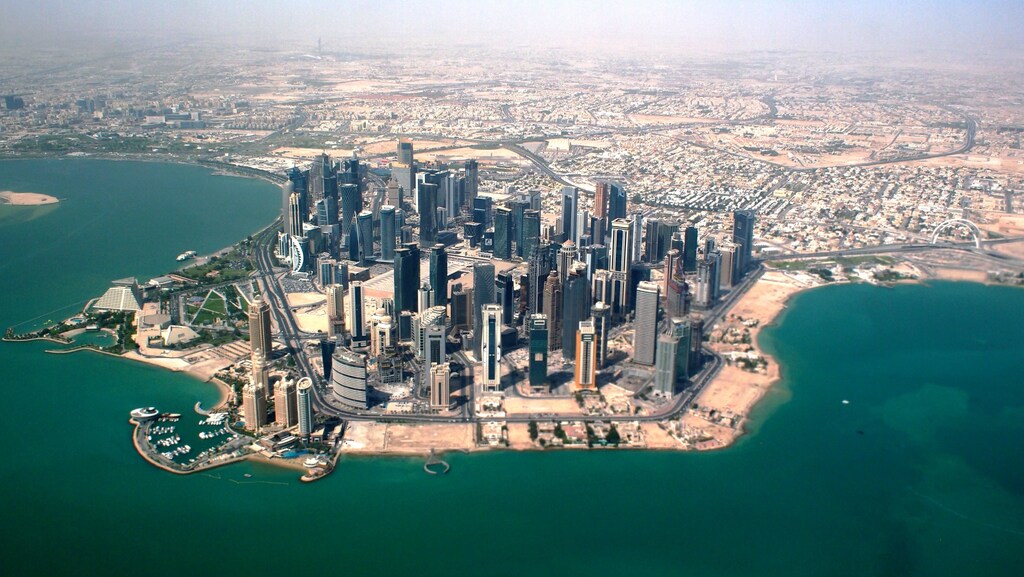
Qatar has built a strong economy by leveraging its natural resources as the world's second largest gas exporter.
But the country needs to build a new resilience model for the future, one based on a knowledge-based economy and industry decarbonization.
Three Qatari Young Global Leaders believe that investing sustainably, building governance frameworks and empowering women will be key.
Qatar’s growth story needs little introduction. The world’s second largest natural gas exporter has leveraged its natural resources to build a competitive economy with strong global trade ties, seamless connectivity and an ambitious leadership.
Like its peers in the Gulf, Qatar’s long-term future requires a new resilience model. This rests on a knowledge-based economy and decarbonizing the nation’s strategic industries. Qatar’s future thereby relies on the quality of its talent – a key lever to unlocking its next growth era.
We spoke with three Qatari Young Global Leaders who are playing their part in fulfilling their nation’s future-proof vision. They share the conviction that safeguarding Qatar’s resilience lies in investing sustainably, building cohesive governance frameworks, and empowering women.
ESG targets to build a sustainable future
In 2021, the Qatar Stock Exchange launched its first environmental, social and governance (ESG)-tradable index and announced plans to mandate ESG disclosures for publicly-listed firms. This move reflects a broader global shift towards long-term value creation in the country.
Ahmed Ali Al-Hammadi is the Chief Investment Officer for Europe, Russia and Turkey at the Qatar Investment Authority (QIA), Qatar's sovereign wealth fund.
“We have looked inwards to build our vision and formulate the role that we will play as fiduciaries to Qatar’s future generations,” he says, describing QIA's approach to sustainable investing, which he has been charged with defining.
QIA is also taking its ambitions global. In 2017, it co-founded the One Planet Sovereign Wealth Funds initiative, working with other sovereign wealth funds and large asset managers, to examine how climate-related risks and opportunities are assessed.
"The actions we are taking show the commitment of our industry to shape the global effort on climate change," says Al-Hammadi, highlighting the initiative's growth from six to 43 members, which now account for more than $36 trillion in assets under management.
Sheikha Alanoud bint Hamad Al-Thani is the Deputy CEO and Chief Business Officer of the Qatar Financial Centre (QFC), where she is helping steer Qatar’s transformation into a global financial and commercial hub. “QFC’s firms are at the forefront of the ESG revolution,” she says, describing how 1,300 firms in QFC are currently tackling ESG challenges from the energy transition to governance.
“That record is not an accident,” she explains, adding that “success beyond financial metrics has been at the core mission of QFC since its inception”.
Abdulrahman Essa Al-Mannai is the CEO of Milaha Group, one of the Middle East’s largest maritime and logistics companies. “I have to lead and inspire our employees to incorporate ESG into their thinking and behaviour,” says Al-Mannai. “High standards of corporate governance and transparency start at the top and penetrate all levels of the company.”
He described his efforts in creating a governance charter for the company board, a whistleblowing hotline, frameworks for carbon intensity reduction, and employee wellness initiatives. “We don’t look at this as a compliance measure alone,” he remarks on the latter. “We have a strong responsibility towards our employees. By looking after their welfare, we will have a happier and more motivated workforce.”
Improving governance and shifting mindsets
“For investment institutions, we have a duty to define investment policies that reflect our values and empower communities globally,” says Al-Hammadi.
When asked about his proudest achievements, he points to responsible global citizenship. “My proudest moments come from being able to raise awareness, ensuring that sustainability is at the centre of the discussion – not an afterthought.”
He draws inspiration from his role in the investment committee of the Qatar Red Crescent Society. “Lasting change requires a series of incremental steps – similar to Qatar’s growth story,” he explains.
Rise of women in Qatar's financial sector
For Sheikha Alanoud, her most gratifying achievements are in increasing the representation of women in the workforce, which she views as integral to good governance. “I take pride in championing the role of women, having hired and mentored numerous women over the course of my career,” she says.
“According to 2019 data, 13.5% of senior level positions in QFC companies were filled by women – compared to 8.5% in Qatar’s financial sector as a whole,” she says. “This number continues to grow – and at the same time, these companies are posting record profits.”
Achieving this involved upsetting the status quo and choosing a path where there is resistance, particularly on company boards, and in a traditionally male-dominated field.
Similarly for Al-Mannai, his proudest moments have been in achieving parity in compensation across genders and nationalities. “Early in my career, I worked in human resources and played a role in changing my employers’ policies…years later those policies became the norm in Qatar’s major sectors,” he says.
“I also have the good fortune to mentor many young Qataris, especially females, some of whom have gone to become very successful."
Al-Mannai also spoke of cultivating “native” capabilities. “In terms of innovation, I am a believer in the essence of human potential, which is limitless,” he says. “This means inspiring the people we lead to look inside the organization, not around it.”
“The most difficult part,” he says, “is being able to make people truly believe they can do it.”
Optimistic outlook for Qatar’s future
When asked about their outlook for the coming months, the three Young Global Leaders expressed optimism for the future.
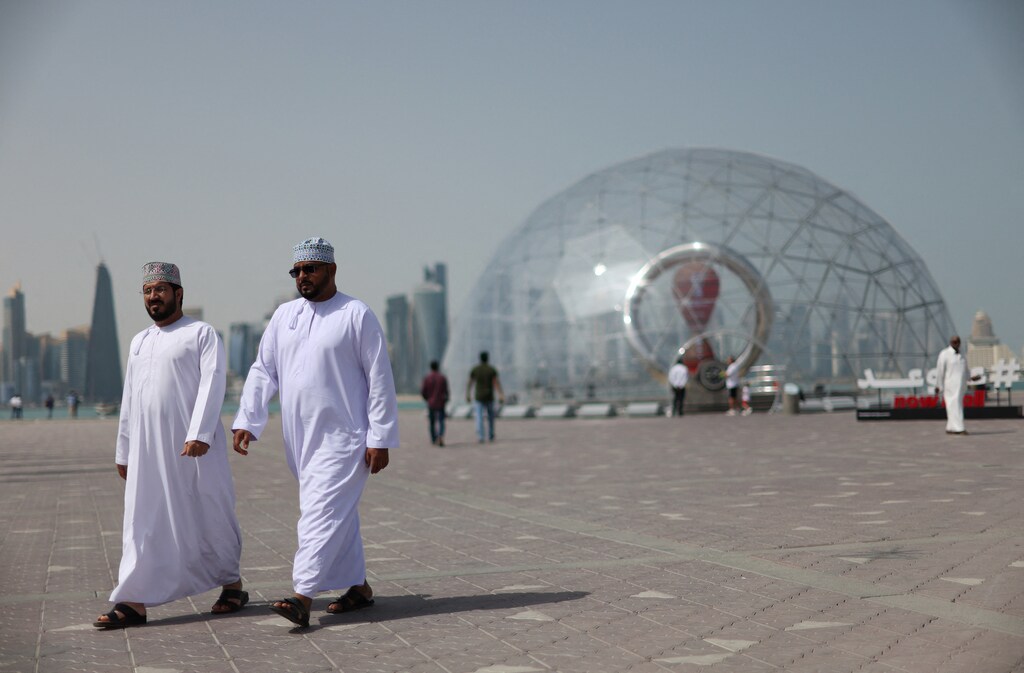
“In 2022, I hope that QIA’s progress will position us as a global sustainability leader,” said Al-Hammadi. He also expressed excitement at Qatar hosting the first carbon-neutral FIFA World Cup later this year.
How is the World Economic Forum promoting equality in the workplace?
The Future of Jobs Report 2023 found that 75% of companies surveyed expect to adopt AI, big data and cloud technologies in the next five years.
The Centre for the New Economy and Society provides a platform for leaders to share insights on the adoption and efficacy of new technologies, and the readiness of the workforce to use them. Our work includes developing insights and dialogue on growth, jobs, skills, equity and risks.
Learn more about our impact:
Gender parity: Since 2006, we have annually measured the state and evolution of gender parity in 101 economies, supporting decision-makers to identify the most effective policies to close gender gaps. In Chile, we helped establish gender parity accelerators and benefitted 728,000 women – reducing the gender gap by 37% in the participating companies.
Reskilling Revolution: With our partners, we are helping the global workforce future-proof their careers, working with over 350 organizations to provide 1 billion people with better education, skills and economic opportunities by 2030.
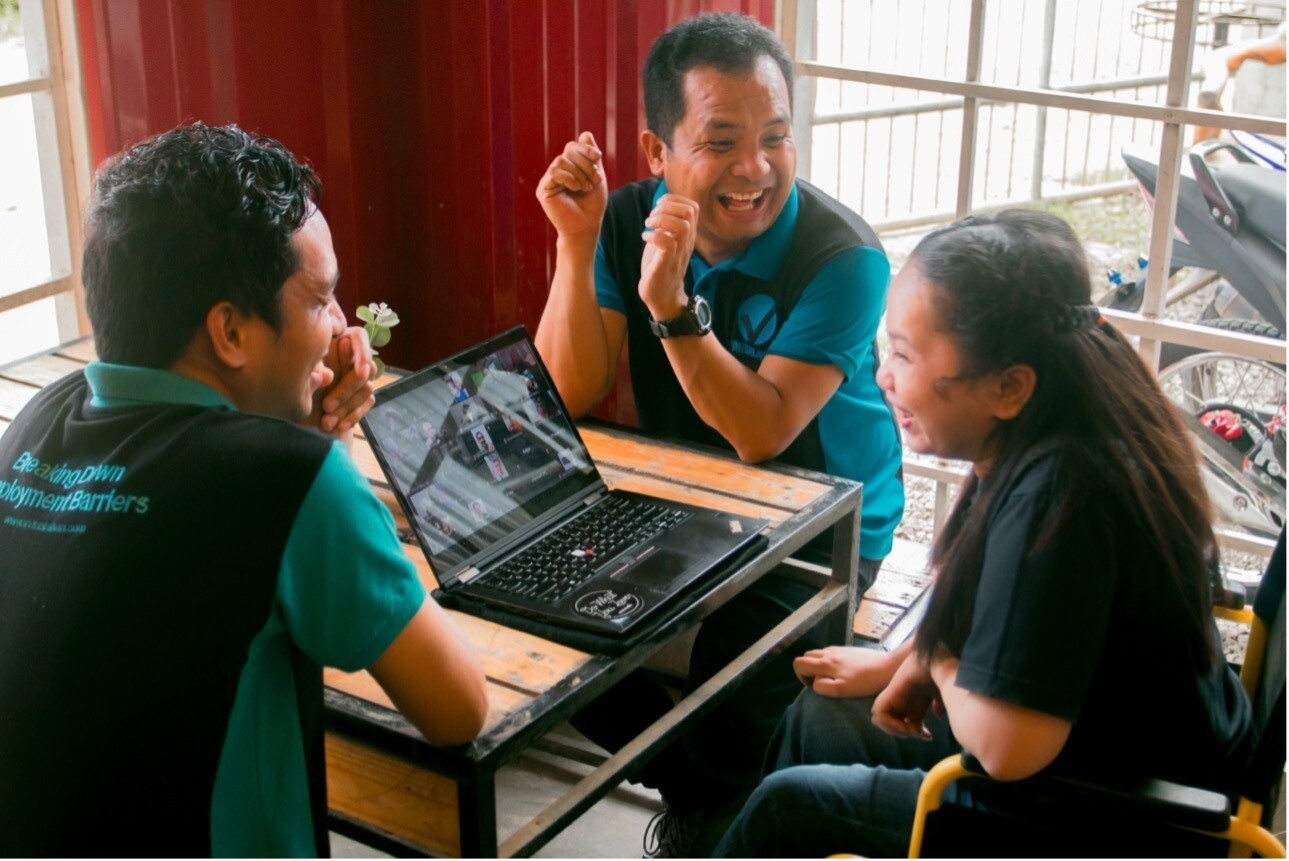
Disability inclusion: Working with the Valuable500, we are collaborating with the largest global network of CEOs committed to closing the disability inclusion gap. Members are making progress by increasing the adoption of digital accessibility best practices and including disability in diversity, equity and inclusion strategies.
Racial justice: We are collaborating with a global coalition of 55 organizations in 13 industries who are committed to building equitable and just workplaces for professionals from under-represented racial and ethnic identities.
Want to know more about our centre’s impact or get involved? Contact us.
Al-Mannai looks forward to celebrating Milaha’s 65th anniversary. “As one of the largest service providers in the Middle East, and main contributor in facilitating Qatar’s economic activity, we will focus on supporting the maritime, shipping and logistics industry and serving as our clients’ choice for reliable, efficient, and sustainable services.”
As for Sheikha Alanoud, she is enthusiastic about QFC’s companies emerging out of the pandemic stronger, better organized, and with a clearer idea of the values they wish to create.
“I look forward to boosting our interconnectivity with other financial centres and innovation hubs to propel QFC’s evolution into the leading professional services and financial jurisdiction for Qatar and globally,” she says.