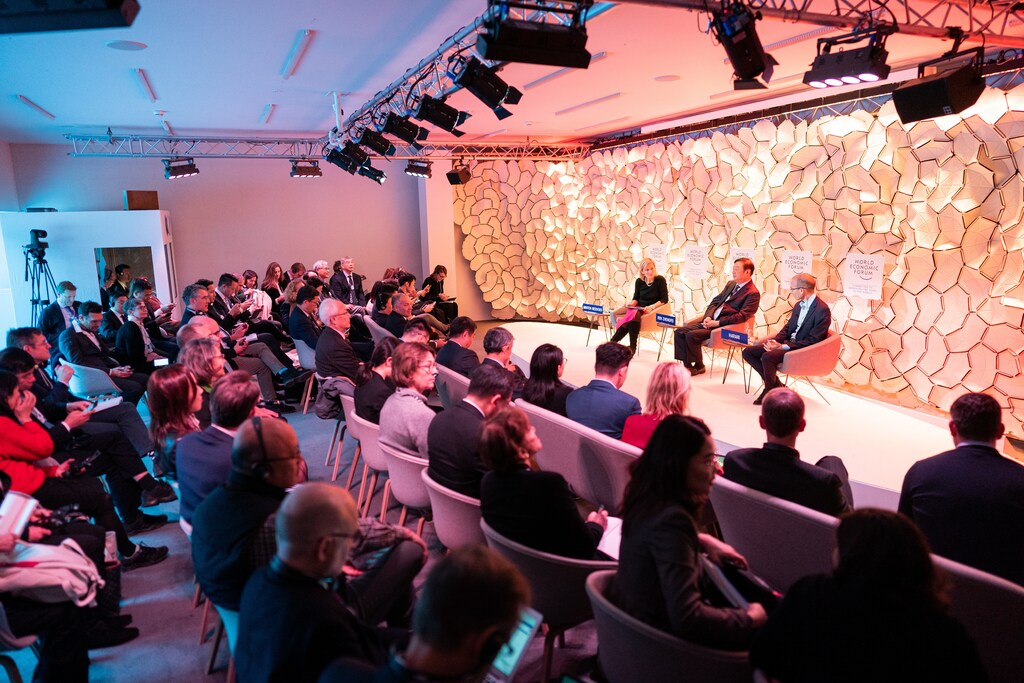
Huawei CEO Ren Zhengfei and historian Yuval Noah Harari spoke in Davos about the future of technologies and the rise of digital surveillance.
Harari warned companies and governments can essentially "hack" humans.
Zhengfei downplayed the US ban on Huawei.
Two starkly different views of technology and the future emerged in a Davos discussion between Ren Zhengfei, CEO of the Chinese tech giant Huawei, and the historian Yuval Noah Harari.
For Harari, the age of rival investment between the US and China in Artificial Intelligence should worry us all.
"On the most shallow level it could be a repeat of the nineteenth century industrial revolution, when the leaders had the chance to dominate the world economically and politically," he said. "I understand the current arms race as an imperial arms race...You don't need to send the soldiers in if you have all the data on a country."
From the geopolitical to the personal, the age of digital surveillance also threatens what it means to be human and free, Harari warned.
"The point is when you gather enough data on people, you get to know people better than they know yourself. Are we at the point where companies or governments can hack millions of people, that means they know my medical history, personal weaknesses?"
But how do you hack a human being?
"You need a lot of biological knowledge, enough computer power, and enough data about me. You can hack my body, my brain, my life, you can reach a point where you know me better than I know myself," he said.
In his view, there is state surveillance in China, surveillance capitalism in the US, and no serious third player in the arms race for tech dominance.
What is the World Economic Forum doing on cybersecurity?
The Centre for Cybersecurity provides a trusted platform where leaders come together to make sense of evolving cyber risks and their systemic implications. It focuses on building understanding and trust in an increasingly interconnected digital world.
By enabling cross-sector collaboration and insight sharing, the Centre helps partners strengthen cyber resilience and address challenges that require collective responses.
Striking a much more optimistic tone was Ren Zhengfei. Just 20 years ago he didn't have his own home, but he founded Huawei, which ships more handsets in a year than Apple and invests heavily in innovation.
"I believe in the face of new technologies, humanity will be able to use them to benefit us. Most people aspire to a good life, not a miserable life," he said.
The executive also put into context today's fears around AI with other periods of upheaval, as people's concerns over the mechanical technologies of the First Industrial Revolution were gradually overcome.
In the present day, Huawei is in the spotlight after the United States blacklisted it last year over national security concerns, in the context of a trade war between the US and China.
"Huawei used to be an admirer of the US, we learned a lot from them. We hired dozens of American consulting firms to learn how to manage our business. The US should feel proud of [Huawei], they have the US management system exported and implemented. They should not be overly concerned about Huawei and our position in the world."
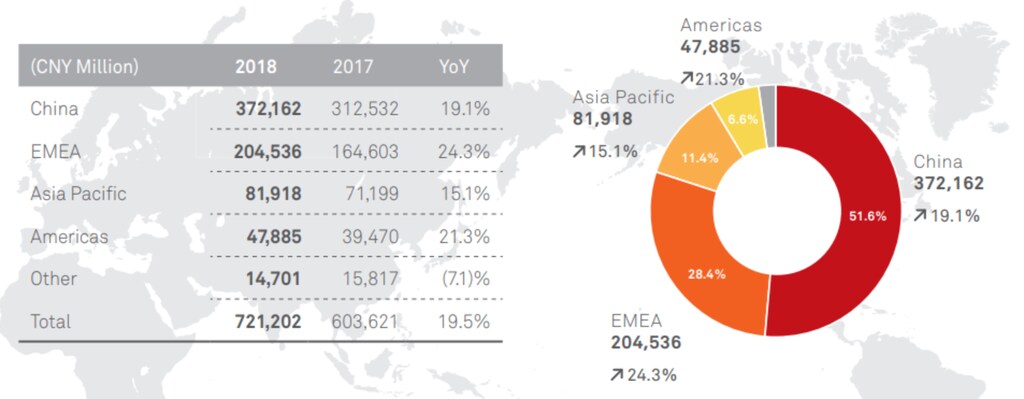
Ren Zhengfei downplayed the impact of the US ban and any potential escalation, saying they had been forced to adopt a Plan B to cope.