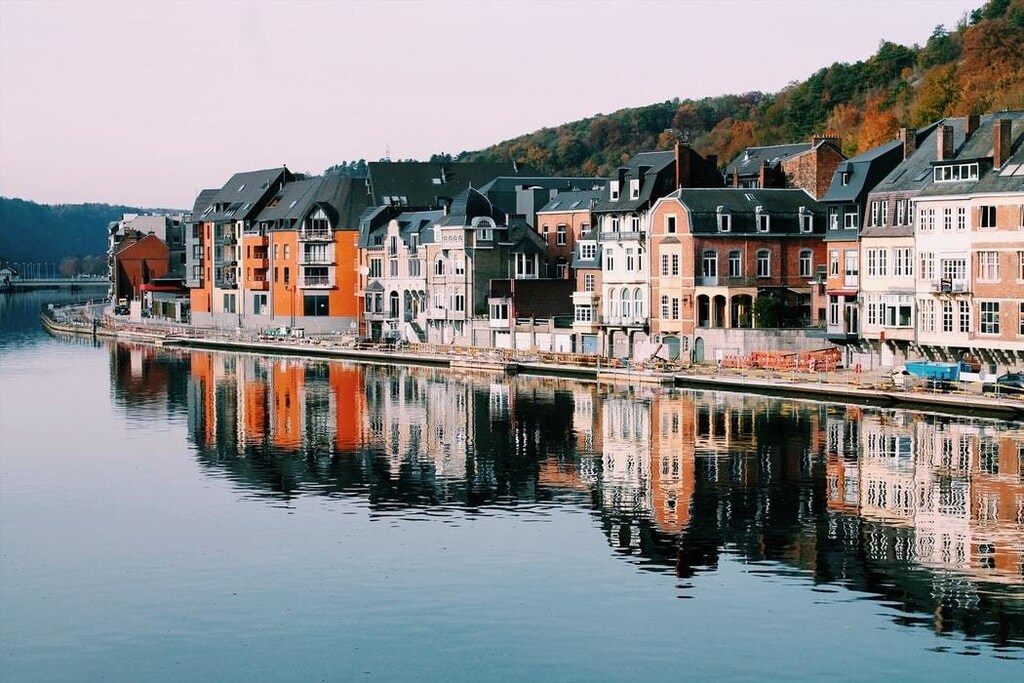
Almost half the population of the European Union lives in apartments.
Seven out of 10 people in EU member states own their house or flat.
But across Europe and indeed the world, there is a shortage of affordable housing.
Decent housing is one of the most basic of human needs. The place we call home, whether it’s a tiny flat or a grand house, provides shelter, safety and often defines our place in the social order too.
The latest housing research from the European Union (EU) gives a detailed breakdown of the types of homes occupied by citizens across the member states.
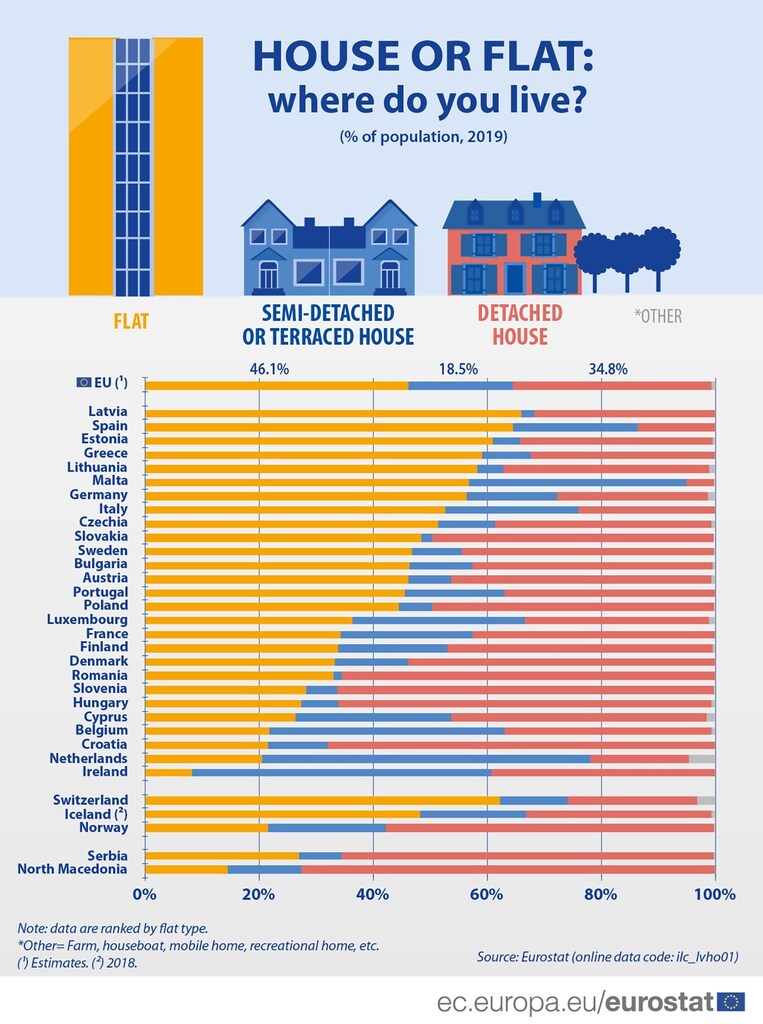
The data for 2019 (the latest available), shows that across the European Union as a whole, 53.3% of people lived in houses (detached, semi-detached or terraced) and 46.1% of people lived in apartments.
In 14 EU member states a majority of the population lived in flats. Latvia leads the way in flat occupation with 66% living in this type of home with Spain a close second on 65%. Ireland had just 8% of people residing in flats.
Croatia (68%) and Slovenia (66%) had the highest percentage of people living in detached houses. Ireland and the Netherlands were the only countries where a majority lived in semi-detached houses (58% and 53% respectively).
Owner occupiers
The research also reveals a high level of home ownership across Europe.
Across the continent seven out of every 10 people lived in a house or flat they own.
There were more owners than tenants in every EU member state in 2019. Romania (96%), Hungary (92%), Slovakia (91%) and Lithuania (90%) have the highest levels of ownership. The lowest shares of owner-occupied flats and houses were in Germany (51%) and Austria (55%).
A crisis in affordable housing
Statistics on home occupancy and ownership only tell part of the story. Across Europe and indeed the world, there is a shortage of affordable housing. Home ownership remains well beyond reach for many and even making the monthly rent is a struggle for hundreds of millions of people. Indeed, a 2019 World Economic Forum whitepaper warned that 90% of cities around the world do not provide affordable housing or housing of adequate quality.
The latest research from the Organization for Economic Co-operation and Development (OECD), Building for a better tomorrow: Policies to make housing more affordable, sets out the scale of the problem and suggests policy approaches to ensure everyone has access to decent, affordable housing.
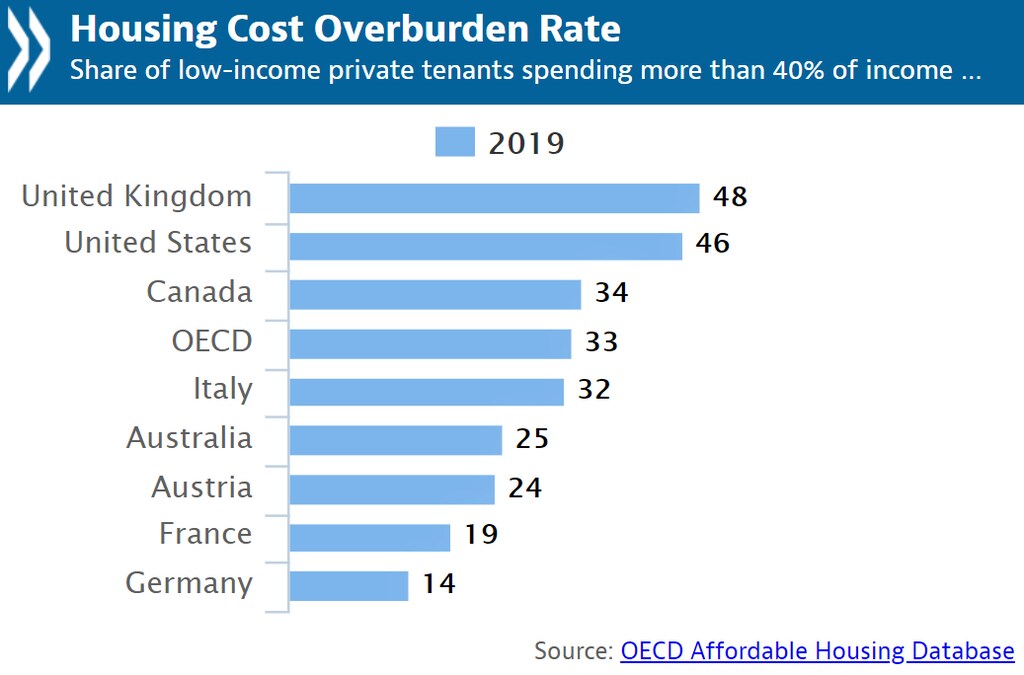
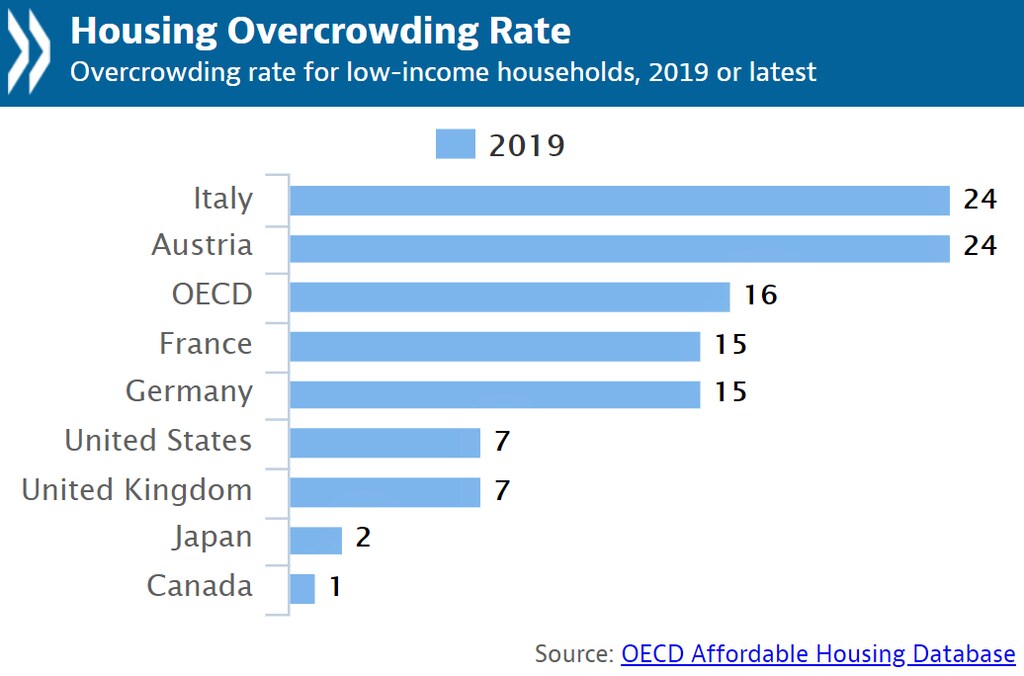
The report finds less than half of the population, on average, in OECD countries think there is enough affordable housing available. It also shows families spending a greater proportion of household income on housing.
For low-income households it’s a continuing and familiar worry. Those worries are now hitting the middle classes too, says the report, with relatively high earners now finding it difficult to make ends meet as housing costs swallow up more of the monthly budget.
In the UK, 48% of households are spending more than 40% of their monthly budget on housing costs with the US a close second at 46%.
The lack of good-quality affordable housing means more people are sharing homes to spread the costs. This is driving up the number of overcrowded homes. Those on low incomes are the most likely to live in overcrowded housing. In Europe, Italy and Austria have the highest number of overcrowded homes.
What is the World Economic Forum doing to promote sustainable urban development?
Cities are responsible for 75% of global greenhouse gas emissions and are home to over half of the world’s population—a number that will grow to two-thirds by 2050. By prioritizing cleaner energy, cities could contribute more than half of the emissions cuts needed to keep global warming to less than 2°c, which would be in line with the Paris Agreement.

To achieve net-zero and nature-positive cities and communities by 2050, the World Economic Forum is partnering with public and private sector stakeholders on initiatives that drive global ambition through local action. Here are just a few:
Davos Baukultur Alliance: Advancing high-quality planning, construction and management of buildings, infrastructure, and public spaces using principles based on climate resilience, sustainability and circularity in the built environment. Learn more.
Global New Mobility Coalition: Exploring new solutions to reduce congestion and emissions, enhance EV infrastructure and transform urban mobility and deliveries. Learn more.
Alliance for Urban Innovation: Connecting innovators and entrepreneurs to new markets and opportunities that reimagine and reshape quality of life and local economies. Learn more.
G20 Global Smart Cities Alliance: Accelerating intelligent, practical solutions to build climate resilience, enhance public well-being and tackle the most pressing challenges facing cities and local communities. Learn more.
Future of Travel and Tourism: Driving inclusive and sustainable economic growth while preserving cultural heritage and protecting natural ecosystems. Learn more..
Discover how you can be a part of our efforts to create more sustainable and livable cities and communities. Contact us here.
A foot on the property ladder
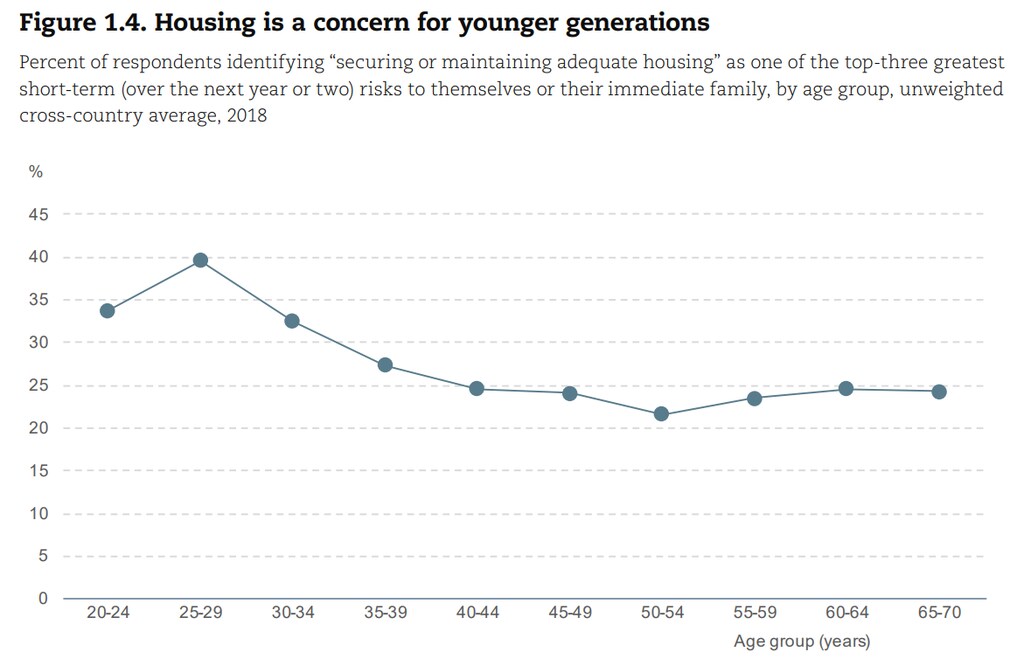
Young adults in Europe and around the world are being particularly hard-hit by the shortage of affordable housing. On average, young people in OECD countries aged 20-29 most commonly live with their parents. Finding and being able to afford decent housing was one of the top three worries of young adults who responded to the OECD’s Risks That Matter Report of 2018.
Creating affordable cities of the future
The United Nations includes the right to adequate housing among a list of fundamental human rights.
Finding solutions to house a growing global population which is increasingly living in urban areas, will require collaboration between public and private sector organizations.
The World Economic Forum has proposed a Framework for the Future of Real Estate with the aim of making living in our cities more affordable and sustainable.