A new survey shows resurgent interest in travel across Europe this summer.
COVID-19 is no longer the primary worry for travellers, with inflation and family/personal concerns having taken over.
The World Economic Forum's latest Travel and Tourism Development Index highlights the vital economic role of tourism.
The Northern Hemisphere summer holiday season is in full swing and as pandemic-related travel restrictions are lifted a new survey shows just how many Europeans are planning to take advantage.
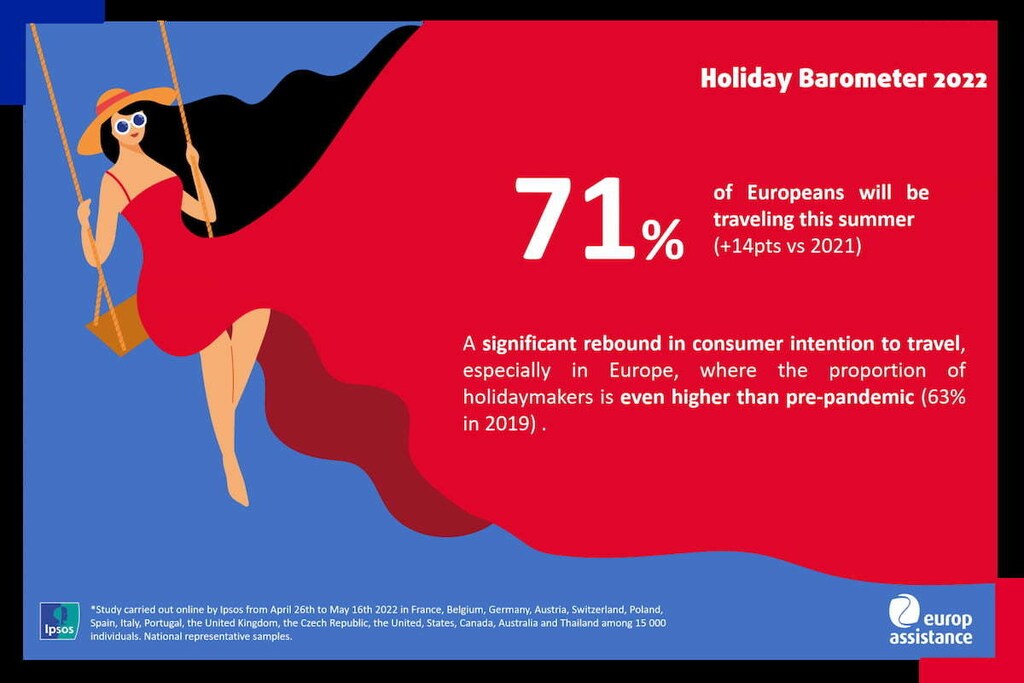
Ipsos, in partnership with Europ Assistance, spoke to 15,000 people across 15 countries and found that 71% of Europeans plan to travel this summer - a 14 percentage point increase on last year.
A rebound following the COVID-19 pandemic
Most of those surveyed (72%) are 'really excited' or 'happy to' travel and travel habits have continued to return to some pre-COVID-19 norms. Foreign travel, city breaks, and air travel have all gained popularity this year after pandemic-induced slumps.
Indeed, COVID-19 is no longer the primary concern for travellers this year, inflation and personal/family concerns have overtaken it.
The survey shows that the proportion of holidaymakers in Europe this year is even higher than before the pandemic.
Sustainable and resilient travel and tourism
The rebound in travel numbers serves to remind us of the vital importance of the tourism industry to economies around the world, but also its vulnerability and the subsequent impact on millions of livelihoods.
The World Economic Forum's latest Travel and Tourism Development Index looks at how to build a sustainable and resilient travel and tourism (T&T) sector.
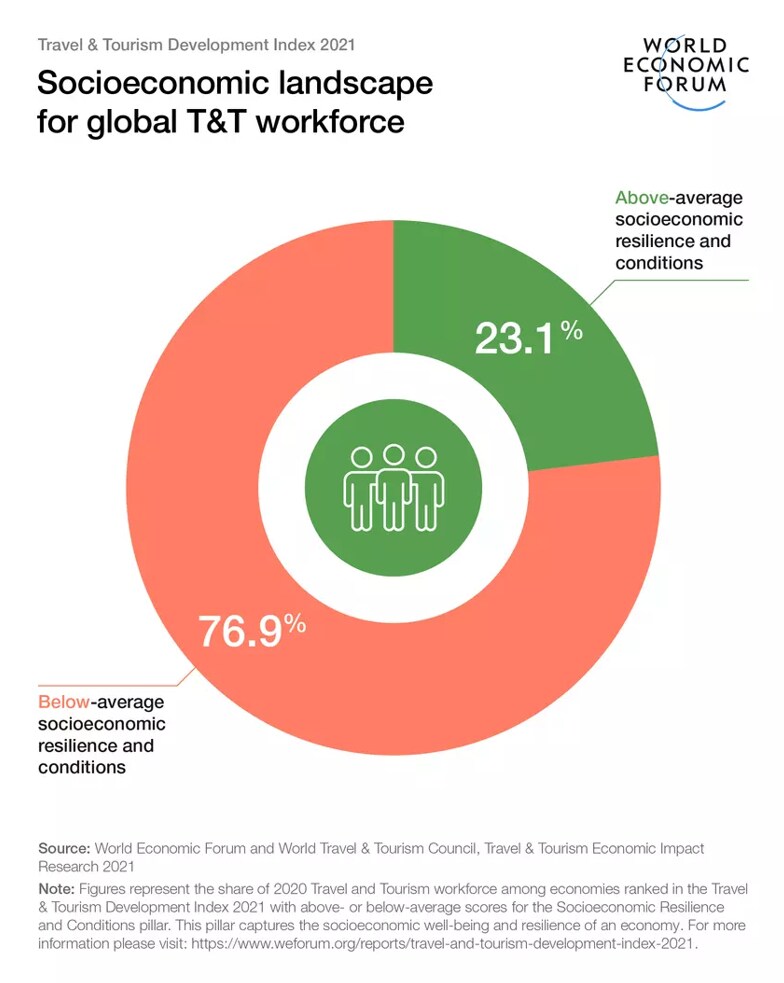
"The T&T sector is a major driver of economic development, global connectivity and the livelihood of some of the populations and businesses most vulnerable to, and hardest hit by, the pandemic," explain the report's authors.
"Supporting T&T development and recovery – which in turn will help the global recovery, build resilience and support all of those who depend on the sector for work – will be critical."
How is the World Economic Forum promoting safer, cleaner and more inclusive transportation systems?
The World Economic Forum’s Platform for Shaping the Future of Mobility works across four industries: aerospace and drones; automotive and new mobility; aviation travel and tourism; and supply chain and transport. It aims to ensure that the future of mobility is safe, clean, and inclusive.
Through the Clean Skies for Tomorrow Coalition, more than 100 companies are working together to power global aviation with 10% sustainable aviation fuel by 2030.
In collaboration with UNICEF, the Forum developed a charter with leading shipping, airlines and logistics to support COVAX in delivering more than 1 billion COVID-19 vaccines to vulnerable communities worldwide.
The Road Freight Zero Project and P4G-Getting to Zero Coalition have led to outcomes demonstrating the rationale, costs and opportunities for accelerating the transition to zero emission freight.
The Medicine from the Sky initiative is using drones to deliver vaccines and medicine to remote areas in India, completing over 300 successful trials.
The Forum’s Target True Zero initiative is working to accelerate the deployment and scaling of zero emission aviation, leveraging electric and hydrogen flight technologies.
In collaboration with the City of Los Angeles, Federal Aviation Administration, and NASA, the Forum developed the Principles of the Urban Sky to help adopt Urban Air Mobility in cities worldwide.
The Forum led the development of the Space Sustainability Rating to incentivize and promote a more safe and sustainable approach to space mission management and debris mitigation in orbit.
The Circular Cars Initiative is informing the automotive circularity policy agenda, following the endorsement from European Commission and Zero Emission Vehicle Transition Council countries, and is now invited to support China’s policy roadmap.
The Moving India network is working with policymakers to advance electric vehicle manufacturing policies, ignite adoption of zero emission road freight vehicles, and finance the transition.
The Urban Mobility Scorecards initiative – led by the Forum’s Global New Mobility Coalition – is bringing together mobility operators and cities to benchmark the transition to sustainable urban mobility systems.
Contact us for more information on how to get involved.