
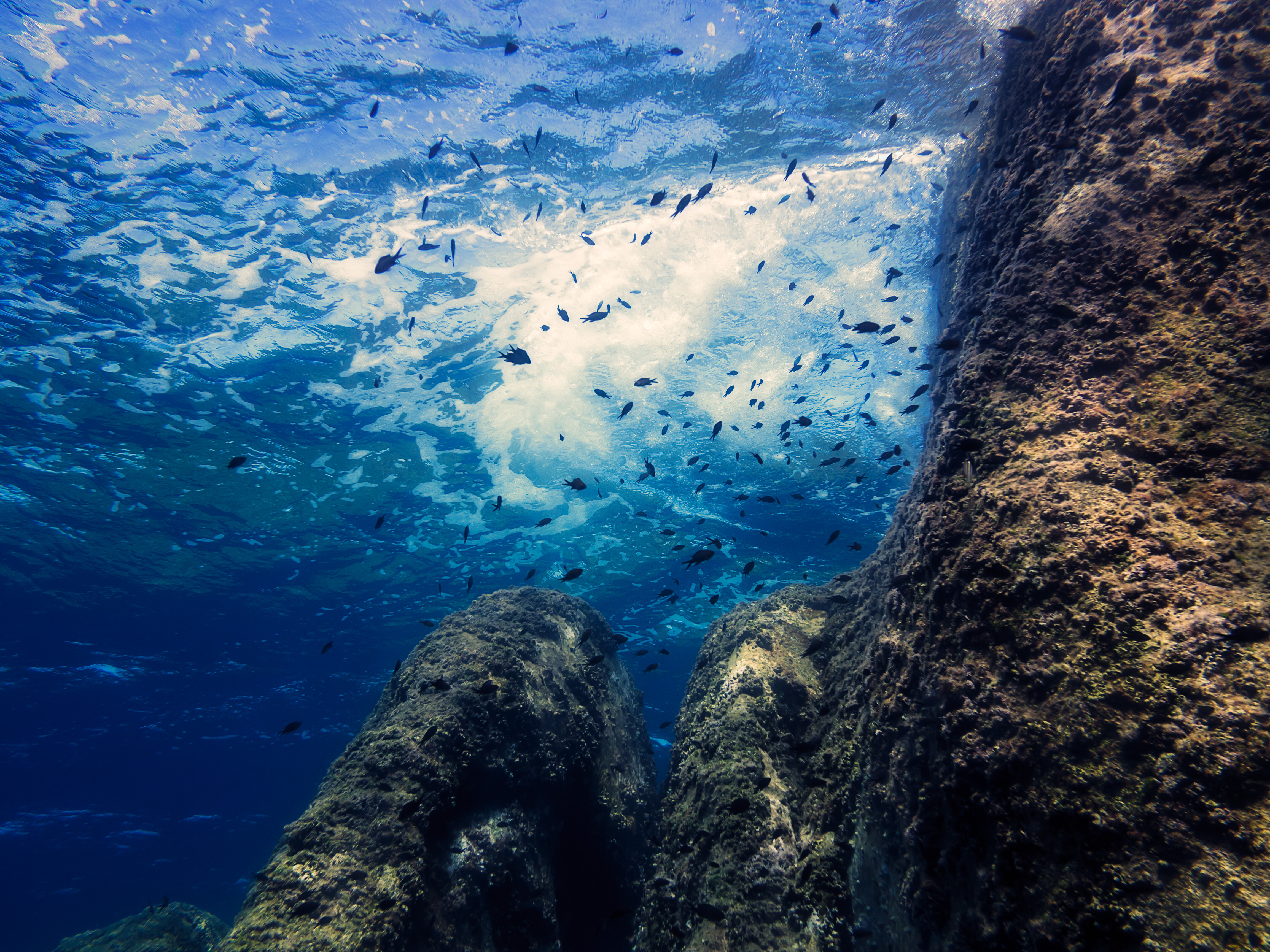
30x30 Action Plan Launches at the UN Ocean Conference
Read the full report here.
Nice, France - Today at the third UN Ocean Conference (UNOC3), UN Secretary General’s Special Envoy for the Ocean, Ambassador Peter Thomson, announced the launch of a new report - The 30x30 Ocean Action Plan - convened by Friends of Ocean Action in collaboration with organizations including Blue Action Fund, Blue Marine Foundation, Dona Bertarelli Philanthropy, Mercuria, Minderoo Foundation, Oceano Azul Foundation, and with the strategic support of UNEP and IUCN.
Guided by the latest data and analysis, the 30x30 Action Plan is a call to action for governments and stakeholders to align efforts, scale up protection, and seize opportunities presented by international agreements to close the gap and protect ocean ecosystems critical to climate resilience, food security, and community livelihoods.
Ambassador Peter Thomson: “This Action Plan distills insights from those already delivering on-the-water action to achieve the protection of our blue planet. The report offers a frank assessment of current protection, identifies key opportunities to accelerate progress, and outlines strategic actions to catalyse political will, mobilize finance, and empower communities and institutions.
We have five years to get this right. The Action Plan aims at building the momentum to make that so. We know what works. We know who is leading. We know where support is needed. Now is the time for urgent ocean action.”
As of June 2025, only 8.6% of the ocean is designated as marine protected areas (MPAs), and just 2.7% is fully or highly protected. Without urgent, coordinated action, the world is not on track to meet the 30x30 ocean protection target.
In a recently-released report - The Ocean Protection Gap: Assessing Progress toward the 30x30 Target - it was revealed that just $1.2 billion a year currently flows to ocean protection efforts - a fraction of the $15.8 billion needed annually to deliver 30x30. The report highlights that protecting 30% of the ocean could unlock around $85 billion per year by 2050 in avoided costs and annual returns from just three key benefits alone: preserving natural coastal defences, avoiding carbon emissions from seagrass loss, and restoring overexploited fisheries.
Alfredo Giron, Head of Ocean, World Economic Forum: “Put simply, our economies and societies cannot function without the services that nature, and our ocean, provide. As such, business must move from compliance to co-leadership. From minimizing harm to maximizing positive impact.
“Ocean industries such as energy, ports, shipping, tourism, tech, and seafood, should not be just users of ocean space, they should be one of the most avid stewards of its future. It is critical that ocean industries have a seat at the table when it comes to safeguarding our ocean for future generations. Through maximising opportunities to collaborate, we can deliver action for our ocean at a far greater, and faster, scale.”
The Action Plan reviews relevant mechanisms and evaluates a set of large MPAs under potential consideration. If fully realised these in design MPAs could boost global ocean protection by an additional 4.0%, raising total global marine protection to 12.3%. This still falls far short of meeting the ambition of 30% by 2030; the Action Plan calls for the creation of a collective movement to accelerate results, noting the Biodiversity Beyond National Jurisdiction (BBNJ) Agreement as a key opportunity to do so.
Susan Gardner, Director, Ecosystems Division, UN Environment Programme: “The report clearly shows we need to urgently step up our efforts on coverage, which includes ensuring that areas under protection are well managed with effective, inclusive governance and engagement of local communities. The Regional Seas Conventions will play an important role here, bridging on the ground realities, regional collaboration and global frameworks including the CBD’s Global Biodiversity Framework and the BBNJ Agreement.”
The report identifies systemic barriers to progress, including fragmented data, political inertia, inclusion of Indigenous Peoples and local communities, financing, insufficient implementation, and the effective use of available science and tools, and outlines a two-pronged Action Plan to accelerate progress.
Enable Global Conditions for Success: Ratify and operationalize the BBNJ Agreement, align national strategies with global commitments, secure long-term financing, and strengthen international coordination, monitoring, and data systems.
Accelerate Protection in Key Geographies: Support countries to expand protections in national waters, develop high seas MPAs aligned with BBNJ provisions, and empower IPLCs through inclusive governance, legal recognition, and resourcing.
The launch of the Action Plan is intended to catalyze concerted efforts towards achieving 30x30, and to be used to support in the development and implementation of clear, robust, national roadmaps to be presented at the next Conference of the Parties of the United Nations Convention on Biological Diversity (CBD COP17) that will take place in Armenia next year. However, this goes beyond government action; the Action Plan also identifies how others can join national efforts by supporting and further enabling governments to implement effective and equitable marine protection by 2030.
Media contact:
Erin Skoczylas: erin.skoczylas@weforum.org,
Patricia Roy, patricia@communicationsinc.co.uk, +34 696 905 907
Notes to Editors
- Only ~8.3% of the global ocean is currently designated as a protected area, and just 2.7% is fully or highly protected.
- Marine Protected Areas (MPAs) in design could add 4% more, still short of 30x30.
- The High Seas make up 61% of the world’s ocean, but remain unprotected. If realised, High Seas areas currently under consideration would increase current ocean protection by approximately 2.2%.
- EEZs make up ~39% of the ocean, yet only 12 countries have protected 30% or more of their zones.
- If the 30 largest EEZ-holding nations protected 30% of their waters, it could add another 4.4% of global ocean coverage.