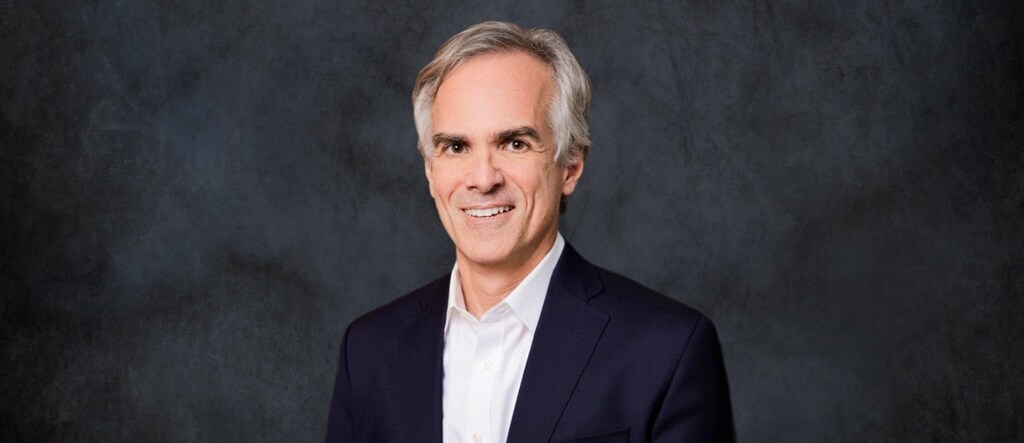
Russell Reynolds CEO Constantine Alexandrakis shares real-world case studies from top CEOs collected in his latest book The Catalyst CEO, sharing what's really needed to drive change -- and the signals that too many overlook.
More than 70% of leaders believe their organizations could become extinct within 10 years without the right transformation. Yet fewer than 30% believe they are good at making those changes happen. So what separates the successes from the stalled initiatives?
Constantine Alexandrakis is the CEO of leadership consultancy Russell Reynolds Associates. In his book The Catalyst CEO, he compiles stories and practical lessons from real CEOs and their case studies, breaking down what’s needed to make change possible, especially as leadership evolves in an AI era. He shares practical lessons from companies such as Eli Lilly, Merck and Yum Brands and organizational blindspots leaders can’t ignore. He also shares his own his hard-won transformation story as well as why the Greek concept of ‘philotimo’ can build a sense of stewardship in leaders.
In this episode, you’ll learn:
Why driving change is challenging - and what leaders overlook
How learning sharing power can strengthen empowerment and speed change
What is psychological inertia and how it can slow transformation
How to spot and tap ‘influencers’ in your team
The shocking announcement that kicked off one company’s leadership restructure
The value satire plays after big changes - and why it’s an unsung form of feedback
Alexandrakis also discusses AI, distributed leadership, psychological inertia, the meetings he never skips, and gives his take on big trends shaping the future of work.
Subscribe to Meet The Leader on Apple, Spotify or YouTube.
Constantine Alexandrakis, Russell Reynolds Over 70% of leaders believe if their organizations don't transform, they will be extinct in 10 years. but less than 30% believe that they are actually capable of successfully transforming or good at transforming.
Linda Lacina, Meet The Leader Welcome to Meet the Leader, the podcast where top leaders share how they're tackling the world's biggest challenges.
In today's episode, we talk to the head of one of the world's top leadership consultancies about how leadership is transforming and what organizations need to do to catch up.
Subscribe to Meet The Leader on Apple, Spotify, and wherever you get your favorite podcasts. Don't forget, rate and review us.
I'm Linda Lacina at the World Economic Forum and this is Meet The Leader.
Constantine Alexandrakis, Russell Reynolds A CEO may see the need for change first, but transformation can't remain the CEO's personal agenda. So it has to move from my transformation to our leadership team's transformation to our company's transformation.
Honestly, if it is still my transformation over a period of time, it has not scaled. It needs to be our transformation.
Linda Lacina, Meet The Leader The world is changing. And leaders know it. In fact, 74% of leaders surveyed say they risk going out of business without fundamental transformations in the next decade. That is a daunting prospect, especially since less than one in three from that survey say their past transformation efforts worked.
To take us through how to do it right, we have Constantine Alexandrakis. He is the CEO at leadership consultancy, Russell Reynolds. His firm helps thousands of public, private, and nonprofit organizations worldwide do everything from find their next CEO or board member or help them puzzle through big change. This gives him a pretty unique view on what works and the patterns that can hold leaders and companies back.
He has collected those insights and stories, including data like the statistics I just shared, into a new book, The Catalyst CEO. In it, he breaks down how some of the world's top leaders made big change work in their companies, the practical steps that we need to take to train today's leaders, to help them run the companies we'll be building tomorrow.
He'll dig into all of that, including his own change mistakes and hard-won lessons learned. But first, he'll talk to us about how leadership is changing, and if we're ready for it.
Why Leaders can struggle to keep pace with change
Constantine Alexandrakis, Russell Reynolds I think we're getting ready for it Linda. It's a challenging time with a lot of issues hitting leaders at once and the speed of those issues accelerating. So, I think companies and organizations are doing their best to adapt.
Linda Lacina, Meet The Leader Could you describe sort of the swirl of things that are contributing to this challenging moment that people may not be fully poised for?
Constantine Alexandrakis, Russell Reynolds Look, the issues that leaders are facing today, geopolitical issues, technology innovation issues, economic uncertainty issues and everything else, they're not new issues per se, but what's happening is that they're all hitting at once and the speed at which they are changing and being redefined and hitting organizations is speeding up. So that creates a bit of a compounding puzzle for leaders across different types of companies and organizations.
Linda Lacina, Meet The Leader In your mind, what's standing in the way of fixing this?
Constantine Alexandrakis, Russell Reynolds It really is the accelerating pace of the change, the sort of increasingly interconnected nature of those challenges.
It used to be that if you had a technology issue, you could figure it out within the technology organization. But with AI as an example today, That permeates every single business process in the company. It's less a technology issue and more of a business issue. So, I think the combination of the bead and the pervasiveness of some of these topics are contributing to that.
Why CEOs struggle with Business transformation - and what successful leaders always do
Linda Lacina, Meet The Leader If there was maybe a statistic on this that kind of helps give people a picture of the challenge, what would that be? What's a statistic that might even surprise or shock people?
Constantine Alexandrakis, Russell Reynolds Over 70% of leaders believe if their organizations don't transform, they will be extinct in 10 years, but less than 30% believe that they are actually capable of successfully transforming or good at transforming.
Linda Lacina, Meet The Leader If we are able to tackle this, what does the world look like in 10 years, if we're able to sort of develop the leaders to fix these challenges?
Constantine Alexandrakis, Russell Reynolds Well, I'd hope we'd stop thinking of leadership development primarily as preparing someone for their next job and start thinking about it as preparing people to exercise judgment before they have the title. We need to have more people trusted with consequential decisions and organizations as a result of that being able to continuously transform themselves.
Linda Lacina, Meet The Leader You recently wrote a book, The Catalyst CEO. Can you tell us a little bit about it?
Constantine Alexandrakis, Russell Reynolds Sure. The book actually began with the puzzle based on the stats that I shared a moment ago. Leaders overwhelmingly agree that transformation is essential, yet many of them don't believe that they're good at it.
So, we thought, how do we figure out what the successful CEOs do in order to drive transformation to ultimate success? And in a nutshell, we found that the CEO's critical role is to build a transformational leadership team that can challenge the organization, share accountability, and ultimately expand ownership of decision-making and judgment much further throughout the enterprise.
Linda Lacina, Meet The Leader What was the moment when you guys realized, gosh, we need to put something together to help?
Constantine Alexandrakis, Russell Reynolds It was really just having countless conversations with CEOs, with leaders, and with board members, where all of them, even if their companies are doing really well, felt the need in the current environment to drive a transformation. But again, very few of them feeling or having the confidence to really know how to do that effectively.
What is business transformation -- and how does it differ from a business turnaround?
Linda Lacina, Meet The Leader In this, of course, we've talked a little bit about transformation. Can you define this for us? What is the leadership transformation that we need and that we're hoping to make sure that we have in place?
Constantine Alexandrakis, Russell Reynolds Well, it's a great point, Linda, because sometimes people use the word transformation to mean different things. So, it does not mean turnaround. Turnaround is a very specific situation where a company is failing in some way and needs to urgently address the problem. A transformation is basically a fundamental change in how an organization creates value, and that requires changes in capabilities and behavior, resource allocation, everyday decisions. So, it's how does the organization create value in the future and take advantage of all the opportunities that it's facing given new technologies, given an evolving landscape in the environment.
Linda Lacina, Meet The Leader A lot of companies have sort of acknowledged that maybe the role of leadership is going to be changed. The way that companies are structured is going to need to be evolving. This command-and-control structure has not been relevant for quite some time, but there's still this difficulty with companies to be a little bit more nimble, to make sure that more teams are empowered so that they can act more quickly, make decisions more quickly. Can you talk a little about this? How will leadership and how will leaders look different in 10 years?
How will leadership structures evolve in the next 10 years?
Constantine Alexandrakis, Russell Reynolds The theory of distributed leadership, as you said, has been around for a while. The fact that you can't run an organization successfully through command and control. Those concepts have been around a while, but the reality is that when things get tough within organizations and when the environment starts to, the complexity of the environment starts to multiply, decisions and judgment do get pulled back to the center, do get pulled back to the CEO and the leadership team. And that creates even more of a bottleneck and difficulty in adapting to new situations.
So, in the future, we see organizations who have successfully transformed and moved those decision-making rights to where they really matter. And that leadership is more of an enabler that creates the guardrails and the direction and the accountabilities for those decisions to happen in the right places so that the company can move more nimbly.
What leaders agree is key to driving change and transformation
Linda Lacina, Meet The Leader As you wrote this, I mean, and of course you, you guys live this every day, but what surprised you, was there something really, gosh, you know, maybe that deep end, your understanding of a topic that you were very familiar with, or was there something that you just felt like, gosh I never thought that that was going in this direction or I'm, I'm a little bit surprised at the scope of that number, what surprised
Constantine Alexandrakis, Russell Reynolds Yeah, it's something that you hear about theoretically, but it was repeated so many times by the CEOs that we interviewed. It's about how much time successful CEOs devote to building conviction and alignment before trying to accelerate execution. And the old adage of going slow in order to go fast. That's probably the consistency of that and the reality of that. As frustrating it is, as it is to every CEO to have to do that, it's sort of an essential piece of driving transformation within an organization. And that was probably my biggest surprise.
Linda Lacina, Meet The Leader You talk a lot also in the book of expanding the circle or sharing power. And I think that's a really, really interesting idea because I think people don't think about that as a way that helps everybody rise. They think about it maybe as having less and not more. Tell us more about this concept of sharing power, what it is and why it's so important to understand.
Constantine Alexandrakis, Russell Reynolds It refers to expanding real ownership, judgment and decision-making beyond the executive team while maintaining clear accountability. It doesn't mean democracy, it doesn't mean the CEO stops deciding, but it means recognizing that ownership has to extend beyond the people sitting around the executive table, giving people clear direction, guardrails and real decision rights. That allows transformation to really scale. It can't scale if a thousand decisions need to come back up to the leadership team or the CEO. There's also a human reason which is that people defend what they helped create.
Linda Lacina, Meet The Leader Kind of expand on this idea that you want to defend what you create. This is hardly a new issue, right? This is something that's endemic to lots of things that hold people back. But what's very hard now? What makes this all the more difficult in maybe the current context?
Constantine Alexandrakis, Russell Reynolds It comes back to the issues we said about the speed of change, the volume of unknowns. In the previous decade, you could rely on certain policies around economic investment, around collaboration across borders, around the steady pace of technological innovation. But today you can't rely on that because things are changing, if not monthly, weekly. And that means that a single person, the CEO or a leadership team, cannot effectively make decisions at the right speed themselves. There has to be a distribution of judgment across the entire organization and the guardrails, but also authorities in place to allow the decision to be shared across that organization. And the CEO needs to model that. The leadership team needs the model that.
Linda Lacina, Meet The Leader Do you think that leaders recognize the urgency of getting that into place?
Constantine Alexandrakis, Russell Reynolds Some do, some don't. So that was part of the reason why we wrote the book, to help educate leaders out there about what successful leaders do and have done in order to tackle those sorts of things.
What Eli Lilly learned about organizational change and sharing power
Linda Lacina, Meet The Leader There's some really great case studies in the book on how leaders sort of faced important moments, how they kind of learned how to share power, how they learned to get some of these skills in place that will be so important to enable the transformation that we're going to have in the future.
We can start with Eli Lilly, right? They had a dream situation for any leader. They get along. People talk at lunch. Had more of a book club vibe. I think you, you, describe it in the books, but not necessarily like a team winning on the field type of vibe. Can you talk a little bit about this happy problem and what was needed to fix it?
Constantine Alexandrakis, Russell Reynolds Well put. It's a very happy problem. Lilly had a genuinely collegial culture and still does. But Dave Ricks, when he became CEO, wanted to preserve that community and that feel, while also giving the company a sharper edge to more effectively compete and innovate. And the danger was that harmony could start suppressing productive tension, right? Because A culture like that could become inertia when behaviors you cherish begin protecting you from the behaviors you need, which are around challenging one another and having lively debate. So that was what Dave was facing when he came into that role.
What is 'psychological inertia' and how can it slow transformation
Linda Lacina, Meet The Leader And one of the things that was really interesting -- the term of psychological inertia. Can you talk a little bit about that? I think that term is so fascinating and I think it can maybe help people understand why these good vibes can hold people back. Can you tell me a little about psychological inertia?
Constantine Alexandrakis, Russell Reynolds Well, there are several different types of inertia that interfere with successful transformations within companies and psychological inertia. It is the one that people, human beings have a natural tendency to want to return to their equilibrium state. So, they may sign up for a transformation or be excited about a change, but over time, psychologically, there's just a natural snap back to where they were before. And that was one of the challenges that Dave faced there and had to really experiment with different approaches in order to tackle it and make the transformation successful.
How employee 'influencers' help change take hold
Linda Lacina, Meet The Leader So one of the things that they did is identify influencers in that organization and then sort of help promote them across the organization. What is that? What's an influencer in terms of an organization and a structure and how did they identify them?
Constantine Alexandrakis, Russell Reynolds So an influencer is somebody within the organization, not on the leadership team, but somewhere else who is watched and listened to by others. So, a role model, a, a person with a following and influence within the organization. So, Lily used network analysis and manager nominations to find people several levels below the C-suite that are actually listened to by others, and they then invited those people. Into the tent on the transformation to help actually shape it rather than simply be spokespeople for it. They actually brought them in to sort of own the creation of the transformation, the priorities for the transformation and help create something that everyone could embrace.
And how does that create a flywheel for change? The people who helped design the change then carried it themselves through the organization and really became an actual feedback loop of where it was landing well and where it wasn't, and when it wasn’t, why. So, they actually became these energy kind of sources for powering the transformation forward. That process also for those individuals became a leadership development experience and opportunity for them in real time as they were learning how to carry a major strategic agenda through an organization.
Linda Lacina, Meet The Leader While kind of putting this thing forward and kind of ushering this through. Is there anything that they wish they'd known earlier? Is there something like, gosh, you know, we didn't expect that we should have done x or y? What kind of comes to mind?
Constantine Alexandrakis, Russell Reynolds I think it was experimentation around when to bring people in, uh, at what stage of architecting the transformation, do you bring them in, in the middle of that, do bring them into the first state early on, and I think they learned that the earlier, the better so that they could really understand from the beginning, whether an idea would work on the ground.
The other part of this is remember transformations and these sorts of alignments have a half-life after 12 months, 18 months, 24 months, the energy around them just naturally starts to dwindle as that psychological inertia kicks in. So, by creating these influencers and bringing them in early, they were able to also have reinforcement when that inertia started to set in and help the organization prevent a reversion to older ways of working.
How Yum Brands used 'shared authorship' to drive change
Linda Lacina, Meet The Leader There's another case study in your book with Yum Brands, right? And it's really interesting. They came to like a change moment and the way that they decided to bring folks in and get everybody on the same page was by asking people to co-author the company vision. Can you talk a little bit about that? Right? Because that's a type of exercise that can maybe seem a little bit too in the air and maybe not that practical and tangible. But this one was, can you talk a little about the change moment they were facing and why this was the right solution?
Constantine Alexandrakis, Russell Reynolds Yes. And it's, it's a little bit similar in slightly different way to what Eli Lilly faced. Well, Greg Creed, when he became CEO of Yum Brands, he inherited three major brands that were not operating as a unified enterprise or completely siloed and faced growing pressure to remain culturally relevant. And the biggest strategic test in all that came around Yum China. Which represented about half of the profits of the company but also had significant risk. And Greg really forced the team to ask whether they were managing the growth story or actually becoming hostage to it.
So, he brought the senior team together with zero PowerPoint decks, but really just in a room with flip charts, markers, sticky notes, and asked them, to take a giant step back and just describe who they were at their best and how that represents the company. And that debate was really messy in a constructive way. And from that, the team created this vision called "Heart-Led, Hungry and Humble Together." Greg used that. He saw his role as writing the first chapter of the transformation, but that exercise with the team helped write chapter two, which then took them to the next stage of their development. So, it's the notion of shared authorship creating shared commitment.
Linda Lacina, Meet The Leader And how do you then take that shared authorship of a vision into a practical application? Every single company has a mission somewhere on their website. And many people, I guess, would be sort of hard pressed to say what that mission is, or to repeat it verbatim. What's a practical way that they were able to implement this strategy, make sure people, people were taking it forward and internalizing it, embedding it.
Constantine Alexandrakis, Russell Reynolds That was pretty much ensured by the way it was created. So, the co-authorship of it, the cocreation of it made it something that each of those leaders was not being told. To replicate or to bring to their teams, but they actually felt like they had created it, it was theirs and it was their duty and obligation to bring it forward and share it with others. So, it was the way it was constructed was the that allowed them to carry it forward. If he had just announced it, it would have been exactly like you said, something that's written on a wall and no one really believes in.
Linda Lacina, Meet The Leader I assume there's also a value in folks having these discussions. It maybe it helps flesh out how they think about the company right now, what their sort of advantages and capabilities are in a way that they might not have just from their own single vantage point, but then also makes them feel like, gosh, you know, it's okay to talk about the company in a particular way, because we've had this larger discussion, everyone has buy in. Right? They feel like, Oh, no, no. No, this is approved. It's an approved way. And I don't need to go have a check, right? Is that also maybe sort of an advantage of this?
Constantine Alexandrakis, Russell Reynolds It's very much an advantage and there are always unexpected things that come out of those types of conversations, but having those unexpected ideas, being able to debate those ideas hands-on only increases ownership and commitment from the stakeholders involved.
How Merck reshaped its leadership team
Linda Lacina, Meet The Leader There was an interesting case study you guys have also from Merck. And I want to talk about this because I think one of the things that we're looking at is as we look towards the future and we're looking for, do we have the right folks for the transformation, We really need to be looking at, you know, um, do we have the right people in place to be making these decisions, to be co-leading on these and Merck comes in, the CEO makes big changes to the leadership team. Can you talk a little bit about that?
Constantine Alexandrakis, Russell Reynolds Yeah. So, this is the, the Merck in Germany and Stefan Oschmann inherited, I think it was like a 350-year-old company where they had made steady progress over decades, but the company had become over a long period of time, very siloed and Stefan commit came in pretty directly said, told their senior team, 70% of you are going to change. And what he did was he rotated leaders into different roles that they had had before, brought in a number of outsiders to take on other roles, and really redesigned the organization around speed, accountability, around total enterprise thinking. And he referred to it as freeing up the oxygen in order to allow the company to move forward and to kind of break through those historical silos.
Linda Lacina, Meet The Leader Setting up that expectation ahead of making these changes. What's the impact? What's the before and after that came from that?
Constantine Alexandrakis, Russell Reynolds It's a demonstration of an important principle from the book, which is build the team for the company you are going to become, not for the company you have been, which is really hard for organizations to let go of the present and move towards the future, certainly past performance matters, but transformation requires learning speed, systems thinking, comfort with ambiguity and the ability to parade across boundaries and silos. So, It was very much a way of setting a tone and orienting everyone to really think about the new direction that they needed to head in.
Build the team for the company you are going to become, not for the company you have been.
Constantine Alexandrakis
CEO, Russell ReynoldsThe Leadership gut checks CEOs should deploy
Leadership blindspots you can't overlook and gut checks you should make
Linda Lacina, Meet The Leader Leadership changes these big reorgs and things they're difficult they're hard for a lot of very good reasons sometimes something was put in place for a solution that was needed at the time but time moves on and you have to make some hard decisions what's something that's easy to overlook when it comes to maybe rethinking your maybe your leadership structure your leadership team and building for the company you want. What's something that everybody should understand that is a blind spot.
Constantine Alexandrakis, Russell Reynolds Well, there are a few, but I think the one thing that every CEO we interviewed for the book and beyond said was in one form or another, they admitted that their biggest regret was not moving faster on people decisions. Every single leader repeated that in their own way. And that's a lot easier to feel with hindsight, obviously, but the reality is that teams that once thrived under one strategy can gradually become obstacles to the next. So, most leaders hesitate and sort of err on the side of giving people an opportunity to prove themselves, hoping that time or coaching will close that gap, but chemistry matters as much as composition and that's something that gets overlooked consistently.
Linda Lacina, Meet The Leader Go ahead. I want to maybe talk about some qualities that maybe companies think that they have in place. Certainly, I do meet the leader interviews, and I ask people what helped make X or Y happen and everybody tells me, oh, well, we've got trust, we got transparency, whatever. We all have great communication. But the reality is that if everyone had all of this in place, we wouldn't have any problems anymore. Everything would be solved, it would only be done, right? So, there's clearly an opportunity, right, everyone has an opportunity where they can improve a little bit and sometimes, they might need a gut check to make sure that they really are where they think they are on some of these things. So, what I want to do is I'm going to name a couple qualities and maybe you can sort of give me what is the gut check that leaders can put in place. To ask themselves, do we really have this? The first one is that idea of open dialog. What's a gut-check leaders should be, maybe something they should be asking themselves or taking a look at their team to make that they actually have that.
Constantine Alexandrakis, Russell Reynolds I'd say on that one, Linda, watch what happens to the first person who raises a difficult truth in a meeting, because every one of the organizations is also watching, and that's so important for setting the tone of change and transformation. So, it's related to the question about what am I not hearing that I should be?
Linda Lacina, Meet The Leader Trust. Trust is a big one. I think trust is almost impossible to sort of quantify, right? Everybody thinks they have it, but it's a moving target. What's another gut check that leaders can have in place? What's something they should be watched for, looking for a tell to see if they really have it or if there's maybe more work to be done.
Constantine Alexandrakis, Russell Reynolds Well, something we heard loud and clear in the research for the book was trust is not whether the team gets along. Trust is whether they can disagree vigorously, but then still move together afterward. So that's what I would say is the gut check for that.
Linda Lacina, Meet The Leader What about just the idea of leadership development at all, right? I mean, I think a lot of companies think that they are doing this, but then, you know, somebody takes a new job and there's a crisis, what's something they should be thinking about when it comes to leadership development? What's the tell that they've got more work to do.
Constantine Alexandrakis, Russell Reynolds Well, this is pervasive misconception. I mean, it's not about how many people are in leadership programs. It really goes back to the theme of the book, which is how many below the C-suite are actually trusted with consequential decisions? And how does that decision-making, how does the judgment, how do things get done within the company? Because you can bet that those where decision- making is encouraged and spread throughout the organization is where the fastest and most useful leadership development is occurring.
How to give teams more decision-making power
Linda Lacina, Meet The Leader I think all of this ladders up to nimble systems, nimble systems of change and decision-making. What can leaders do to sort of help push forward a more nimble structure so that there are more people getting the opportunity to make decisions, feel empowered, push things forward? What can leaders do to make sure that these things are being put in place?
Constantine Alexandrakis, Russell Reynolds Well, that one is pretty straightforward. I mean, honestly ask yourself every week what decision came to me this week that shouldn't need me next time and may not have needed me this time. So., using that test and that screen and then ask whether the people closest to that decision have the context or the guardrails or the authority or combination of those three in order to make that decision next time because every decision that unnecessarily comes back to the CEO or senior leader teaches the organization to just wait. And no one can afford to wait these days.
Every decision that unnecessarily comes back to the CEO or senior leader teaches the organization to just wait. And no one can afford to wait these days.
Constantine Alexandrakis
CEO, Russell Reynolds
Linda Lacina, Meet The Leader You say one thing in the book that people should stop saying "my" and start saying "our" especially helpful to keep people to share power but why is that little language change so helpful in pushing for the culture of sharing power.
Constantine Alexandrakis, Russell Reynolds I mean, that's a big one that we see all the time. And a CEO may see the need for change first, but transformation can't remain the CEO's personal agenda. So, it has to move from my transformation to our leadership team's transformation to our company's transformation. The sort of ownership for it needs to spread throughout the organization. And honestly, if it is still my transformation over a period of time, it has not scaled. It needs to be our transformation.
Linda Lacina, Meet The Leader You talked a little bit about, hey, it's not about the, maybe the leadership development programs that people have in place, these sort of beautiful mentorship programs, these beautiful three-hour training sessions and things like that. It's really how the work is getting done.
But in your mind, if I'm listening to this and it's like, oh gosh, you know, I see these little gaps in my own organization, I wanna fix them. What should they be doing to build a leadership bench that is ready for driving the transformation we're gonna be needing in the years ahead. How do we build that leadership bench? What are the steps that somebody should be taking right now in their organization?
Constantine Alexandrakis, Russell Reynolds Well, first, they need to be listening very closely and watching which leaders exhibit courage in how they communicate in meetings, how they drive their teams, and how open they are to actually making decisions on the day-to-day.
Then they need to do some tactical things in terms of clarifying decision rights and making the guardrails explicit for those. People need to really understand what they own, how much risk they can take, and when something genuinely needs to go back up to the top of the corporation, and then reinforce those expectations through rewards, through operating rhythms, through who gets promoted because if the whole organization sees who gets promoted and who doesn't, and if the people who are exercising these ways of working are the ones promoted, then that normalizes those sorts of behaviors. So, it's about how you enable the system to enable people to, to work in these ways, and it's also about what the system actually rewards.
The organizational blindspots that block transformation
Linda Lacina, Meet The Leader And are there any sort of blind spots or maybe organizational inhibitors that get in the way when it comes to either making sure that people are empowered or that these structures are working in order to sort of be nimble and enable fast decision-making? What is the organizational inhibitor that people should be on a detective hunt for?
Success can hide the need for change. And hierarchy can also silence candor.
Constantine Alexandrakis
CEO, Russell Reynolds
Constantine Alexandrakis, Russell Reynolds There are many. I mean, one of them is the actual success of the organization. As I said, at the outset, we're not talking about turnarounds here. We're talking about transformation and usually companies are transforming from a position of strength and success can hide the need for change. And hierarchy can also silence candor. So, it's about really. Using success as an opportunity to leapfrog to the next stage versus viewing it as something that is protecting us from needing to change. Another one is boards. Boards are always aware of the transformation and following the transformation, but they need to be brought in early, not to just bless it, but to also understand what the likely hiccups are going to be during the course of the transmission so that they can be supportive during those times and help the company work through them as inevitably they will arise. The CEO can be the greatest catalyst for the transformation by driving some of these truths, but also can be its greatest bottleneck if they maintain the blind spots and some of these inhibitors.
Linda Lacina, Meet The Leader You mentioned at the top of this that 74% of leaders that you guys surveyed think that they risk going out of business without a fundamental transformation in the next decade. But you guys also say that less than one in three say that transformation efforts have been successful. What is a way that people can keep going even when the going is tough? What's the way that they can keep at it?
Constantine Alexandrakis, Russell Reynolds Yeah, I think it's about the CEO and the leadership team really continuously communicating about the future opportunities and vulnerabilities that the company may face and communicating about those before actual company performance forces the issue. Really defining the decision rights that support the change, creating explicit norms challenges or challenges. And align everyone towards it and really build conviction continuously. Literally every CEO we interviewed told us that they had to repeat themselves over and over again about the objectives they were trying to achieve to the point where they were exhausted of hearing themselves say it, but it's a necessity to get through those soft spots and those lulls in the journey.
Constantine Alexandrakis shares his own transformation lesson learned
Linda Lacina, Meet The Leader We talked a little bit about other companies and sort of change moments that they had and what they learned from it, what they gained from it. You had a moment that you write about in the book where you hit a wall, you were looking to sort of break down some silos, but it had an unexpected outcome. Can you talk a little about the hub, the hub solution that you put into place?
Constantine Alexandrakis, Russell Reynolds Yes, the mess I created. So, early in my tenure, this was just after the pandemic, I had heard from a number of our colleagues that COVID had sort of hardened our silos across geographies. We're a global firm and it was felt that people had really retreated to their own countries and were not working cross-border as much as they had before the pandemic and as much as we need to best serve our clients. So, I reorganized our geographic regions to force greater collaboration. And that meant things like. Putting France together with Mexico and Germany with China, a variety of combinations. And on paper, I thought it was a clever idea that was going to attack the silos, but it really was a bit of a mess. And the meme started, including fictional regions like Nordic, Latin America, or Iberian Pacific, or many things like that. And the important thing was that very few people had told me directly that it wasn't working. I mean it took a while. So, my mistake in that was not getting the answer wrong. It was sort of allowing satire to become a safer feedback mechanism than directness and candor.
Linda Lacina, Meet The Leader I think that's an interesting thing, because I think sometimes people might think that satire is either a fun personality quirk or even a sign of disrespect, but it's actually a feedback tool, right? Tell me a little bit about that satire as an important feedback tool.
Constantine Alexandrakis, Russell Reynolds It is because it's people feel psychological safety in that and it's a lot easier to make a joke or create a meme than it is to tell the CEO or senior leader that your idea was a bad one and it is not working.
Linda Lacina, Meet The Leader What did you do instead? How did you fix it? How'd you fix your mess, Constantine?
Constantine Alexandrakis, Russell Reynolds Well, I restored us back to more normal regional structures. I think it may be paying much more attention to what is not being said. And to ask a lot more questions, not of the leadership team only, but also a few levels down around what people's feedback is on different topics. It also made me more conscious about how much judgment I was still holding onto myself. Made me more comfortable letting difficult issues be resolved more quickly and pushing resolution as quickly as possible.
What "philotimo" teaches leaders about better stewardship
Linda Lacina, Meet The Leader There's a reference to an ancient Greek concept in a book that's very meaningful to you. It's “philotimo.’ Can you tell me a little bit about that? Am I mispronouncing that? Philotimo?
Constantine Alexandrakis, Russell Reynolds Philotimo, Linda. Philotimo.
Linda Lacina, Meet The Leader Philotimo, all right, very good. Tell me a bit about it.
Constantine Alexandrakis, Russell Reynolds Look, it's hard to translate into most other languages, but it's essentially a deep sense of responsibility, of obligation, of hospitality, a sense of something larger than yourself to give to others. And it's a very important concept in the Greek culture. And one way we could think about it in leadership is about stewardship and CEOs are temporary stewards for the institution and its people and its norms and its values and our jobs as leaders are to leave those organizations stronger for whoever comes next. So, philotimo's about giving a hard mind and soul to help deliver that.
Linda Lacina, Meet The Leader Does this concept of philotimo -- does it help people maybe think in the long term and also put things in perspective, right? Where maybe you don't need to be worried so much sweating the small stuff. Does it sort of help us manage the long-term better?
Constantine Alexandrakis, Russell Reynolds I think that's a really good point, Linda. I think it is about the bigger picture and the longer term and thinking about what are we trying to serve in our community, our employee, our customers, our clients, and how do we bring out the best in people and in each other in order to do so.
What is the meeting CEOs should never decline?
Linda Lacina, Meet The Leader There's an interesting factoid in the book. You talk about a type of meeting that you never decline, right? People, people look at meetings defensively, but here's a meeting that you always very fine, very, very valuable. Can you tell me a little bit about a skip level meetings?
Constantine Alexandrakis, Russell Reynolds Those are super important, I think, to any leader, and it goes back to a little bit of what we talked about before about really making sure you're listening and hearing all the things that are important within the organization. But I started experimenting with skip level meetings where I'd have meetings with people who were a few levels down in the corporate hierarchy, or at least on paper, but just as important as anyone else in the organization in terms of what they do for colleagues and for customers and clients. And I find those... so inspirational, but also so informative because those are the individuals who not only see things that are impossible for a CEO to see but also are typically more open to being honest and straightforward about what they're seeing, which is incredibly valuable to any leader.
Linda Lacina, Meet The Leader Is there a way that you structure these? How many do you do a month? Is it the same group of people? Can you tell me a little bit about the shape those take?
Constantine Alexandrakis, Russell Reynolds No, it's not the same group of people. I try to get to a variety of folks. I try to do it a couple a week and it depends a little bit on my travel schedule. I might do it locally with somebody, or I might just set it up as a, as a phone call or zoom call, but it's always set up as. A chance to check in and I'll have a couple open-ended questions in the beginning, but the conversations always take on a life of their own, which is what I value most.
Linda Lacina, Meet The Leader Is there something in particular that has been really, really impactful to you? That gosh, like if you hadn't done that, this other change wouldn't have happened.
Constantine Alexandrakis, Russell Reynolds There are so many examples and I, I'm going to have trouble right now coming up with a specific one, but I'd say 80% of those conversations generate an idea that I take forward myself or to one of the leaders to influence something we're trying to achieve. Is there a book you recommend? I love a leader as healer by Nicholas Janney. It's a fascinating look at how leaders can think about their role and their influence within an organization. So that was a fun read.
Linda Lacina, Meet The Leader And how would it change someone who read it?
Constantine Alexandrakis, Russell Reynolds I think it helps you look at your role in a completely different light and it takes you away from performance dashboards and spreadsheets and business objectives and board objectives and really helps you think about how are you really supporting your people and the community of your organization and how do you frame your role as a leader to do that even more so.
Linda Lacina, Meet The Leader You run Russell Reynolds. You guys are. advising folks on, on leadership decisions that they should be making. But how has your tenure as CEO Russell Reynolds? How has it changed you personally as a leader? What's something that you do now that maybe you would never have occurred to you, uh sort of before you took on this role.
Day one CEO cannot be year 10 CEO.
Constantine Alexandrakis
CEO Russell Reynolds
Constantine Alexandrakis, Russell Reynolds Look, one of the things is that I've discovered during this role that you have to reinvent yourself and the role periodically. So, day one CEO cannot be year10 CEO every 18, 12 to 18 months, you have to reprioritize, reassess, take a step back and think about how Do I need to change how I lead and how do I need to change where I spend my time? Because the company is changing, the leadership team is evolving and growing, and a static CEO doesn't help anybody. That's been one of my biggest learnings. And it's also one of the most exciting parts of the job to be able to do that periodically in order to, to sharpen how you deliver.
Constantine Alexandrakis weighs on on predictions for the future of work
Linda Lacina, Meet The Leader Well, we're almost at the end here, Constantine. We have one little bit that we're going to do to kind of kick us off at the time. It's a rapid response where I'll give you a little statement about the future, something that we may have all heard about, sort of what's going to be coming down the pike. And you'll tell me whether or not you think it will happen or not. And you can sort of say yes or no, and then maybe a little phrase on why that is. Well, the first one is we'll all work for AI agents.
Constantine Alexandrakis, Russell Reynolds Not all of us, but most of us will work with them. The AI agents will probably take on more tasks and increasingly become part of how work gets done, but human judgments, human relationships, and accountability are always gonna be important.
Linda Lacina, Meet The Leader Middle managers will disappear.
Constantine Alexandrakis, Russell Reynolds I think the role changes more than it disappears. Managers who primarily move information up and down will be under pressure, but people are still going to need managers who provide context, exercise judgment, coach others, and help teams make decisions.
Linda Lacina, Meet The Leader The corporate ladder will become a web.
Constantine Alexandrakis, Russell Reynolds I think that's already happening actually, careers will become less linear, people will be building capability through projects and functions and geographies with different forms of leadership rather than simply climbing one vertical ladder step after step.
Linda Lacina, Meet The Leader And your last one, we'll finally build the leaders that we need.
Constantine Alexandrakis, Russell Reynolds Yes, we will continue to strive towards that and the key is building leaders for what is needed next.
Linda Lacina, Meet The Leader Thanks so much to him and thanks so much to you for listening.
If you liked this episode, check out our conversation with Ty Wiggins. He's a CEO coach at Russell Reynolds who helps leaders make the jump into the top role. He shared with us the common mistakes new leaders often make and how to make the most of your first 100 days in any big role.
Find a transcript of this episode as well as transcripts from my colleague's podcast, Radio Davos at wef.ch/podcasts.
This episode of Meet the Leader was produced and presented by me with Taz Kelleher as editor and Gareth Nolan driving the studio production. That's it for now. I'm Linda Lacina from the World Economic Forum. Have a great day.