Motorcycle helmets save lives - make them accessible to all
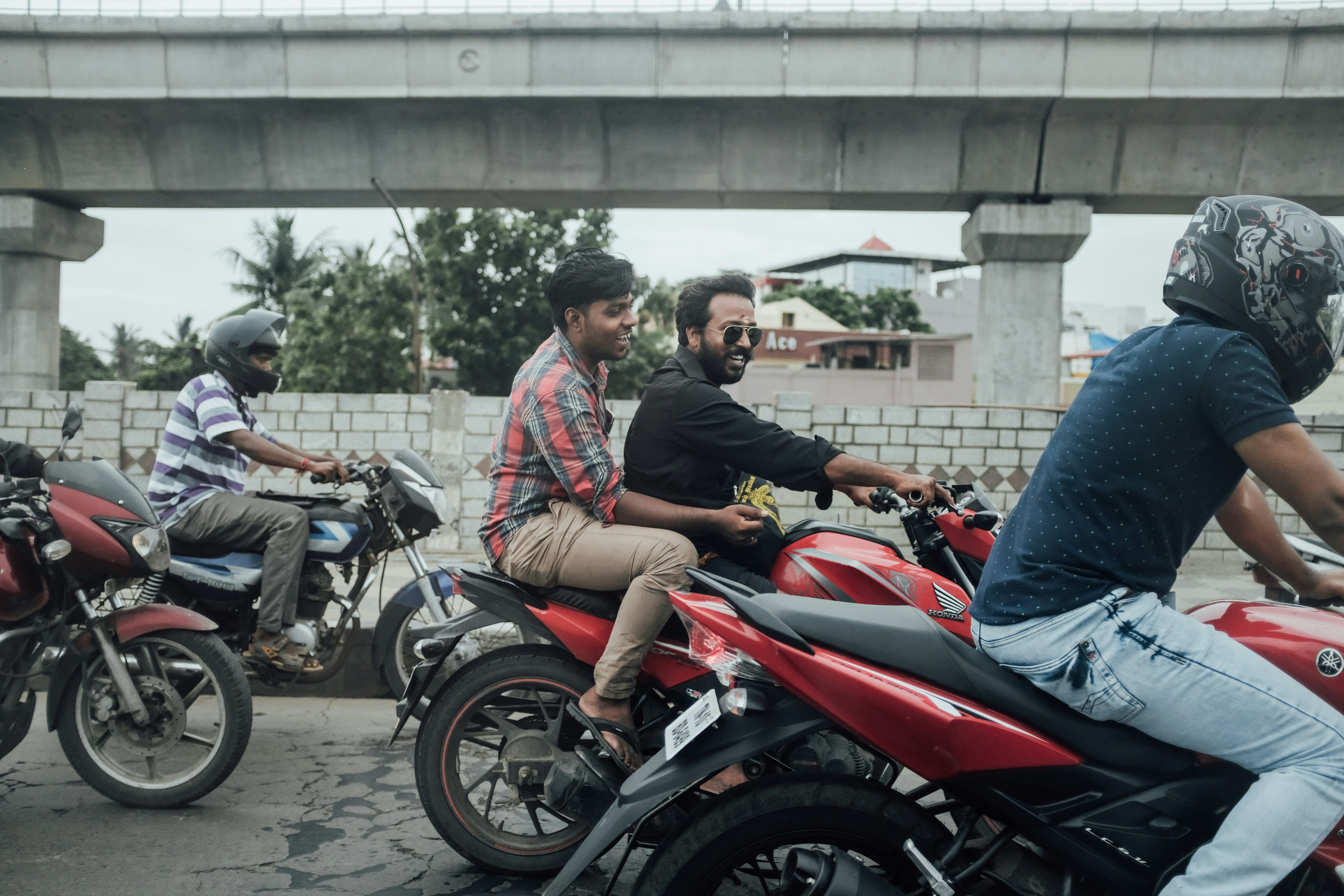
Safety-approved motorcycle helmets save lives Image: Photo by Steve Rybka on Unsplash
- A safe motorcycle helmet costs more than some families earn in a week.
- Much like vaccines, motorcycle helmets save lives only if they are safe, available and affordable.
- The UNRSF Partnership Pledging Conference on 20 July marks the next step in a global push to make safe and affordable motorcycle helmets more widely available in low- and middle-income countries.
A safe motorcycle helmet costs more than some families earn in a week. A certified $23 motorcycle helmet leaving the factory in Asia ends up costing $93 to a rider in Nairobi. That gap isn’t a market failure, it's a policy failure. Closing it is exactly the kind of real-world challenge that the UN Road Safety Fund (UNRSF) was created to tackle through policy change. The UNRSF Partnership Pledging Conference on 20 July 2026 is the chance to rally the partnerships and resources needed for change to happen.
On the margins of this year's global World Health Assembly, the UN Secretary-General's Special Envoy for Road Safety, Jean Todt, convened a high-level panel of experts – including the Director General of the World Health Organization, Dr. Tedros Adhanom Ghebreyesus – to ask a deceptively simple question: what if we treated motorcycle helmets like vaccines?
This isn’t just a metaphor. Helmets are a public health tool. Much like vaccines, helmets save lives only if they are safe, available and affordable. Today, we fall short on all three for motorcycle riders and passengers.
A motorcycle helmet only saves lives if it meets safety standards. UN Regulation No. 22, developed by UNECE and adopted by 46 countries, provides the international benchmark for motorcycle helmet safety. Yet in many countries, riders still wear helmets that are uncertified and do not meet international standards. In Rwanda, for example, nearly all motorcycle riders wear a helmet, but motorcyclists still accounted for 21% of road deaths, according to the WHO 2023 Global Status Report on Road Safety. This shows that high motorcycle helmet use alone is not enough.
Following the 2024 meeting in Kigali between President Paul Kagame and Jean Todt, the UNRSF began supporting the Tuwurinde (Let us protect heads) project. Together with partners, including Healthy People Rwanda, UNECA, UNECE and the Rwanda Standards Board, the UNRSF project resulted in Rwanda adopting UN Regulation No. 22 as its national helmet standard.
Africa gets its first helmet testing laboratory
Building on that policy change, the FIA Foundation – a founding UNRSF partner – further supported the establishment of Africa’s first helmet testing laboratory at the Rwanda Standards Board. Jamaica, a co-host of the UNRSF Pledging Conference, took equally decisive action, launching a new national helmet safety standard in April 2026, backed by a coalition of partners and a two-year enforcement programme.
Across sub-Saharan Africa, Latin America and much of Southeast Asia, there is little or no local production or testing of certified motorcycle helmets. Most certified motorcycle helmets are imported from a small number of manufacturing countries, including India, Indonesia, Spain and South Korea. Many countries also lack the testing infrastructure needed to enforce helmet standards at the border or point of sale.
Expanding local manufacturing and testing capacity is essential to making certified motorcycle helmets more widely available where motorcycle use is growing fastest. Across Africa, Asia and Latin America, uncertified helmets, with no guarantee of protection, can cost two to three times less than certified ones. According to the Global Alliance of NGOs for Road Safety, a $23 certified helmet leaving the factory in Asia can end up costing a rider in Kenya $93 - four times the factory price – once import taxes, trading costs and distributor markups are added.
Fake helmets are safety hazards
The alternative is often a $7 motorcycle helmet with a fake certification sticker that looks safe, but fails basic impact tests. In many low- and middle-income countries, where 90% of road deaths occur, genuinely safe motorcycle helmets are simply too expensive.
As the world marks World Motorcycle Day on 21 June, the message is clear: motorcycle helmets save lives, but only if people can access and afford helmets that truly protect them. A month later, on the margins of the UN General Assembly High-Level Meeting on Road Safety, the UNRSF Partnership Pledging Conference on 20 July will mark the next step in a global push to make safe and affordable motorcycle helmets more widely available in low- and middle-income countries.
Bringing together leaders across policy, manufacturing, finance and road safety, UNRSF will announce an unprecedented global initiative with the potential to save countless lives by better protecting motorcycle riders and their passengers.
Don't miss any update on this topic
Create a free account and access your personalized content collection with our latest publications and analyses.
License and Republishing
World Economic Forum articles may be republished in accordance with the Creative Commons Attribution-NonCommercial-NoDerivatives 4.0 International Public License, and in accordance with our Terms of Use.
The views expressed in this article are those of the author alone and not the World Economic Forum.
Stay up to date:
Sustainable Development
Related topics:


Forum Stories newsletter
Bringing you weekly curated insights and analysis on the global issues that matter.
More on Wellbeing and Mental HealthSee all

Edmond Clint Fernandes and Drishti Kansara
July 24, 2026


