The next AI divide is between learning and earning
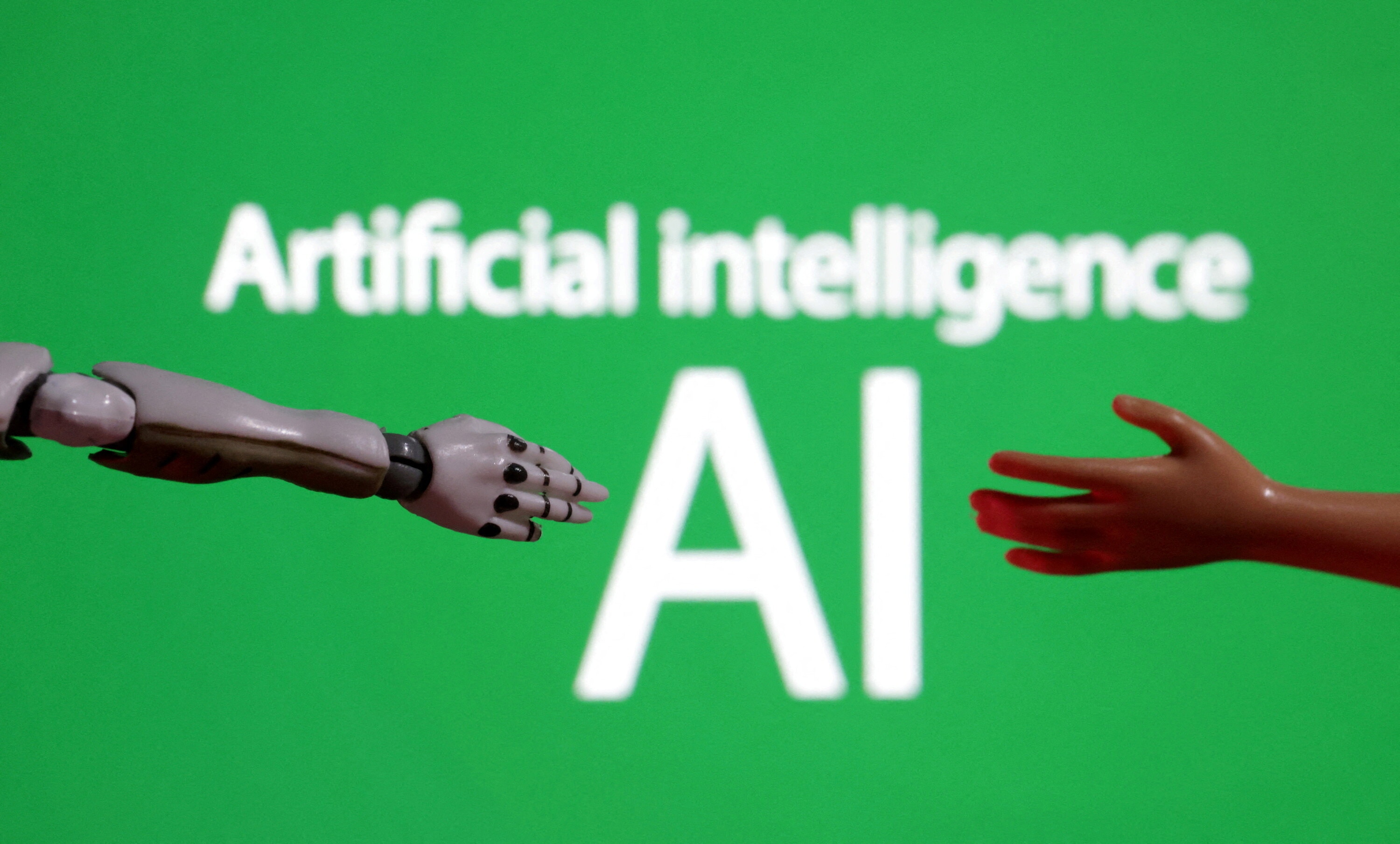
AI skills are spreading rapidly, but access to jobs and economic opportunity remains uneven. Image: Reuters/Dado Ruvic
- Young people are rapidly adopting artificial intelligence (AI) but knowing how to use AI does not automatically translate into jobs or income.
- Training should extend to hands-on projects, such as internships and apprenticeships, so young people can hone their skills.
- A lack of access to devices, connectivity and professional networks can prevent young people from benefiting from AI.
A particular kind of confidence comes from knowing how to use a tool without yet knowing what it's for. Ask young people whether they use artificial intelligence (AI) and many will say yes. But ask whether that skill has changed their economic prospects and the answer gets much murkier.
Goodwall's latest survey of young people captures this gap in stark numbers: 91% use AI at least weekly, 60.2% every day and among those who assessed their own ability, 97.1% describe themselves as at least somewhat confident using it for learning, creativity or work.
By any measure, the pace at which this generation has learned this technology is difficult to overstate. However, fluency and opportunity aren’t the same thing.
Why AI literacy alone does not lead to jobs or income
Knowing how to prompt a generative AI tool, produce content or develop an idea doesn’t, on its own, produce a paying client, an internship, a first job, startup capital or even the device and connectivity needed to keep building the skill in the first place.
That is where the next AI divide is emerging: between those who can learn the technology and those who have the opportunity to convert that learning into improved livelihoods. It is also the challenge at the centre of our work together at Goodwall and HP.
Through the Goodwall app and the AI to Opportunity programme, part of the NextGen AI Alliance, we’re helping young people to access future-focused skills and AI learning at no cost.
Participants can earn while they learn, access HP technology to strengthen their ability to work and build and connect with a global peer network where they can share ideas, learn from others and discover new opportunities.
We are also increasingly looking at how to support young entrepreneurs with the business skills, initial funding, networks and guidance they need to keep developing their ideas and careers.
Since November 2025, the second year of the partnership, 967,000 learners have accessed new AI skilling opportunities, while more than 130 HP devices have reached disconnected young people across more than 50 countries.
Turning AI skills into economic opportunity
Our ultimate aim is to give young people the skills and tools to turn that knowledge into economic opportunity and the appetite to do so is already there.
In Goodwall’s Career Compass research, 46.8% said they wanted to build their own venture, while another 43.7% were open to it. Yet 68.9% identified financial or family pressures as the biggest obstacle standing between them and their ambitions.
For someone expected to contribute financially to their household, for example, months of unpaid experimentation may not be possible. Another online course may add knowledge without changing their economic prospects.
For this reason, AI education must go deeper than AI literacy. Learning how AI works is the foundation. The economic value comes when someone can apply that knowledge to a real problem, completing a task more effectively for an employer, developing a service a customer will pay for, building a product, starting a venture or solving a problem in their community.
Our discussions with young people reveal how different that gap can look depending on where they live. In some communities, students are learning in environments with national AI strategies and institutions already integrating AI into education. In others, schools still lack information, communication and technology laboratories and students have little or no access to devices.
For young people in those settings, asking whether an AI course leads to employment is premature if they cannot reliably access the technology after the programme ends. Elsewhere, the infrastructure exists but the pathway into jobs where that knowledge can be readily applied is not clear.
The first AI divide was about who could access the technology and learn how to use it. The next will be about who gets to turn that knowledge into a livelihood.
”What young people need to turn AI learning into earning
If the objective is inclusive economic participation, we need to start designing AI education backwards from the outcome we want. That means going beyond asking what a young person should learn to what needs to happen afterwards for that learning to improve their livelihood.
First, young people need opportunities to apply skills in real settings. Training should connect to projects, work-based challenges, internships, apprenticeships and entrepreneurial opportunities where learners can demonstrate their skills.
Second, they need people who can help them navigate the transition. Mentors, educators and industry professionals can turn an abstract skill into a clearer pathway: which capabilities employers value, how to build a portfolio, where opportunities exist and how an idea might become a viable business.
Third, credentials need to reflect demonstrated capability, rather than simply course completion. As AI skills become more widespread, employers will need better signals of whether someone can use those skills effectively and responsibly in practice.
Building pathways from AI skills to economic opportunity
This thinking is already shaping our own work together. Goodwall and HP are partners in the NextGen AI Alliance, founded by Goodwall with HP, Microsoft and Cognizant to expand access to AI education and prepare young people for the future of work.
It is one example of what closing the learning-to-earning gap can look like in practice: skills, tools and opportunities designed as parts of the same pathway.
This week during the UN General Assembly, Goodwall and HP will build on their shared focus on turning skills into tangible opportunities for young people. Across two high-level engagements, HP will bring its perspective on how technology can help demonstrate and scale youth impact, drawing on insights and stories from the HP Foundation’s work.
The discussions will centre on a common challenge: how to move beyond skilling alone and create clearer pathways into employment, economic opportunity and long-term resilience: from embedding AI literacy into national workforce systems to ensuring education and training translate into meaningful opportunities for young people in an AI-driven world.
The first AI divide was about who could access the technology and learn how to use it. The next will be about who gets to turn that knowledge into a livelihood. Closing the distance between learning and earning is how we ensure AI doesn't simply create a more technologically skilled generation, but a generation with greater economic opportunity.
Don't miss any update on this topic
Create a free account and access your personalized content collection with our latest publications and analyses.
License and Republishing
World Economic Forum articles may be republished in accordance with the Creative Commons Attribution-NonCommercial-NoDerivatives 4.0 International Public License, and in accordance with our Terms of Use.
The views expressed in this article are those of the author alone and not the World Economic Forum.
Stay up to date:
Artificial Intelligence


Forum Stories newsletter
Bringing you weekly curated insights and analysis on the global issues that matter.
More on Artificial IntelligenceSee all

Amanda Wolthuizen
September 22, 2026


