This weekly roundup brings you some key climate change stories from the past seven days.
Top stories this week: How countries are cutting back on carbon; Germany's eco-friendly transport scheme; Great Salt Lake shrinks; US to plant 1 billion trees; How to raise resilience to extreme heat.
1. These regions produce a lot of carbon emissions - here’s what they plan to do about it
Roughly a third of global electricity production capacity currently comes from low-carbon sources, with 26% from renewables and around 10% from nuclear power. But, the remainder still comes from greenhouse-gas emitting fossil fuels.
The International Energy Agency says annual investment in clean energy must triple by 2030 if the world is to achieve net-zero emissions by 2050.
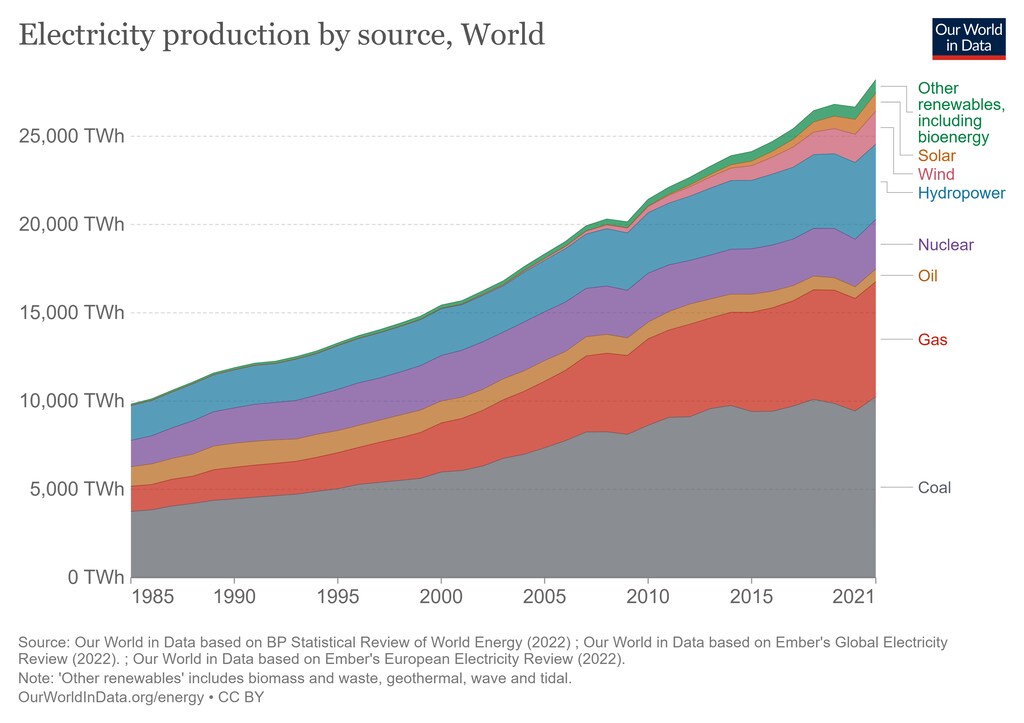
Countries around the world are making strides to cut their use of fossil fuels and boost clean energy sources. Consider the US, where clean energy comprised 67% of new electric generating capacity during the first half of this year.
Discover how the world's biggest emitters are cutting back on greenhouse gas emissions.
2. Germany's €9 transit ticket cuts 1.8 million tonnes of CO2
In response to the rising cost of living and the nation's net-zero commitments, Germany started offering monthly public transit tickets for €9 at the start of June. Over 52 million people took advantage of the tickets and the reduction in car use has cut carbon dioxide emissions by 1.8 million tonnes, according to VDV, the leading public-transport organisation in Germany.
Additionally, researchers at the University of Potsdam found that air pollution levels fell by up to 7% in response to this shift in German transport use. The ticket scheme expired at the end of August, despite calls for an extension.
Learn more about Germany's innovative public transit scheme.
How is the World Economic Forum promoting safer, cleaner and more inclusive transportation systems?
The World Economic Forum’s Platform for Shaping the Future of Mobility works across four industries: aerospace and drones; automotive and new mobility; aviation travel and tourism; and supply chain and transport. It aims to ensure that the future of mobility is safe, clean, and inclusive.
Through the Clean Skies for Tomorrow Coalition, more than 100 companies are working together to power global aviation with 10% sustainable aviation fuel by 2030.
In collaboration with UNICEF, the Forum developed a charter with leading shipping, airlines and logistics to support COVAX in delivering more than 1 billion COVID-19 vaccines to vulnerable communities worldwide.
The Road Freight Zero Project and P4G-Getting to Zero Coalition have led to outcomes demonstrating the rationale, costs and opportunities for accelerating the transition to zero emission freight.
The Medicine from the Sky initiative is using drones to deliver vaccines and medicine to remote areas in India, completing over 300 successful trials.
The Forum’s Target True Zero initiative is working to accelerate the deployment and scaling of zero emission aviation, leveraging electric and hydrogen flight technologies.
In collaboration with the City of Los Angeles, Federal Aviation Administration, and NASA, the Forum developed the Principles of the Urban Sky to help adopt Urban Air Mobility in cities worldwide.
The Forum led the development of the Space Sustainability Rating to incentivize and promote a more safe and sustainable approach to space mission management and debris mitigation in orbit.
The Circular Cars Initiative is informing the automotive circularity policy agenda, following the endorsement from European Commission and Zero Emission Vehicle Transition Council countries, and is now invited to support China’s policy roadmap.
The Moving India network is working with policymakers to advance electric vehicle manufacturing policies, ignite adoption of zero emission road freight vehicles, and finance the transition.
The Urban Mobility Scorecards initiative – led by the Forum’s Global New Mobility Coalition – is bringing together mobility operators and cities to benchmark the transition to sustainable urban mobility systems.
Contact us for more information on how to get involved.
3. The Great Salt Lake is getting a little less great - here’s why
The biggest salt water lake in the western hemisphere hit a record low of 1,276.9 metres on 10 August. In 1986 the lake was at its highest recorded level with an average water height of 1,283.7 metres.
“Though water levels in the Great Salt Lake can fluctuate by year, they have generally been declining for decades,” warns NASA’s Earth Observatory.

Explore why the Great Salt Lake is shrinking and the impacts this is having.
4. The US is planting a billion trees to fight climate change
Trees have the ability to capture carbon from the atmosphere and store it for generations. They are vital tools in tackling climate change and more and more countries are looking to use this nature-based solution in response to global warming.
The US is among those countries, aiming to plant 1 billion trees over the next 10 years.

Read more on the benefits of tree planting in tackling the climate crisis.
5. Extreme heat is weakening cities, financial services can help build resilience
In the last month alone, Spain and Portugal have collectively reported 2,000 fatalities due to extreme heat. Despite the dangers of extreme heat, more global attention is consistently given to more visible disasters such as hurricanes, tornadoes or floods, writes Daniel Murphy, Risk and Resilience Specialist at the World Economic Forum.
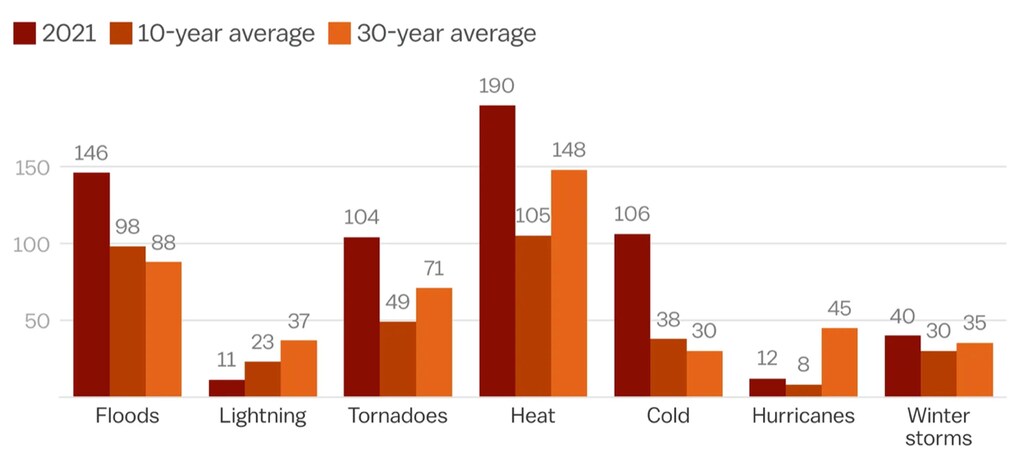
But a growing body of research is showing the effects of extreme heat. Not only does extreme heat hit cities' infrastructure, it also harms the mental and physical health of citizens, which inhibits economic growth and individual social mobility, and therefore exacerbates existing socio-economic inequities.
A multi-stakeholder approach is necessary if cities are to build heat resilience. Look at Seville, which has seen success due to its involvement of leaders in public health, finance, insurance, and academia.
Discover more about building resilience to extreme heat.