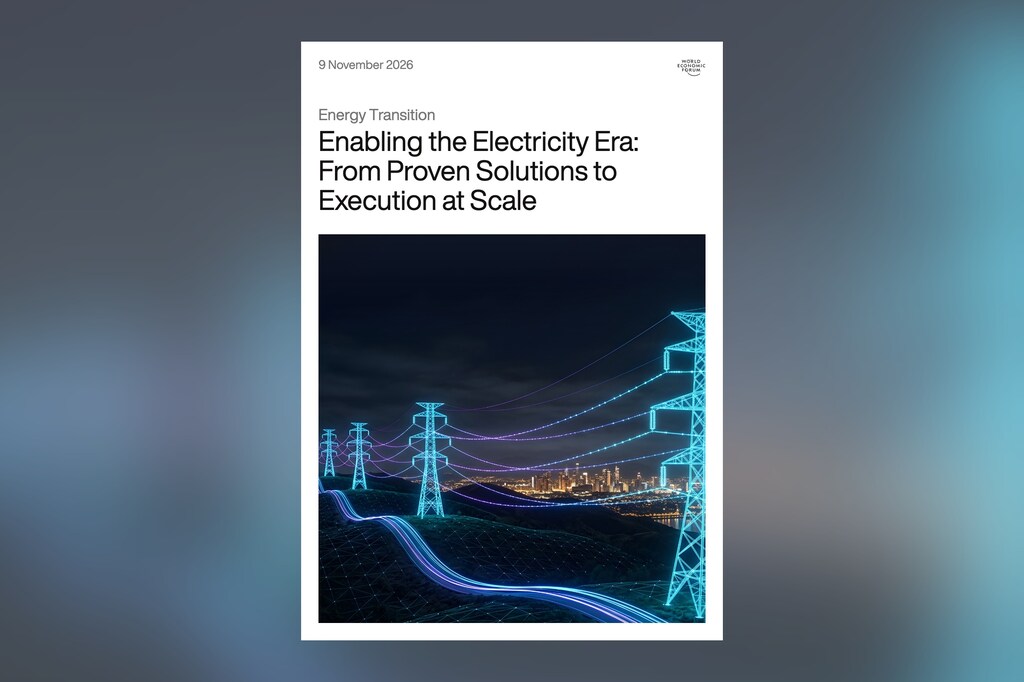
The EU knows it needs to electrify further – but for many in the bloc, that progress is not moving fast enough. Europe can change that though.
Europe’s energy system is stuck in a costly holding pattern. The global energy crises of recent years have reinforced the risks of imported fossil fuels: notably in the form of volatile energy prices, supply insecurity and added exposure to geopolitical events beyond its control.
As emphasized in European Commission President Ursula von der Leyen’s State of the Union speech at the EU Parliament on 16 September 2026, the electrification of Europe’s buildings, infrastructure and industries has been heralded as the solution to Europe’s energy sovereignty, enabling its energy system to run on local, clean power sources. Yet, the bloc’s electrification rate has remained largely stagnant at around 23% over the past decade.
Having been constrained by fragmented policies, aging infrastructure and an economic model that favours fossil fuels, the EU announced its Electrification Action Plan in July 2026 as a welcome step. Its proposed target (albeit non-binding) to reach a 46% electrification rate by 2040 could provide a clearer direction of travel. The European Commission estimates that reaching this level could save the EU up to €260 billion annually on its fossil fuel import bill by 2040.
But Europe cannot afford another decade of slow progress. The real test will be moving from ambition to delivery.
EU electrification's decisive phase
Businesses need certainty that clean electricity will have long-term price competitiveness in comparison to fossil fuels, and that national measures will follow the direction set in Brussels. A factory looking to electrify an industrial process does not need another long-term aspiration. It needs a viable business case, predictable policy, access to funding and confidence that the necessary grid connection will arrive on time.
This requires clearer sector signals and incentives, particularly for the parts of the economy that can move fastest. It also means using EU and national funding to de-risk projects and attract private investment.
The 2040 target is an important start, but a non-binding ambition will only go so far. Moving towards a binding and predictable European electrification target would give businesses the confidence needed to make long-term investment decisions to decarbonize. Collaboration will be equally important. Through the World Economic Forum’s Future of Power Systems initiative, public and private-sector leaders are working to identify how power systems can become more resilient, flexible and investment-ready.
Royal Avebe, a Netherlands-based starch and plant‑protein cooperative, just electrified one of its production facilities without requiring reinforcement of the electricity grid. By focusing on digital energy management, the business provides greater visibility of energy use across its manufacturing environment, supporting more informed operational decisions and helping to decarbonize.
Its upgrades, which included significant hardware changes, show that deeper electrification is possible without waiting on grid expansions. It is a reminder that electrification is not simply about replacing one energy source with another; it is about making industrial energy use more intelligent and more efficient.

Unlocking European energy's low-hanging fruit
Europe can move the dial fastest by prioritizing applications where the technology is already available and the economics can work today.
Take transport. Targeted support for corporate fleet electrification could accelerate demand for electric vehicles while expanding the second-hand EV market, making electric mobility accessible to more people.
Buildings offer another major opportunity, particularly because reducing their energy consumption does not necessarily require people to change their everyday habits.
Existing measures such as the Energy Efficiency Directive and Energy Performance of Buildings Directive can support near-term action. Scaling building automation and control systems could save up to 450 TWh of energy annually, avoid 64 million tonnes of CO₂ emissions and reduce energy bills by €36 billion.
Addressing the last mile
Electrification policy will only succeed if Europe can connect electrification projects to the grid.
Around half of the continent’s grid infrastructure is more than 40 years old. At the distribution level, grid constraints, connection delays and limited visibility are already preventing viable projects from moving into deployment. More than €100 billion of renewable energy and storage projects, representing approximately 830 GW of connection capacity, are waiting for distribution-level grid connections. The Electrification Action Plan and EU Grids Package must therefore operate as one system plan, rather than two separate policy tracks.
Investment in grids is essential, but Europe can also make better use of the infrastructure it already has. Digital grid-enhancing technologies could increase network capacity by between 20% and 40% by 2040 while cutting costs by around 35% compared with traditional expansion.
This is how Europe turns millions of individual technologies into an intelligent, responsive energy system.
Making the economics of electrification work
Ultimately, people and businesses will only electrify at scale if electricity becomes the most attractive economic option.
The Electrification Action Plan correctly recognizes that electricity should not be taxed more heavily than gas. But taxation remains a national competence, so progress will depend on Member States acting with sufficient speed and consistency.
Europe must address the pricing structures, taxes, levies and network charges that distort the comparison between electricity and gas. It must also rebalance incentives away from fossil fuels, and do so with innovative solutions due to fiscally constrained national budgets.
Time to break the deadlock
Electrification will not scale on ambition alone. It must be treated as core European infrastructure, essential to the continent’s security, competitiveness and sustainability.
The Electrification Action Plan is Europe’s opportunity to break free from a decade of stagnation. That means setting a stronger direction, prioritizing sectors ready to move, modernizing the grid and making electricity economically preferable to fossil fuels.
Every euro invested in electrification is a euro invested in Europe’s industrial future, energy resilience and long-term sovereignty. European industry stands ready to accelerate. The opportunity is there. Now, Europe must create the conditions to seize it.