In June, Germany began offering monthly public transit tickets for €9.
The low-cost ticket aimed to mitigate the burden of the increasing cost of living.
Tens of millions of people have bought the 9-euro tickets and the reduction in car use has cut carbon dioxide emissions significantly.
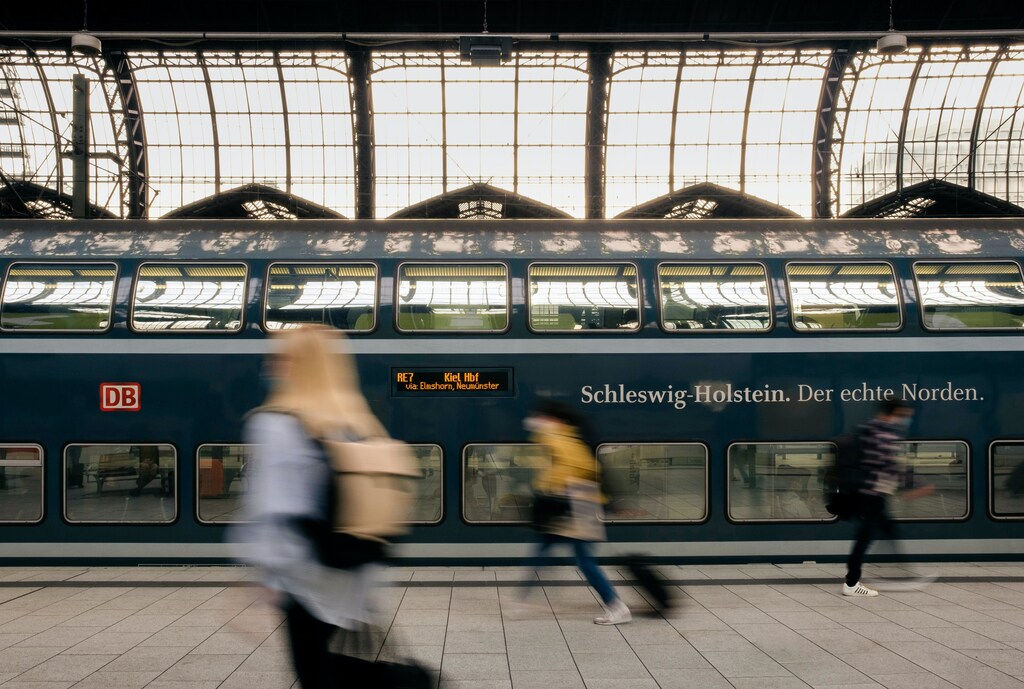
For three months, Germany has been offering ultracheap monthly tickets for all local trains, metros, trams and buses. The scheme was introduced in an effort to encourage the use of public transportation and ease the burden of inflation and high energy costs.
The plan appears to have been a success. Over 52 million people have bought the €9 tickets and the reduction in car use has cut carbon dioxide emissions by 1.8 million tonnes, according to VDV, the leading public-transport organisation in Germany.
“The 9-euro ticket not only relieved citizens financially but also had a clearly positive effect on the climate,” said Oliver Wolff, VDV’s CEO.
The impact of Germany's 9-euro tickets
Notable improvements to air quality in metropolitan areas have also been documented. Researchers at the University of Potsdam found that air pollution levels fell by up to 7% in response to the introduction of the low-cost ticket.
“Our results may have important policy and health implications: they show that subsidizing public transportation might be a viable option to reduce air pollution particularly in cities, thereby contributing to the UN’s sustainability goal of creating more resilient, safer and healthier urban agglomerations,” the University of Potsdam’s report states.
The study echoes the World Economic Forum's recent Sustainable Road Transport and Pricing report, which called for affordable public transportation to "further encourage adoption and reduce the financial burden for current users."
Deutsche Bahn, Germany's national rail authority, said it alone sold 26 million of the 9-euro tickets and saw a 10% increase in ridership over the summer months. Evelyn Palla, a Deutsche Bahn board member, called the 9-euro ticket experiment a “complete success.”
The discounted ticket constituted a major price reduction. Normally, monthly tickets for local transportation in Berlin cost €107. Among new purchasers of monthly public transportation tickets since June, over half said the low price was the leading incentive, VDV surveys found.
The 9-euro ticket scheme is set to expire at the end of August, but many advocates are pushing for an extension.
“All responsible actors should therefore now decide quickly on the continuation and further development of such an offer,” Wolff added. “If we take the traffic turnaround and climate change seriously, then we have to act now.”
The decision comes as Germany continues to face high inflation, which nearly hit 8% in August. The uptick reversed a slight downward trend that was recorded in the months prior.
How is the World Economic Forum promoting safer, cleaner and more inclusive transportation systems?
The World Economic Forum’s Platform for Shaping the Future of Mobility works across four industries: aerospace and drones; automotive and new mobility; aviation travel and tourism; and supply chain and transport. It aims to ensure that the future of mobility is safe, clean, and inclusive.
Through the Clean Skies for Tomorrow Coalition, more than 100 companies are working together to power global aviation with 10% sustainable aviation fuel by 2030.
In collaboration with UNICEF, the Forum developed a charter with leading shipping, airlines and logistics to support COVAX in delivering more than 1 billion COVID-19 vaccines to vulnerable communities worldwide.
The Road Freight Zero Project and P4G-Getting to Zero Coalition have led to outcomes demonstrating the rationale, costs and opportunities for accelerating the transition to zero emission freight.
The Medicine from the Sky initiative is using drones to deliver vaccines and medicine to remote areas in India, completing over 300 successful trials.
The Forum’s Target True Zero initiative is working to accelerate the deployment and scaling of zero emission aviation, leveraging electric and hydrogen flight technologies.
In collaboration with the City of Los Angeles, Federal Aviation Administration, and NASA, the Forum developed the Principles of the Urban Sky to help adopt Urban Air Mobility in cities worldwide.
The Forum led the development of the Space Sustainability Rating to incentivize and promote a more safe and sustainable approach to space mission management and debris mitigation in orbit.
The Circular Cars Initiative is informing the automotive circularity policy agenda, following the endorsement from European Commission and Zero Emission Vehicle Transition Council countries, and is now invited to support China’s policy roadmap.
The Moving India network is working with policymakers to advance electric vehicle manufacturing policies, ignite adoption of zero emission road freight vehicles, and finance the transition.
The Urban Mobility Scorecards initiative – led by the Forum’s Global New Mobility Coalition – is bringing together mobility operators and cities to benchmark the transition to sustainable urban mobility systems.
Contact us for more information on how to get involved.