Five environmental innovators have been awarded £1 million each for Prince William's Earthshot Prize 2024.
The prize consists of five categories that address challenges with nature, air, oceans, waste and climate. One of the winners, Keep IT Cool, is a top innovator on the World Economic Forum's UpLink platform, which pairs innovators with investors.
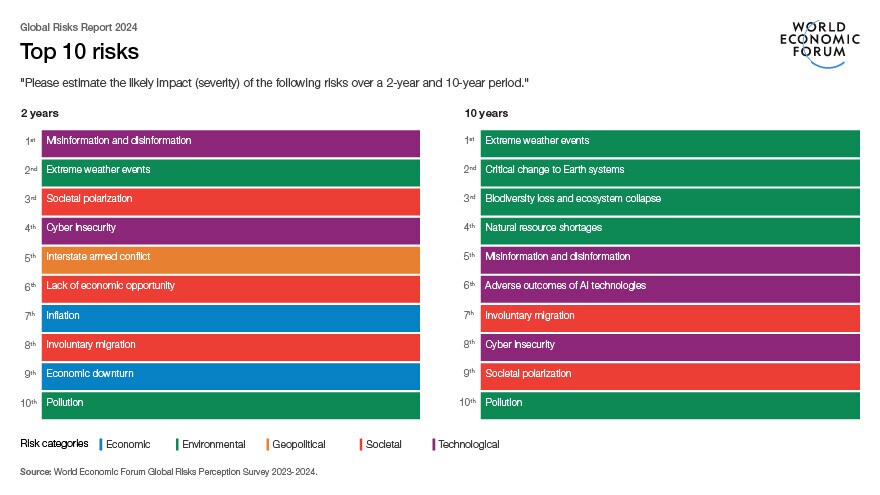
The Forum's Global Risks Report finds environmental risks dominate the top five risks facing the planet in the next 10 years.
Wearing biodegradable, plastic-free trainers, Prince William walked the 'green carpet' in Cape Town at a ceremony to award the winners of the Earthshot Prize 2024.
The prize, now in its fourth year, seeks to recognize and scale innovative solutions to the world's most pressing environmental challenges. Winners are awarded in five categories: Build a Waste-Free World; Protect and Restore Nature; Clean our Air; Revive our Ocean; Fix our Climate.
It came as scientists at the European Union's Copernicus Climate Change Service said 2024 was "virtually certain" to overtake 2023 as the hottest year on record.
Environmental risks make up five of the biggest risks facing the planet over the coming decade, according to the World Economic Forum's Global Risk Report 2024.
Action to keep 1.5 alive
Urgent action is needed if we're to meet the Paris Agreement target of keeping the rise in global surface temperature below 1.5C above pre-industrial levels and cut emissions in half by 2030. “We want to make this the decade in which we transform the world for good, one solution at a time, from the ground up,” Prince William said on stage in a giant reusable dome erected for the ceremony.
The Earthshot Prize announcement came days before leaders gathered in Baku, Azerbaijan, for the United Nations Climate Change Conference, COP29, where UN Climate Change Executive Secretary Simon Stiell urged: "We mustn’t let 1.5 slip out of reach. And even as temperatures rise, the implementation of our agreements must claw them back."
Here are this year’s five Earthshot winners in each category.
Build a Waste-Free World
WINNER: Keep IT Cool (KIC)
KIC, led by Founder and Managing Director Francis Nderitu, is also a Top Innovator on the Forum's UpLink platform, which pairs social entrepreneurs with investors through a series of challenges designed to address the world's biggest challenges. KIC was one of the winners of UpLink's Blue Food Challenge in 2021. It cuts down on food waste on the fishing catch from Kenya's Lake Victoria by providing solar-powered cold storage boxes and refrigerated transportation trucks to cover the whole supply chain. Through its online platform Markiti, it allows retailers to order fish and other protein deliveries, providing predictable demand for fisherfolk to normalize cash flow.
Protect and Restore Nature
WINNER: Altyn Dala Conservation Initiative
Led by Executive Director Vera Voronova, the initiative has taken a scientific approach to saving the critically endangered Saiga Antelope from extinction in one of the world's least protected ecosystems, Kazakhstan’s Golden Steppe. The animal's population has swelled from around 20,000 in 2003 to 2.86 million today. Following its success, Altyn Dala has widened its mission to protect and restore the whole ecosystem of the Golden Steppe.
Clean our Air
WINNER: Green Africa Youth Organization (GAYO)
Co-founded by Desmond Alugnoa in 2014, GAYO is tackling the growing issue of waste management in Africa, where the open burning of waste increases air pollution. Through a Zero Waste Model, GAYO is creating jobs and building infrastructure to support circular waste management, working with communities and minority groups who work with waste. In 2023, GAYO kept 170 tonnes of waste out of landfills - and it aims to grow from 150 to 500 employees across half of African cities by 2030.
What is the World Economic Forum doing on natural climate solutions?
The world faces converging environmental crises: the accelerating destruction of nature, and climate change.
Natural climate solutions (NCS) – investment in conservation and land management programmes that increase carbon storage and reduce carbon emissions – offer an important way of addressing both crises and generate additional environmental and social benefits.
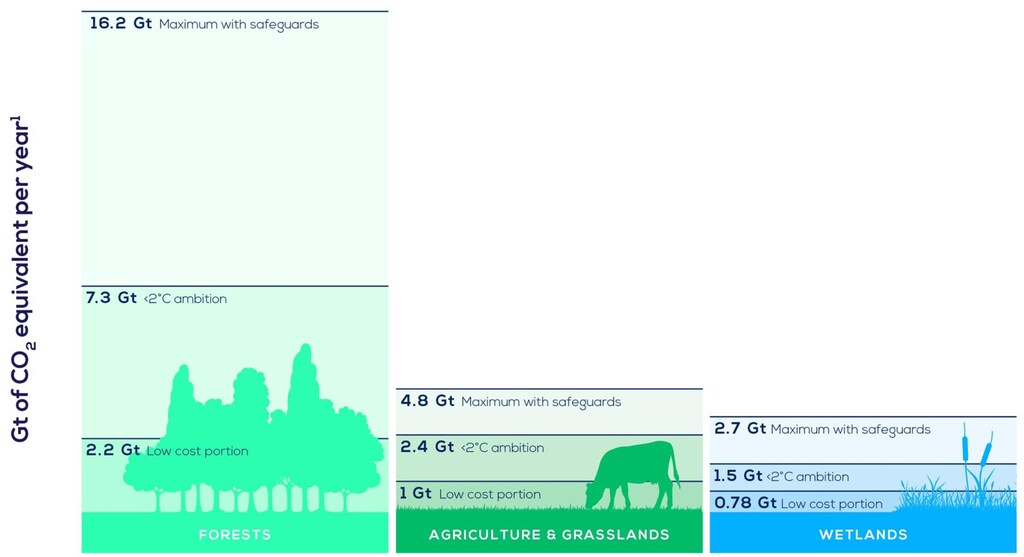
Research conducted for the Forum’s Nature and Net Zero report confirms estimates that NCS can provide one-third of the climate mitigation to reach a 1.5° and 2° pathway by 2030—and at a lower cost than other forms of carbon dioxide removal. This report builds on the recommendations from the Taskforce for Scaling Voluntary Carbon Markets, and identifies six actions to accelerate the scale-up of high-quality NCS and unlock markets through the combined efforts of business leaders, policymakers and civil society.
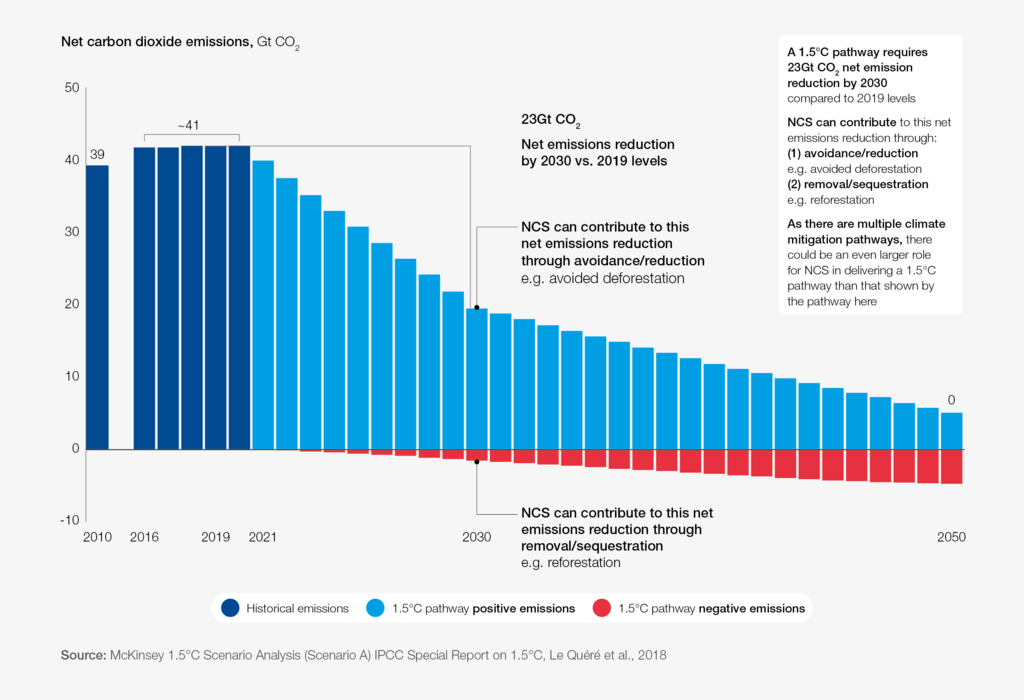
To foster collaboration, in 2019 the Forum and the World Business Council for Sustainable Development came together to establish the Natural Climate Solutions Alliance to convene public and private stakeholders with the purpose of identifying opportunities and barriers to investment into NCS.
NCS Alliance member organizations provided expert input to develop the Natural Climate Solutions for Corporates, a high-level guide to the credible use of NCS credits by businesses.
Get in touch to join our mission to unleash the power of nature.
Revive our Ocean
WINNER: High Ambition Coalition for Nature and People (HAC)
Only 17% of the world’s land and 8% of its oceans are currently protected. Since 2021, HAC, led by Rita Maria El Zaghloul, former Minister Counsel at Costa Rica’s UN Permanent Mission, has signed up 120 countries to protect 30% of the world’s land and oceans by 2030. It played a pivotal role in securing the 30x30 agreement at the UN Biodiversity Conference, COP15, in 2022. Now HAC is pushing for these commitments to be written into law.
Fix our Climate
WINNER: Advanced Thermovoltaic Systems (ATS)
Around 60% of the energy used to power industries is lost as waste heat. Led by CEO Kelly Adams, US-based ATS has developed a scalable technology to capture waste heat from industry and turn it into electricity for the hard-to-abate sectors, such as cement and steel production. It has the potential to save gigatonnes of CO2.