Mongolia is building an AI strategy aimed at developing teachers into AI educators. This matters for other economies, too – if AI education can work on the steppe, then it can work anywhere.
In late May, a maths teacher and a PE coach from Mongolia’s westernmost province set out for the capital Ulaanbaatar. The road is 830 miles, and the pair spent much of it on a laptop, polishing the AI project they had built together over the spring.
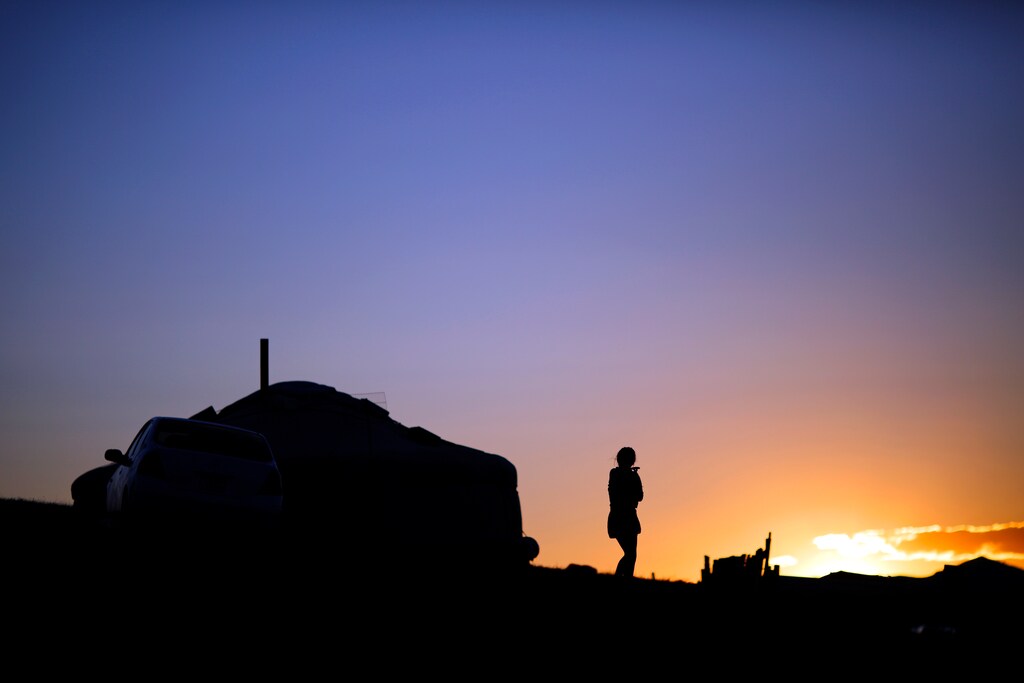
Those two were among 500 teachers from all 21 of Mongolia’s provinces who converged on Ulaanbaatar. They came carrying projects built in regional-centre schools, district classrooms and, in some cases, gers, the traditional dwelling used by nomads in Mongolia for thousands of years.
Governments are still arguing about whether children should touch AI at all. Norway has moved to keep it out of primary classrooms while the United Arab Emirates teaches it from kindergarten.
Mongolia has taken a different route. Before AI reaches a single student, it reaches the teacher.
The 500 in the hall were the second cohort of the National AI Campaign, doubling the country’s certified AI educators to 1,000. From this September, each teaches responsible, practical AI to at least 40 students. In a classroom, that looks like a maths teacher explaining to a Grade 7 class how a model learns from thousands of labelled examples, then having them write a precise prompt, test the answer against their own working and decide when to trust it.
Why Mongolia started with teachers, not devices
Mongolia started with teachers because capacity compounds. Running from 2025 to 2029 under the ITU’s AI Skills Coalition, with Golomt Bank as principal sponsor, the campaign rests on a simple premise: train the teachers and the knowledge multiplies. Each graduate teaches at least 40 students a year. The first cohort of 500 has already reached 10,000; as the corps grows to 2,500 by 2029, it will reach 100,000 students a year.
The graduates are primary school teachers, PE coaches, maths and geography instructors, not IT specialists. They were chosen from nearly 4,000 applicants and trained fully online over four months, so a teacher in the Gobi Desert learned on equal footing with one in Ulaanbaatar.
What they bring instead is classroom wisdom and local trust. In a country where a school can be two days from the capital, that is the only infrastructure that reaches everyone.
Addressing the graduating class, Education Minister Enkh-Amgalan Luvsantseren offered an unusually candid diagnosis: PISA results show learning loss in maths, reading and science, and urban and rural schools, like public and private ones, are drifting apart. Those gaps, he argued, can only be closed through digital transformation with AI at its core. That is the campaign’s logic too: the gaps are widest where connectivity is weakest, and a trained teacher is the one resource every school already has.
When AI met a centuries-old instrument
Graduation day was also a demo day. Nineteen teams pitched, on everything from child-privacy safeguards to personalized learning, and the project that won the room came from an unexpected place: a traditional wind instrument.
The winning team had built the Bishguur Learning System, an AI coach for students learning the bishguur, a traditional Mongolian wind instrument. It combines computer vision with audio analysis to deliver real-time feedback on tone, finger positioning, posture and breathing, giving a student in a remote village what was once available only near a master teacher.
Other teams took aim at a distinctly local challenge: in some public schools, a single classroom holds as many as 50 students. Several capstones built AI teaching assistants to hand time back to teachers, and teachers piloting them say they save around six hours a week. That echoes global evidence: a Gallup and Walton Family Foundation study found that teachers who use AI tools at least weekly save an average of 5.9 hours a week, or six weeks per school year.
Why teachers are the real AI infrastructure
The need for AI skills in education is global. The World Economic Forum's Future of Jobs Report 2025 finds that 39% of workers' core skills will change by 2030. The question is no longer whether to build AI skills at national scale, but who can deliver them fast enough.
The International Telecommunication Union estimates that 2.2 billion people remain offline in 2025, and rural internet use, at 58%, still trails urban use at 85%. For these communities, closing the AI divide will take more than infrastructure.
It will take people. UNESCO estimates the world needs 44 million additional teachers by 2030. Making the teachers we already have the delivery system for AI literacy turns a shortage into leverage. Teachers are the last-mile infrastructure in every community, however remote.
Two key lessons:
1. The bottleneck is delivery, not demand. In Mongolia, nearly 4,000 teachers competed for 500 places. Fully online, plain-language and open to any subject teacher, a model that holds up across the Mongolian steppe will hold up anywhere.
2. Root AI in culture, and let teachers choose the problems. The capstones were not assigned; each team picked a challenge from its own community. That is why the winning project was a coach for a traditional instrument rather than a generic chatbot, and why a tutor for the bishguur will do more to normalize AI in Mongolian homes than any standardized curriculum could.
AI teachers in the room
From September, 1,000 teachers returned to classrooms scattered across the world's most sparsely populated country with a certificate and a mandate. The maths teacher and the PE coach have already made the 830-mile journey home. Their students will meet AI for the first time through two voices they already know and trust, and more than 40,000 others will do the same before the year is out.
Mongolia’s wager is that this is how a small nation stops watching the AI revolution and starts shaping it. Countries will keep debating when a child should first meet AI. In Mongolia, the question is who would be standing in the room when they do.