Welcome to your weekly science update, a curated list of the week’s most interesting stories in science.
Gravitational waves discovery is dust – the 2014 claims of evidence of gravitational waves, signals from the Big Bang that would have settled longstanding disputes about the nature of the universe, was officially put to rest – it was just cosmic dust.
British members of parliament voted yes to mitochondrial replacement therapy to prevent incurable genetic disease. While it has been hailed as a triumph in genetic medicine, media headlines calling this the dawn of “three-parent babies” are ruffling feathers, and religious institutions have come out against the procedure. More on how it works here.
A former EU Chief Science Adviser tells all – her three years in Brussels “contained elements of Quixote, Kafka and Macondo”.
President Obama’s science budget for the fiscal year 2016 increases funds for science by 6% to $146 billion, but political reactions suggest it won’t get congressional support as is. Some scientists criticized the budget as favouring funding for applied over basic science, but all agree it’s a vast improvement. Here’s POTUS explaining the value of basic science.
More and better treatments for cancer. President Obama’s budget includes a special Precision Medicine Initiative, which has its supporters and naysayers. Here’s a portrait of what’s at stake.
Antibiotic resistance – the Obama budget request nearly doubles spending on antibiotic-resistance programmes. Here’s the Wellcome Trust’s Jeremy Farrar on why we’ll need more than science to solve this problem.
Meanwhile, in a galaxy surprisingly not far far away…
To some, public health appears overrated. Measles, once eradicated in the US, is now back and spreading with a vengeance thanks to the growing popularity of the anti-vaccine movement.
This begs the larger question: why do some people doubt science?
And the evidence is in: US scientists and public can pretty much agree to disagree.
Professor Robert Langer of the Massachusetts Institute of Technology, and member of the Global Agenda Council on Nanotechnology, has won the £1 million Queen Elizabeth Prize for Engineering for his development of drug-release systems, tissue-building and microchip implants.
Author: David Gleicher is Senior Programme Manager, Science and Technology, at the World Economic Forum.
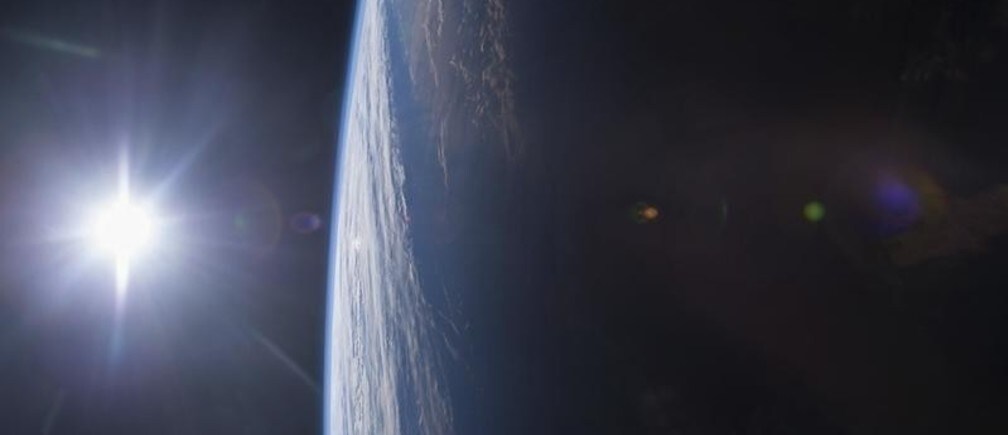
Image: The Gulf of Mexico and US Gulf Coast at sunset is shown in this image from the International Space Station and posted to social media on December 14, 2014. REUTERS/Terry Virts/NASA/Handout