A Dutch start-up has developed a blockchain and cryptography system for supply chain management.
Circularise enables businesses to have transparency in their chain, while maintaining privacy.
Blockchains record information in linked groupings that have reliable auditability.
They can be used to give all partners in a supply chain access to essential information.
While cryptography technology allows sensitive information to remain confidential.
Circularise is a member of The Circulars Accelerator Cohort 2021.
Better supply chain visibility can boost sustainable production methods and provide greater confidence to businesses on where their materials are coming from. It can also offer insights into who is working for all the businesses connected to a particular supply chain.
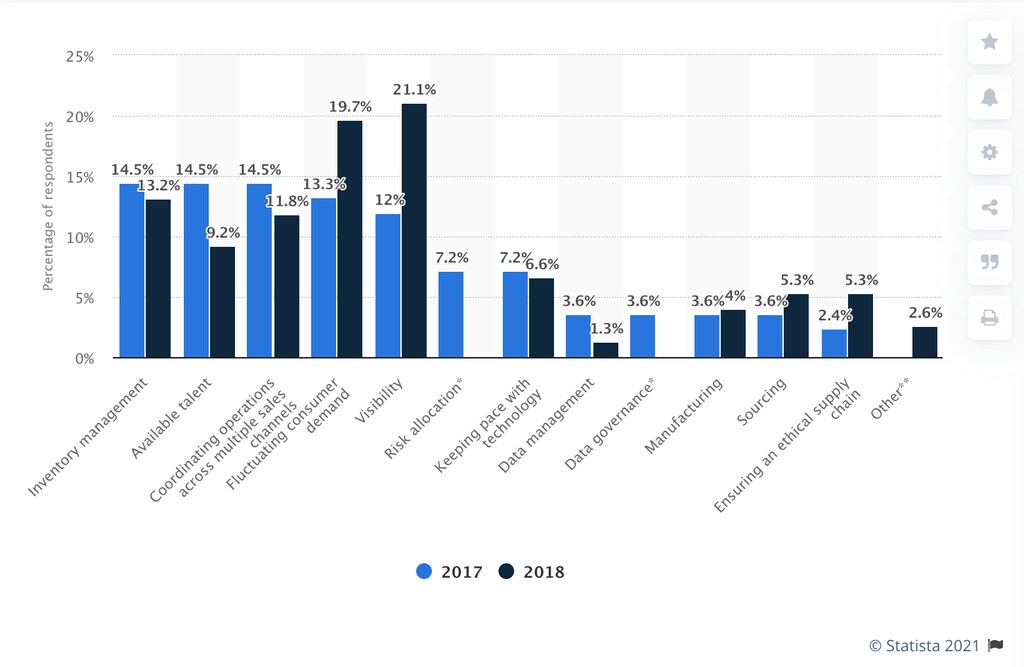
It is, however, a major headache for organizations. The data journalism site Statista cites a 2018 survey which “found that the biggest challenge (21.8%) for global supply chain executives was visibility.”
A Netherlands-based start-up called Circularise has been working on a technology platform that helps deliver the kind of supply chain transparency many businesses would like, while overcoming one of the biggest concerns businesses have – the security of their sensitive data.
Total transparency
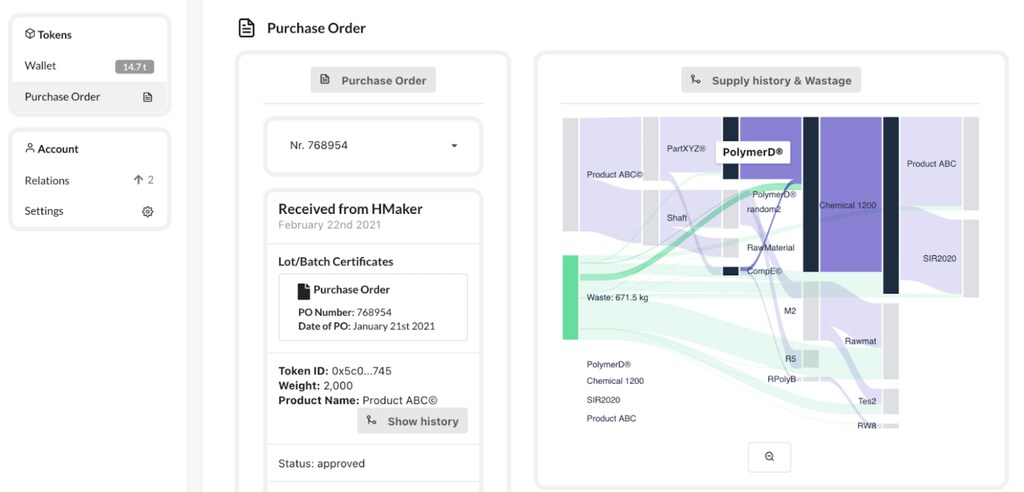
Circularise, a member of the World Economic Forum’s UpLink platform, uses what it describes as “a combination of blockchain, peer-to-peer technology and cryptography like Zero-Knowledge Proofs (ZKPs) in a decentralized information storage and communication platform”. It allows information exchange between participants in value chains while retaining the ability to fine-tune the amount of information disclosed.
Blockchain works like a database that groups related pieces of data together into units called blocks and connects them together sequentially – in chains. Each block of data contains information regarding when they were created or amended, becoming a permanent record of the history and provenance of each block in the chain. Anyone party to a blockchain database can see who has made changes and when things have been added or removed.
In that way, blockchains can be used to provide an ultra-robust record of the provenance of anything that can be recorded in a database, making it possible to know the name of the farm that grew the food you eat, for instance. Or in the case of industrial processes, whether the recycled aluminium in an order actually came from a source of recycled aluminium.
Cryptography for sensitive information
Few businesses would be willing to let the rest of the world access their commercially sensitive data – it’s one of the reasons cybersecurity is so important.
From trade secrets to lists of materials and details of business deals, there are many examples of data within a supply chain that businesses don’t want to share openly. Naturally, this makes the open and accessible nature of blockchains less appealing.
What is the World Economic Forum doing on cybersecurity
The Centre for Cybersecurity provides a trusted platform where leaders come together to make sense of evolving cyber risks and their systemic implications. It focuses on building understanding and trust in an increasingly interconnected digital world.
By enabling cross-sector collaboration and insight sharing, the Centre helps partners strengthen cyber resilience and address challenges that require collective responses.
The ZKPs that Circularise uses keeps information hidden indefinitely, while still allowing users of the blockchain to interrogate it. Rather than list all the materials in a component, the ZKP acts as a question-and-answer portal. Circularise says on its website: “Smart Questioning … allows stakeholders to ask critical questions (eg, ‘Does this plastic part contain hazardous materials?’) to a secret dataset (eg, the bill of materials)”.
This approach makes it possible for businesses across a supply chain to share information about their products on an open blockchain-based system without exposing their sensitive data.
Circularise is one of 17 companies selected from more than 200 applicants for The Circulars Accelerator Cohort 2021, which is run in collaboration with UpLink, the World Economic Forum’s innovation crowdsourcing platform.
The six-month programme – which is led by Accenture, in partnership with Anglo American, Ecolab and Schneider Electric – helps circular innovators scale their solutions by providing them with tailored support and mentorship, and connecting them with industry leaders.
It operates through UpLink, which launched at the World Economic Forum Annual Meeting in 2020. The platform crowdsources expertise and resources to help scale up innovative ideas that can advance the UN's SDGs.