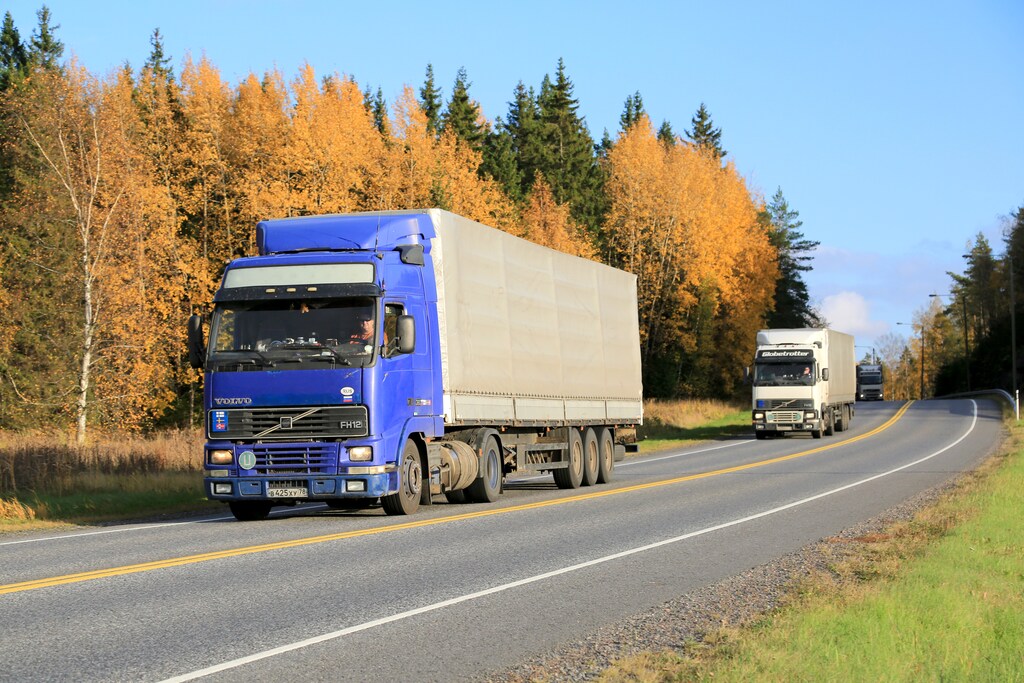
Trucks are responsible for about 10% of global CO₂ emissions, so decarbonizing heavy-duty transport is crucial to achieving net zero.
While progress has been made in electrifying smaller commercial vehicles, medium—and heavy-duty transport still faces challenges that can only be overcome through cross-sector efforts and innovative solutions.
The transition requires substantial investments and supportive regulation that recognizes existing technical limitations and potentials and contributes to solutions without dogmatism.
The global climate crisis is escalating political and societal pressure on companies to operate more sustainably. Customers and investors are increasingly demanding green solutions.
Given that trucks are responsible for approximately 10% of global CO₂ emissions, decarbonizing heavy-duty transport is crucial in the fight against climate change. The logistics industry has recognized this and is driving the sector's transformation.
While significant progress has been made in electrifying smaller commercial vehicles, medium—and heavy-duty transport still face substantial challenges that can only be overcome through cross-sector efforts and innovative solutions. Political willingness to adopt pragmatic approaches must increase to reduce emissions in road freight transport promptly.
Challenges in electrifying freight transport
The shift to zero-emission propulsion in medium and heavy-duty transport is inevitable in the long term. It will take another five to ten years, however, before electric trucks are significantly represented in this segment. The major hurdle is the severely limited grid capacity. Worldwide, grid capacities are massively under-dimensioned and do not meet the needs of larger truck fleets. In many places, fluctuating grid capacities make operating electrically powered small commercial vehicles a significant challenge. Although expanding capacity is a high political priority, it is progressing too slowly, hindering the rapid transition to electric vehicles.
Another issue is the availability of electricity, particularly 'green' electricity, which is insufficient for long-term transformation and remains expensive, driving up the operating costs of electric trucks and small commercial vehicles. Equally significant is the charging infrastructure. There is a lack of sufficient charging stations and the existing infrastructure is often unreliable. Also, integrating charging times for electric trucks into logistics processes presents a significant challenge, as the required charging durations usually exceed the legally mandated driver breaks. For instance, a 1.5-hour charging period does not align with the standard 45-minute break intervals of drivers. To compensate for the resulting operational uncertainties, electric trucks need to be equipped with larger batteries, which increases their empty weight and brings efficiency and cost disadvantages in operation.
These challenges are relevant for all DHL divisions, but especially for the Post & Parcel (P&P) division, which operates a fleet of company-owned and subcontractor vehicles primarily used for regional and long-haul operations. Overcoming these obstacles and successfully transitioning to electric vehicles is crucial for achieving DHL's climate goals, especially in the P&P sector.
How is the World Economic Forum promoting sustainable and inclusive mobility systems?
The World Economic Forum’s Platform for Shaping the Future of Mobility works across four industries: aerospace and drones; automotive and new mobility; aviation travel and tourism; and supply chain and transport. It aims to ensure that the future of mobility is safe, clean, and inclusive.
Through the Clean Skies for Tomorrow Coalition, more than 100 companies are working together to power global aviation with 10% sustainable aviation fuel by 2030.
In collaboration with UNICEF, the Forum developed a charter with leading shipping, airlines and logistics to support COVAX in delivering more than 1 billion COVID-19 vaccines to vulnerable communities worldwide.
The Road Freight Zero Project and P4G-Getting to Zero Coalition have led to outcomes demonstrating the rationale, costs and opportunities for accelerating the transition to zero emission freight.
The Medicine from the Sky initiative is using drones to deliver vaccines and medicine to remote areas in India, completing over 300 successful trials.
The Forum’s Target True Zero initiative is working to accelerate the deployment and scaling of zero emission aviation, leveraging electric and hydrogen flight technologies.
In collaboration with the City of Los Angeles, Federal Aviation Administration, and NASA, the Forum developed the Principles of the Urban Sky to help adopt Urban Air Mobility in cities worldwide.
The Forum led the development of the Space Sustainability Rating to incentivize and promote a more safe and sustainable approach to space mission management and debris mitigation in orbit.
The Circular Cars Initiative is informing the automotive circularity policy agenda, following the endorsement from European Commission and Zero Emission Vehicle Transition Council countries, and is now invited to support China’s policy roadmap.
The Moving India network is working with policymakers to advance electric vehicle manufacturing policies, ignite adoption of zero emission road freight vehicles, and finance the transition.
The Urban Mobility Scorecards initiative – led by the Forum’s Global New Mobility Coalition – is bringing together mobility operators and cities to benchmark the transition to sustainable urban mobility systems.
Contact us for more information on how to get involved.
Innovation and investment as solutions
Innovative solutions and substantial investments are necessary to successfully advance heavy-duty transport's electrification. The urgently needed expansion of the electricity grid and the charging infrastructure must be accelerated. Political initiatives like the Alternative Fuel Infrastructure Regulation (AFIR) in the EU are crucial but require swift implementation in individual countries. Also, peak loads and redundancies must be planned during the initial planning phase. This is the only way to avoid bottlenecks during high-demand periods and ensure the system's resilience. A sensible mix of public, semi-public and private charging options is also necessary to meet the differing requirements of freight transport compared to, for instance, delivery services.
Expanding grid capacity and securing green energy sources are critical. Innovative solutions, such as time-based electricity pricing or technical options that offer more flexibility in charging, are needed to address the challenges of electricity supply and demand. In the future, access to affordable hydrogen will also play an important role.
Additionally, it is worth exploring the implementation of battery-swapping systems, as seen in China, where such systems are well-developed. Companies there enable quick battery exchanges in minutes, significantly reducing downtime and increasing efficiency. The Chinese government supports this with subsidies and policies. In contrast, Europe has not widely adopted these systems due to high infrastructure costs, lack of standardization and lower market demand. However, as electric mobility grows, battery swapping could gain traction in Europe with potential support from standardized batteries and government incentives, enhancing the efficiency and feasibility of electric truck operations in the region.

Accepting transitional solutions
Given the challenges and solutions outlined above, transitioning to zero-emission propulsion in freight transport will take time. However, there are already ways to reduce emissions today.
In addition to transitional technologies, like biogas, advanced biodiesel (HVO), and grey and blue hydrogen, battery-electric trucks with range extenders can make a significant contribution. These trucks are primarily electric but have a diesel-electric generator to supplement the battery pack. This technology allows the truck to operate mainly as an electric vehicle while reducing dependence on charging infrastructure, thus increasing planning reliability and operational utility.
Range extender trucks ensure that required routes can be fully serviced even under challenging conditions, such as winter. According to a technical evaluation by Scania, the vehicle producer, they can produce about 80% less CO₂ emissions than conventional diesel trucks, even when using fossil fuel diesel. However, these transitional solutions have received little political recognition. The lack of incentives, such as exemptions from truck tolls, makes these trucks currently uneconomical, leading to low demand and limited market availability. Despite their potential for significant CO₂ savings and contribution to climate-neutral logistics, the lack of political and regulatory support means this opportunity is being missed.
Path forward
The electrification of heavy-duty transport is a complex but necessary task to achieve climate goals and maintain a livable planet for future generations. Rather than isolated solutions, a holistic international approach is required to electrify the trucking industry. While battery-swapping systems in China have shown promise by reducing downtime and increasing efficiency, Europe's focus on fast-charging stations highlights the need for a unified strategy.
A comprehensive concept should include integrated infrastructure, standardization, government support and industry collaboration. The transition requires substantial investments and, above all, supportive regulation that recognizes existing technical limitations and potentials and contributes to solutions without dogmatism. Heavy-duty transport can soon contribute to climate protection if we can overcome these challenges together.