The energy transition is continuing around the world, but new analysis shows that it's now being shaped by national calculations around energy security, affordability and competitiveness.
The 2015 Paris Agreement represents a moment in time that now feels very remote. When the treaty was signed, UN Secretary-General Ban Ki-moon held his colleagues' hands in the air to celebrate a victory in multilateralism. Superpowers, Pacific island nations, oil producers and energy importers all agreed to take steps to curb global warming. In subsequent years, the Paris Agreement became the dominant narrative shaping energy policy, at least in the West.
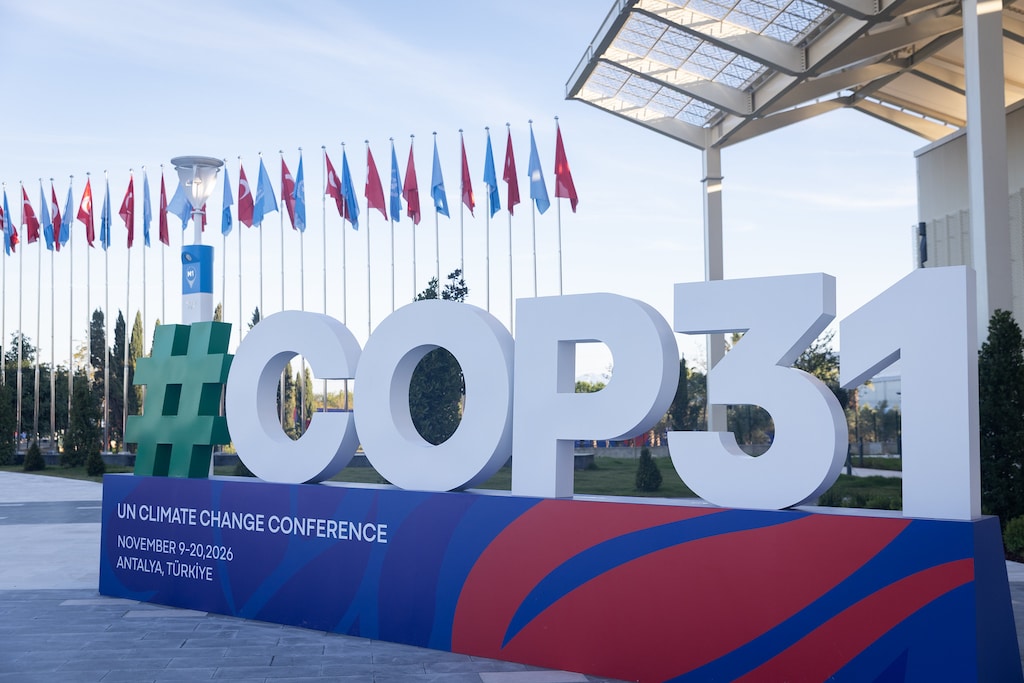
The collapse of the talks at COP 31 in November 2026 demonstrates how the ambition and idealism of the Paris Agreement have now given way to pragmatism, and sometimes cynicism. It is more difficult for climate advocates to get their voices heard in conversations around energy. The Strait of Hormuz crisis has also hardened countries’ focus on energy security.
This environment is reflected in DNV’s latest Energy Transition Outlook. But while the report demonstrates how far priorities have shifted, the model results are surprisingly similar to previous years because energy security and sustainability often pull in the same direction.
As the following five charts illustrate, the energy transition is still happening, but it is now being shaped by new, nation-specific drivers rather than a single global climate narrative.
Not even halfway to net zero
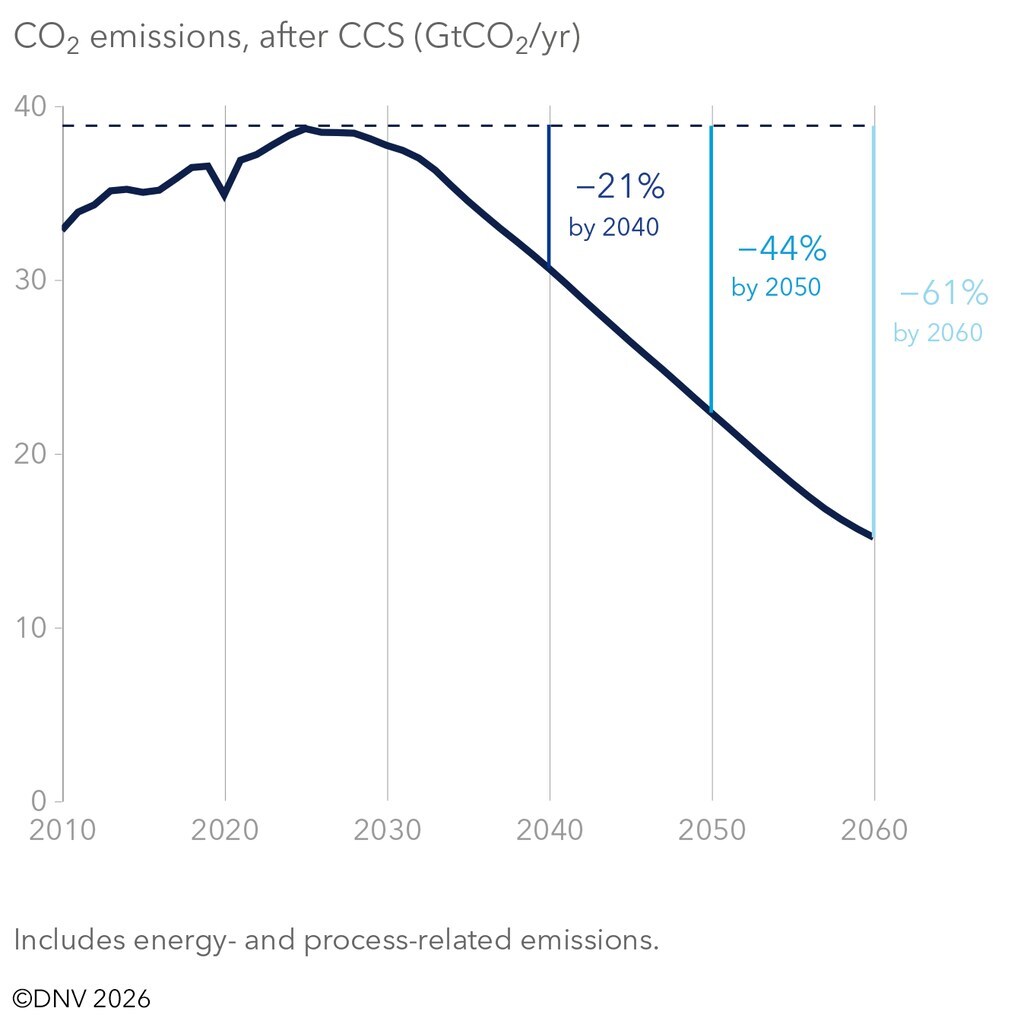
Whether counting electric cars in a traffic jam or wind turbines from the window seat of a plane, it is clear that a historically significant energy transition is underway. It is why DNV believes emissions have peaked within the past 24 months. That transition is only happening fast enough to bring us to the margins of the Paris Agreement, however.
DNV’s latest forecast predicts the planet will warm by 2.3 degrees Celsius and emissions will have fallen by 44% in 2050. This is nowhere near the net-zero target required to limit warming to the most ambitious climate goals. More worryingly, new global warming records increasingly indicate that this climate sensitivity is on the low side and that there is a heightened risk of greater warming.
Limiting global warming to 1.5°C is now no longer possible. The COP process, once seen as the best path to creating a unified climate goal, has been undermined. Global leadership on this matter is sorely missing.
Energy security is splitting the transition
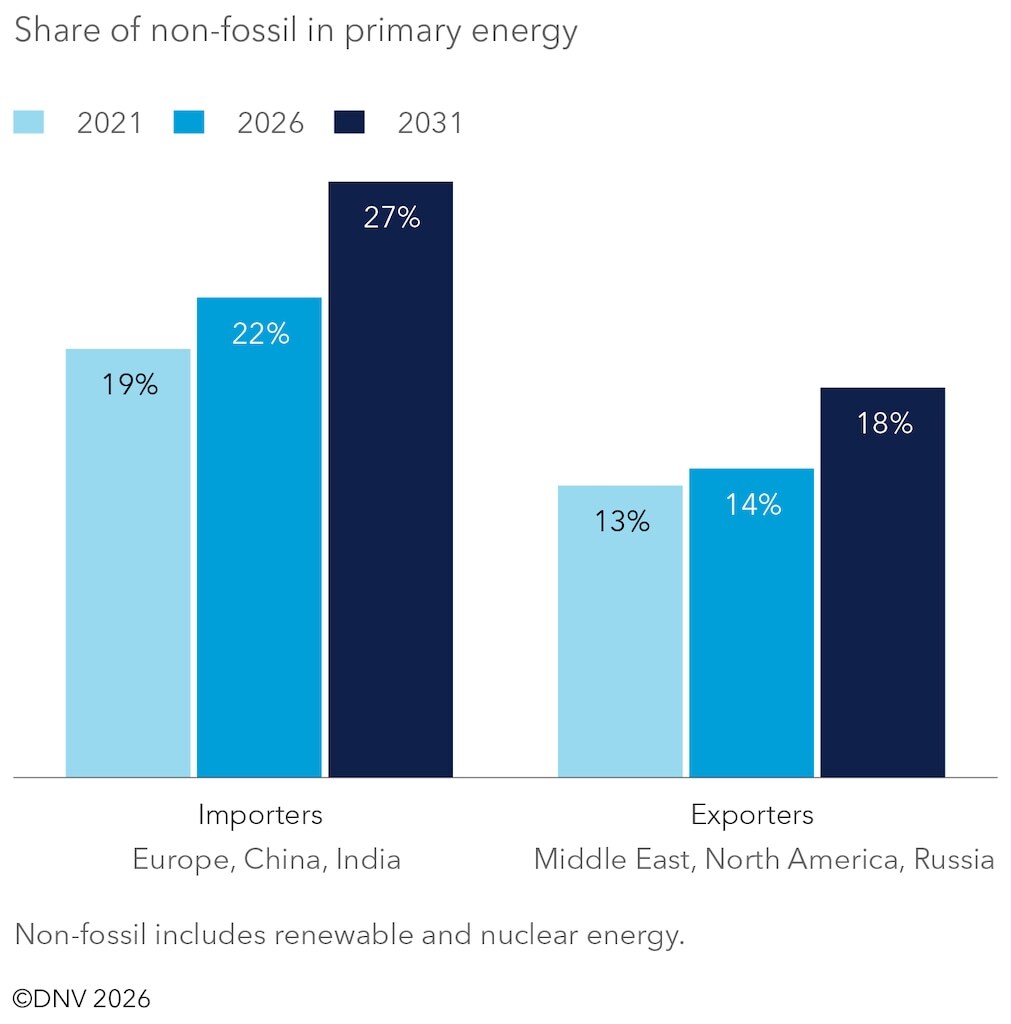
The transition is not moving at one global pace. Energy-importing regions are accelerating the shift towards domestic renewables, nuclear power and efficiency to reduce their exposure to volatile fuel markets. Exporting regions, in contrast, are responding to disrupted Middle Eastern supply by increasing oil and gas production and protecting the industries built around them.
The difference is already visible. Over the past five years, the non-fossil share of primary energy increased by 2.2 percentage points across Europe, China and India, compared with only 0.7 percentage points across the Middle East, North America and Russia. Energy security is not slowing the transition overall, but it is redrawing its map.
Supply shocks are accelerating oil’s decline
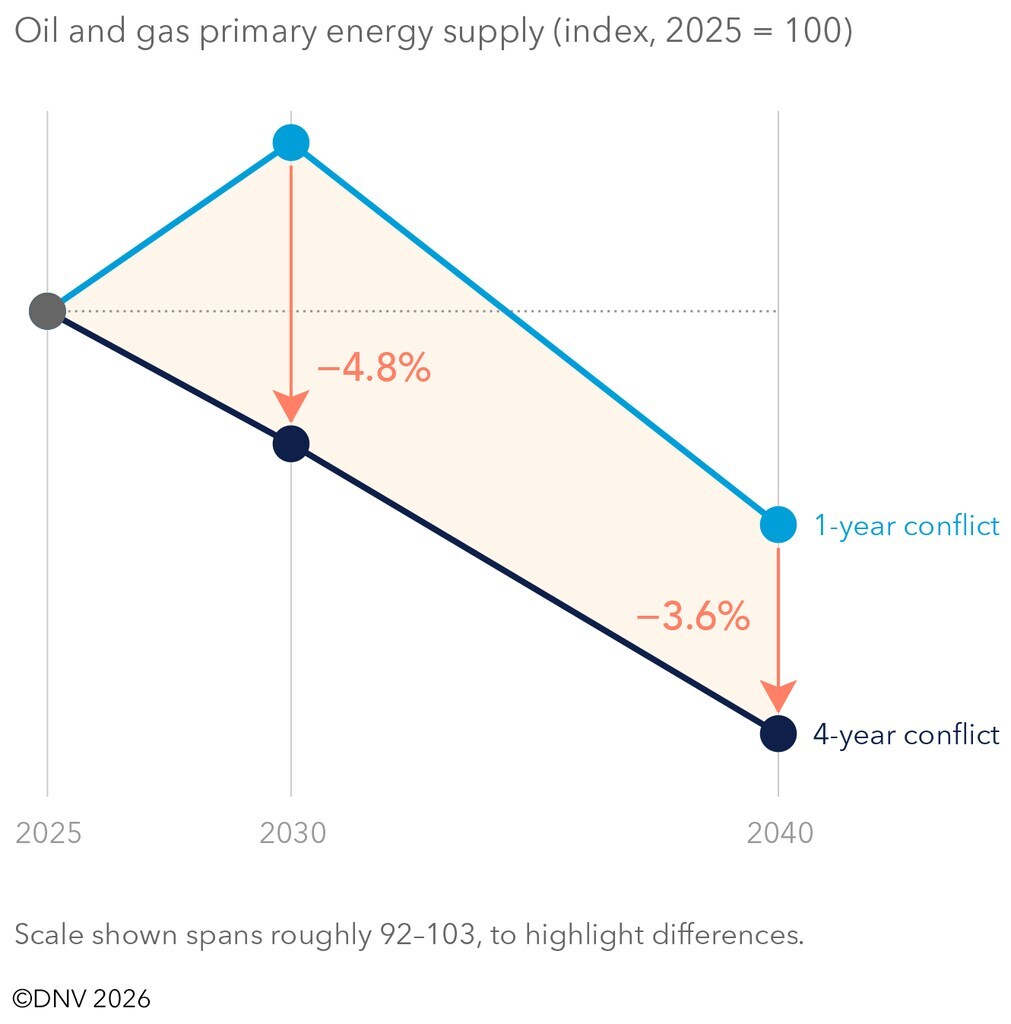
The recent disruption around the Strait of Hormuz has exposed the vulnerability of oil and gas trading. Shortages and higher prices initially reduce consumption but, more importantly, they trigger different investment decisions. A vehicle replaced by an electric model, a boiler converted or an efficiency standard introduced is unlikely to be reversed when prices fall.
DNV’s main forecast assumes the crisis normalizes after one year. A sensitivity study in which it lasts four years shows a deeper and more permanent impact, however. While the crisis persists, global oil and gas demand is 4% to 6% lower, but after the crisis is over, demand still remains 2% to 5% below the main forecast for the rest of the forecast period. A medium-term shock can leave a long tail of demand destruction.
Electricity as the central energy carrier
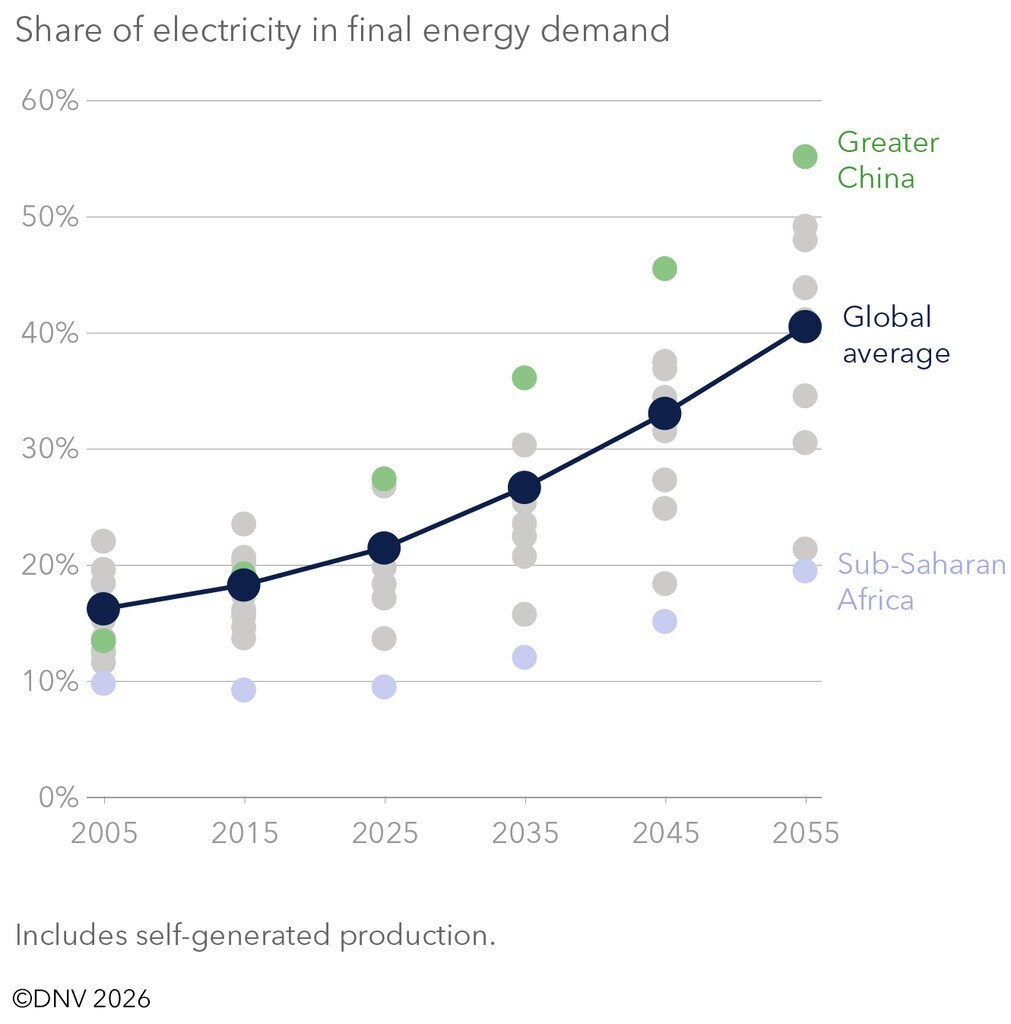
Electricity accounted for 16% of global final energy demand in 2005. Today it is 21%, and by 2045 DNV forecasts it will reach 33%. The rate of electrification over the next 20 years will be more than double that of the previous 20 years.
Importing regions are leading in electrification, but the logic extends well beyond fossil-fuel dependence. Electric vehicles and heat pumps use energy far more efficiently than combustion engines and boilers. Solar, wind and batteries are also becoming increasingly competitive.
China is setting the pace, with electricity already supplying 27% of its final energy demand and is forecast to reach 50% by 2050. Electrification is becoming not only a decarbonization strategy, but an economic and security strategy.
The energy technology gap is widening
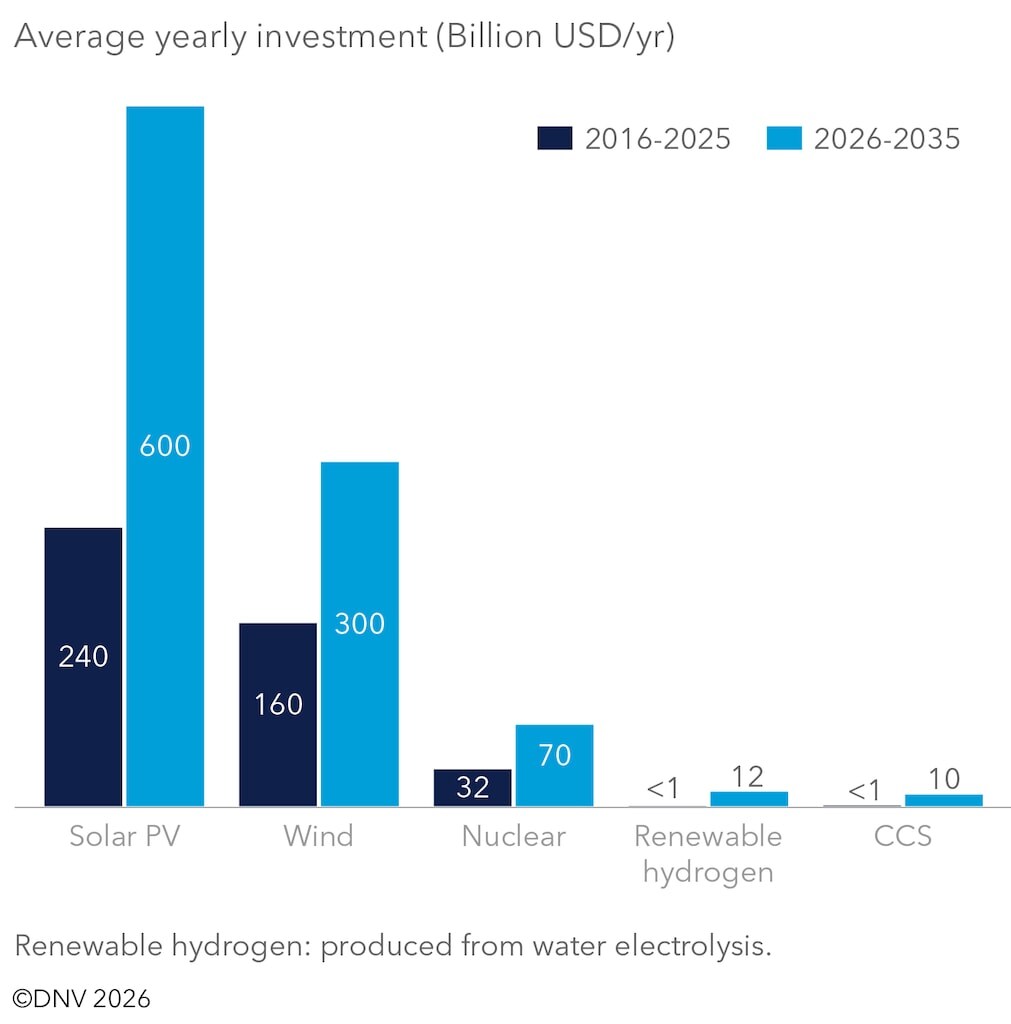
Some clean energy technologies are already mature and competitive. Solar PV and onshore wind, for example, are displacing fossil generation in a growing number of countries, while battery deployment continues to outperform mainstream forecasts. Investment follows these improving economics.
The outlook is harder for technologies that remain dependent on policy support. Compared with last year’s forecast, DNV’s estimate for hydrogen deployment in 2060 is 29% lower and the estimate for carbon capture and storage is 15% lower. Both will grow, but costs and concerns about industrial competitiveness are delaying scale.
Nuclear power is the exception. Despite high costs and supply-chain risks, governments and private investors value its contribution to energy security and DNV forecasts capacity growing by 30% over the next decade and 170% by 2060.
New energy transition drivers
These five charts tell a consistent story: The energy transition is continuing, but it is being shaped less by a single global climate narrative and more by national calculations of security, affordability and competitiveness.
The energy technologies that align with all three of these elements will develop the fastest. Those that rely on climate policy alone face a much steeper climb.