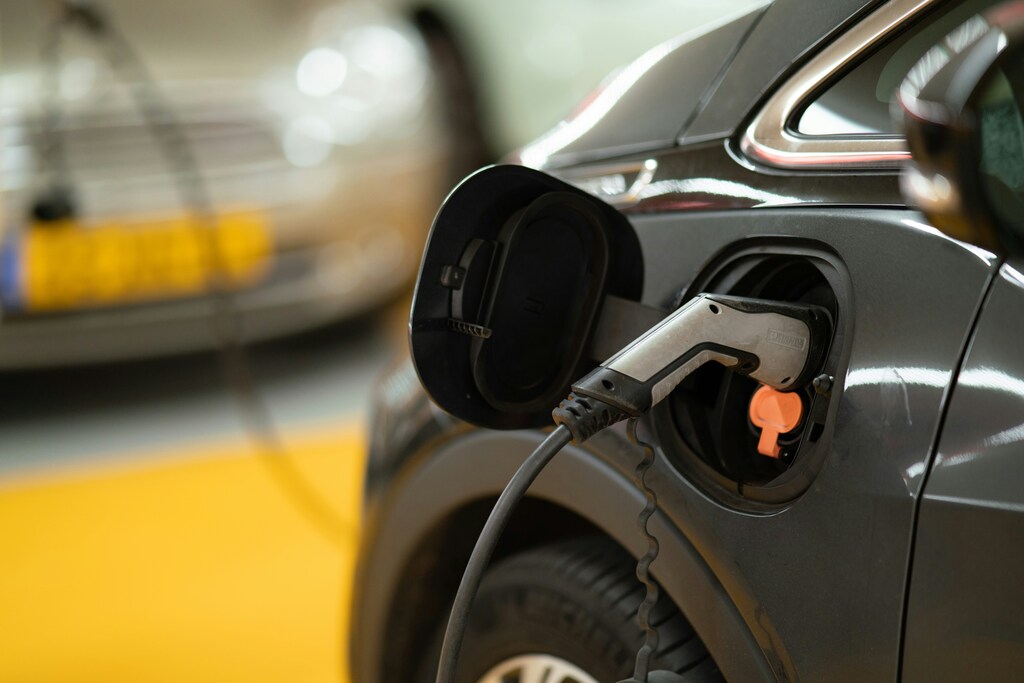
EV adoption is rapidly scaling worldwide, but this expansion needs to be accompanied by infrastructure that is available in the right places and suited to different patterns of use.
The growth of the electric vehicle (EV) market is accelerating globally. However, the expansion of electrified transport is increasingly dependent on infrastructure readiness.
The United States illustrates the scale of the challenge. According to the International Energy Agency (IEA), there were approximately 32 electric light-duty vehicles for every public charging point in 2024. Under the IEA’s stated-policies scenario, the country’s public charging network would need to grow from nearly 200,000 points in 2024 to more than 500,000 by 2030, requiring the installation of roughly 58,000 new points each year.
Yet expanding the network will not be equally straightforward everywhere. Dense cities face limited curb space, complex permitting and expensive grid connections, while rural areas may face lower utilization rates, longer distances and weaker investment incentives. Conventional charging models might therefore lack sufficient economic and physical adaptability to suit every scenario.
Access to EV charging remains a top barrier to adoption. As EV adoption expands beyond households with access to private parking and home charging, the challenge will not only be to build more infrastructure, but to ensure that it is available in the right places and suited to different patterns of use.
This raises an important question: how can innovative approaches help close the gaps in public EV charging and make electric mobility accessible to more people?
The access gap: EV charging for people without private parking
For drivers with a garage or driveway, charging is as simple as plugging in overnight. For many others, it is not.
Research by Energy Innovation finds that up to 94% of US EV drivers in detached single-family homes have access to home charging, compared with about half of those living in apartments. Nearly one-third of US households live in multifamily housing.
A 2022 survey also found that Black and Latino drivers are more likely to rely on public or on-street parking, making accessible public charging a question of fairness as well as convenience.

Charging therefore needs to fit into daily routines, where cars already park overnight. About half of New York City residents park on the street, and the city has set a goal of 40,000 public Level 2 chargers and 6,000 fast chargers by 2030, including 10,000 at the curb. Yet curb space is scarce, permitting is slow and new grid connections are costly.
One response is to draw on spare electrical capacity in nearby buildings instead of building a new grid connection, with property owners sharing in the revenue. The approach was first deployed by It's Electric in Boston, where the mayor set a goal of a public charger within a five-minute walk of every resident, and has since been taken up in more than 10 additional US cities.
Viability matters as much as technology: cities and property owners are more likely to say yes when they take on little upfront cost, while operators need enough regular users to cover costs.
The power gap: fast EV charging where the grid is constrained
For long trips, ride-hail drivers and delivery fleets, fast charging remains essential. However, this requires substantial power capacity, particularly at locations serving many vehicles or supporting long-distance travel.
Grids often need to be sized for peak demand even though it is only needed briefly. Upgrades add cost and delay, putting rural corridors, older urban districts and smaller commercial sites out of reach.
Battery-integrated chargers take a different approach; rather than upgrade a site’s grid to match the charger’s power levels, battery-integrated solutions leverage the site’s spare grid capacity by integrating energy storage directly inside the charger to make up the difference.
The battery fills slowly from a modest grid connection, then releases energy quickly when a car plugs in. This is what the utility industry calls a non-wires alternative, which defers the need for costly distribution grid upgrades, facilitating deployment and reducing lead times.
US National Renewable Energy Laboratory analysis shows that well-sized systems can cut the grid capacity a fast-charging station needs by roughly 50–80%, with no difference for drivers. Operational and economical reliability within the local grid constraints is key.
By integrating intelligent demand management software, battery-integrated charging can also lower electricity consumption costs, provide resilient backup power and monetize grid services alongside its charging operations.
In Detroit, the City's Office of Mobility Innovation deployed an ElectricFish charger at Eastern Market, able to deliver up to 400 kilowatts while drawing about 30 kilowatts from the grid. The model suits places where drivers already stop for brief periods, such as fuel stations, convenience stores, fleet depots and rural highway stops.
Rethinking what public charging can look like
These examples point to a broader lesson: there is no single best charging model. Future networks will likely combine different technologies under different ownership models based on location, user dynamics and local constraints.
Three principles can guide this:
Start with the use case: Speed, location and ownership should fit how people use a place. No technology is an end in itself.
Make charging dependable and easy: Reliability, transparent pricing and the ability to use any network matter as much as raw speed.
Plan charging alongside everything else: Charging should be built into urban, transport and electricity-system planning, so that cities, utilities and operators work from the same map, including where the grid has room to spare.
Policy-makers can support all three through clear guidelines, practical roadmaps, streamlined permitting and better coordination between the authorities that manage streets and those that manage the grid. Cities can also test ideas at a small scale first, as San Francisco and Detroit have done with It's Electric curbside chargers. Without these steps, even well-designed solutions can stall before they reach the street.
Closing the EV charging gap will take a mix of approaches, each matched to the community it serves. Done well, charging can create value for drivers, cities, property owners, utilities and operators alike, and bring electric mobility to far more people.