Space food: How can we advance existing technologies?
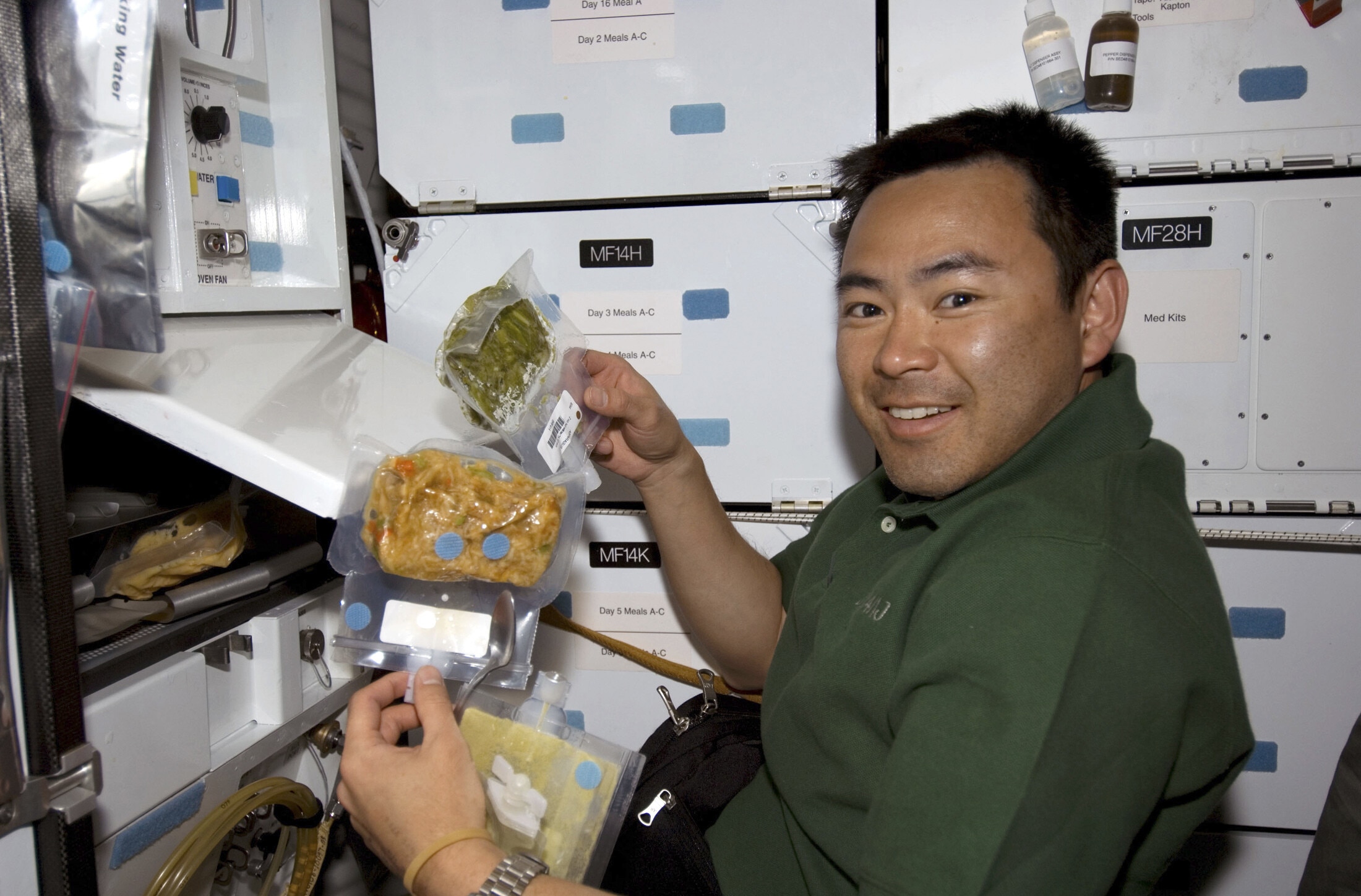
Space food remains one of the most critical constraints on long flights to the Moon. Image: REUTERS/NASA
- Space and Moon missions have become more regular, making the need for infrastructure and human-friendly systems more pressing.
- The availability of food, in particular, is a long-term constraint on space missions, but research has shown that it is possible to engineer hardier plant varieties that survive in the challenging conditions of space.
- Integrating technologies for advanced space food systems requires a more synthesised approach, incorporating actors across agriculture, food processing, biotechnology and regulatory systems to help shape research.
Humanity’s ambitions are extending beyond space exploration toward a sustained presence in space. In turn, human spaceflight is gaining momentum, driven by space agencies, academia and commercial actors, a trend known as “the spaceflight boom” of the 21st century.
Missions to the Moon and eventually, Mars are no longer symbolic milestones but operational programmes requiring ongoing infrastructure, logistics and human-system integration.
At its March 2026 “Ignition” event, NASA reinforced this transition by outlining a phased approach to lunar surface operations, prioritizing repeatability, infrastructure development and long-duration mission capability. This includes fewer isolated missions and a shift toward a sustained lunar cadence, with more frequent missions and eventually regular crewed landings.
In parallel, the China National Space Administration and Roscosmos are advancing the International Lunar Research Station. This shows that multiple global powers are pursuing their own long-term lunar strategies, rather than a single coalition, as has been the case.
The implication is that the Moon is now serving as a “gateway to deep space,” where spaceflight must operate reliably and sustainably.
Treat food in space as a system constraint
Food is a determining factor in a successful long-duration human spaceflight. Continued reliance on pre-packaged foods transported from Earth becomes increasingly restrictive as mission duration and distance increase. Resupply is costly, logistically fragile and constrained by launch reliability. At the same time, shelf-stable food systems degrade in nutritional quality, variety and sensory appeal.
Food is not only a matter of caloric intake; it directly affects crew health, cognitive performance, psychological stability and social cohesion. In isolated and extreme environments, these are primary operational factors. For sustained lunar presence and future Mars missions, the challenge is therefore to develop integrated food systems that are:
- Nutritionally complete over long durations.
- Psychologically acceptable.
- Operationally reliable under constrained conditions.
- Scalable across mission architectures.
Locally produced food, combined with selective resupply, is thus increasingly seen as a necessary evolution.
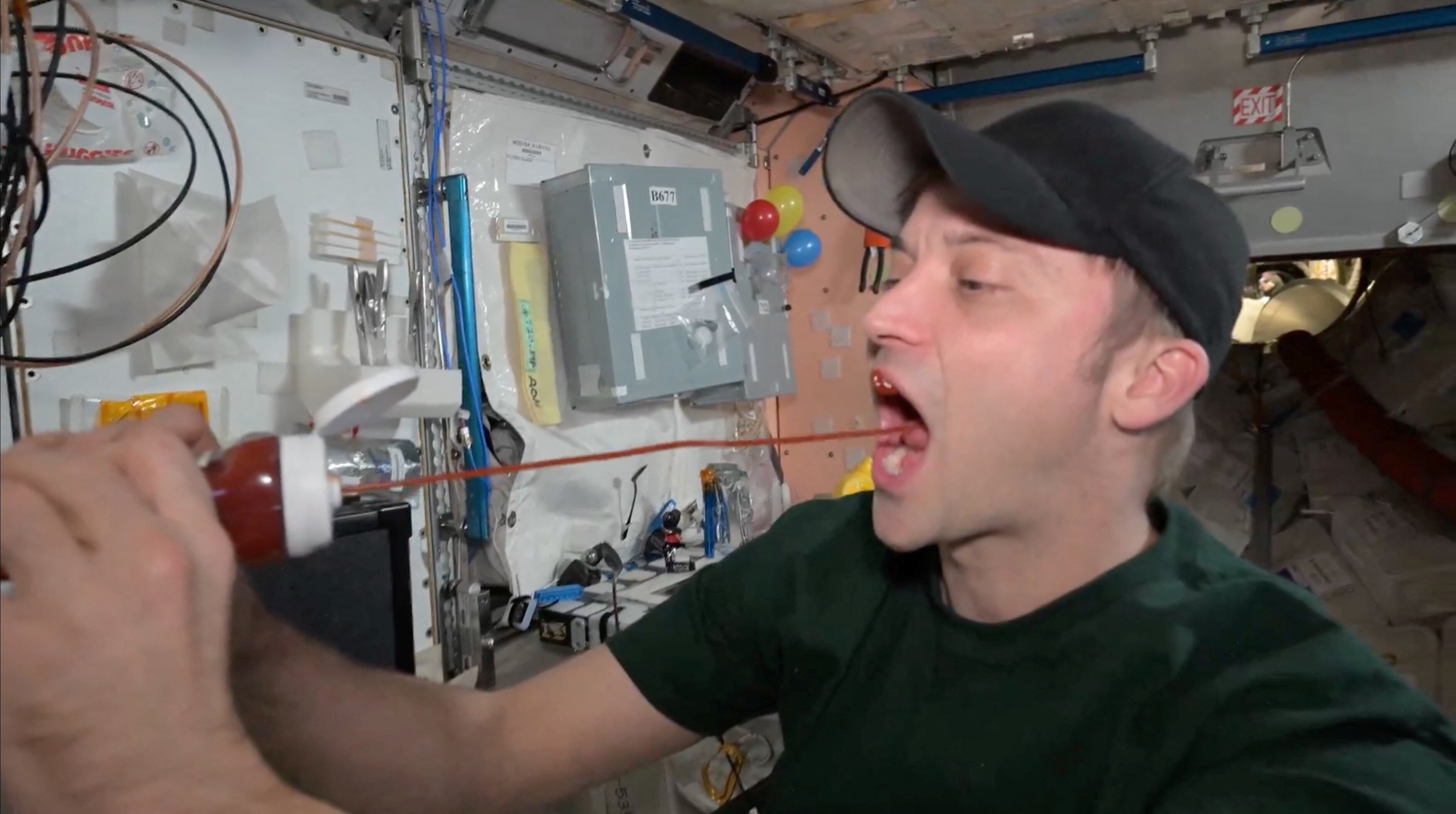
Beyond space: A 2-way innovation pathway
Simultaneously, space-based research is beginning to demonstrate terrestrial relevance. Experiments on plant growth in microgravity, followed by cultivation on Earth, suggest potential pathways for developing more resilient crops under stress conditions.
For example, grapevine samples exposed to microgravity aboard the International Space Station have shown altered responses to disease, pointing to the possibility of engineering hardier plant varieties.
These insights are directly relevant to terrestrial challenges such as:
- Agriculture in resource-constrained environments.
- Climate-driven crop stress.
- Soil degradation and desertification.
However, these findings remain operationally underdeveloped, with no clear pathway to deployment at scale.
Food production and distribution operate as complex socio-technical ecosystems. As well as by biology and engineering, they are shaped by infrastructure, regulation, markets, cultural practices and operational realities. Much of this expertise resides outside the space sector.
As a result, the relationship between space and Earth should be framed as a two-way innovation system in which space provides extreme test conditions, while terrestrial sectors provide the knowledge required to scale, regulate, and implement solutions.
Terrestrial actors across agriculture, food processing, biotechnology and regulatory systems must be engaged as core partners in shaping research agendas, defining use cases and building implementation pathways.
”Create a framework for integrating promising technologies
Despite growing activity, progress remains fragmented. Key enabling technologies are advancing but not yet integrated into viable systems. These include:
- Controlled environment agriculture under microgravity or partial gravity.
- Closed-loop life support systems integrating food production, water recycling and waste processing.
- Cellular agriculture and alternative protein production adapted for space conditions.
- Advanced food preservation and on-demand manufacturing (e.g. bioreactors, 3D food printing).
The challenge is therefore system integration, reliability and operational validation.
Advancing the development of space food systems requires an operational framework that distinguishes:
- Where terrestrial and space needs genuinely overlap.
- Where adaptation is required.
- Where translation is unlikely.
Such a framework would enable cross-sector engagement necessary for more resilient and sustainable spaceflight.
Reform policy and forge partnerships to shape research
Addressing this gap requires deliberate coordination. Terrestrial actors across agriculture, food processing, biotechnology, and regulatory systems must be engaged as core partners in shaping research agendas, defining use cases, and building implementation pathways.
Policy plays a central role in enabling this shift. Today, companies conducting in-space research face multiple regulatory uncertainties, including:
- Limited early engagement with regulators.
- Lack of clear frameworks for validating space-derived data.
- Absence of space-specific manufacturing and comparability standards.
- Fragmented interfaces between health, food, and space regulatory bodies.
Emerging efforts are addressing this. In the United Kingdom, collaboration between the Medicines and Healthcare products Regulatory Agency, the UK Space Agency and other stakeholders is developing regulatory pathways for space-manufactured biologics.
Such models illustrate how regulatory innovation can reduce uncertainty, enable commercialization and create credible pathways from experimentation to deployment.
Treat space as a strategic sector
For space food systems to evolve into an operational capability, it will require deliberate coordination and must remain confined to fragmented experiments with limited real-world impact. The strategic value lies in treating space as a high-constraint development environment, where solutions are designed for reliability, integration and deployment from the outset.
Realizing this requires moving beyond isolated research efforts and toward:
- Joint agendas across space and terrestrial sectors.
- Clear pathways from technology development to deployment.
- Regulatory frameworks that enable, rather than delay, commercialization.
- Economic models that align incentives across stakeholders.
The opportunity is not only to support human life beyond Earth but also to strengthen food systems on Earth. One focus of the Centre for Space Futures’ cross-sector initiative is to build bridges between the space and terrestrial sectors to inform the life sciences.
The question has shifted from the technical feasibility of space food systems to whether they will be developed as an integrated, cross-sector priority or remain an underutilized niche at the margins of both space and terrestrial innovation.
Don't miss any update on this topic
Create a free account and access your personalized content collection with our latest publications and analyses.
License and Republishing
World Economic Forum articles may be republished in accordance with the Creative Commons Attribution-NonCommercial-NoDerivatives 4.0 International Public License, and in accordance with our Terms of Use.
The views expressed in this article are those of the author alone and not the World Economic Forum.
Stay up to date:
Space
Related topics:


Forum Stories newsletter
Bringing you weekly curated insights and analysis on the global issues that matter.