Opinion
The crop science myths that are threatening Africa’s food security
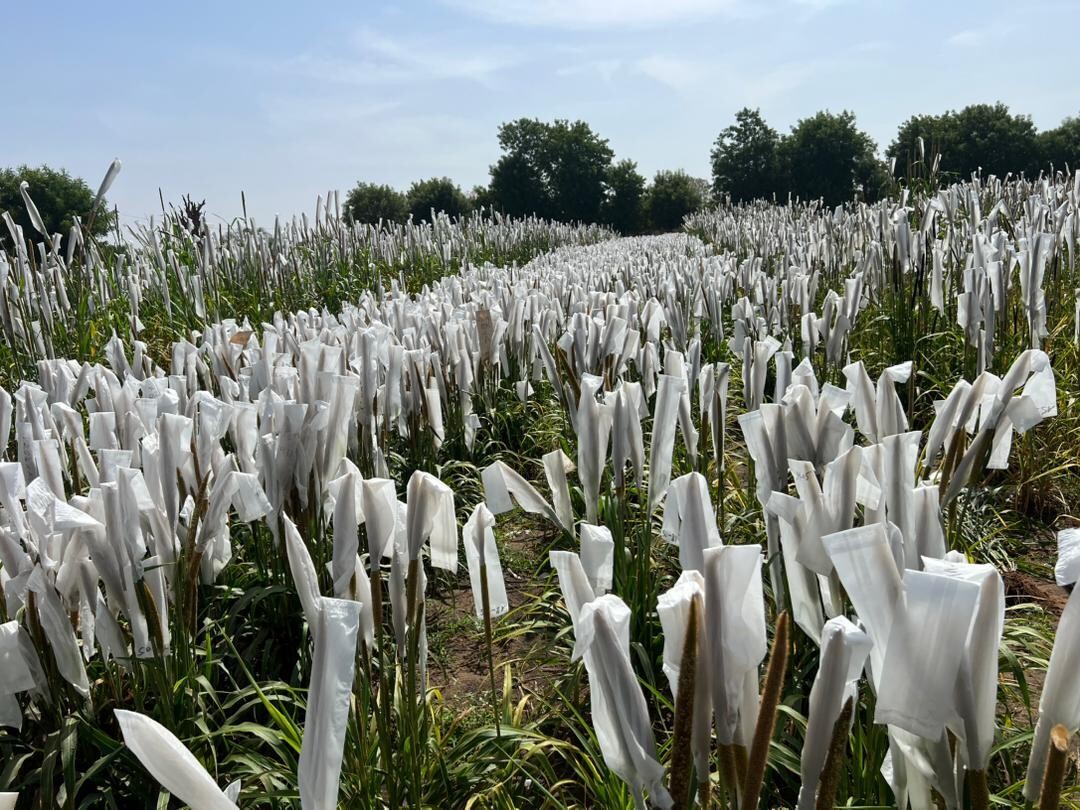
Misinformation about seed varieties is particularly critical for crops valued for their resilience, such as sorghum. Image: Dev-Afrique/Daouda Seck
- Efforts to build African food resilience are being hindered by misinformation and confusion over improved seed varieties.
- Improved seeds and hybrid seeds are frequently conflated by farmers with genetically modified organisms.
- Agriculture development is not simply about upgrading seed systems, but also clear communication with farmers and consumers.
Across Africa, conversations about food are becoming increasingly intertwined with conversations about science as stakeholders across the value chain work to eradicate hunger, malnutrition and food inequality. Farmers are being encouraged to adopt improved seed varieties to cope with climate change, declining soil fertility, emerging pests and diseases and shifting market demands, while governments and development partners continue to invest heavily in agricultural research.
These interventions form a necessary part of securing a sustainable food future, as Africa’s population is projected to reach 2.5 billion by 2050, according to the United Nations Department of Economic and Social Affairs. The projected population surge also means that food demand is expected to increase, driven by rapid urbanization.
With this growth comes the question of the continent’s readiness to build resilient food systems capable of feeding a rapidly growing population under increasingly unpredictable climatic conditions. Thus, informed public conversations about scientific agricultural innovation have never been more important. However, amid these discussions, one challenge continues to surface: misunderstanding.
During recent field engagements across Nigeria and Senegal as part of Dev-Afrique's work assessing sorghum and millet systems, a striking trend surfaced across interviews with stakeholders. Farmers, agro-dealers and community members often used the terms improved seed, hybrid seed and genetically modified organism (GMO) interchangeably. To many, seeds developed by scientists or sold through formal seed systems were simply regarded as a GMO.
This confusion is consequential, as it shapes perception of risk and significantly influences adoption of improved varieties and ultimately affects the adoption of innovations built to strengthen agriculture productivity. What became evident during these visits was the uncertainty around what improved varieties, hybrids and GMOs are, and what they represent. Clarifying these distinctions then provides a foundation for understanding the opportunities and limitations associated with each innovation.
The three types of seed
Perhaps the most important point is this: Not every improved seed is a GMO, and not every hybrid is genetically modified.
An improved variety is typically developed through conventional plant breeding. Plant breeders identify plants with desirable characteristics – such as drought tolerance, disease resistance, early maturity or higher yields – and carefully cross them over multiple generations until those traits become stable. While today's breeding methods are more sophisticated than those used decades ago, the underlying principle remains the same: selecting the best plants and improving them over time.
A hybrid variety is a type of improved variety developed by crossing two carefully selected parent lines to produce first-generation (F1) seed that combines the desirable traits of both parents.
GMOs are different. GMOs are developed using modern biotechnology to modify an organism's genetic material in ways that cannot typically be achieved through conventional breeding alone. Depending on the crop and the objective, scientists may introduce, remove or alter specific genes to achieve characteristics, such as insect resistance or herbicide tolerance. The development, approval and cultivation of GM crops are subject to biosafety regulations that vary across countries.
These are three distinct approaches to crop improvement, yet they are often treated as though they are one and the same.
Why the confusion matters
When every improved variety is automatically labelled as a GMO, farmers may reject seed varieties that could help them withstand drought, reduce crop losses or increase household incomes, simply because of misunderstanding.
Extension workers (trained agricultural advisors) spend valuable time correcting misconceptions rather than providing practical agronomic advice. Seed companies struggle to build trust in genuinely beneficial innovations. Researchers find that decades of investment in plant breeding do not always translate into widespread adoption. Policy-makers, meanwhile, are forced to navigate public debates that are often shaped more by fear than by facts. Ultimately, misinformation becomes another barrier to agricultural productivity.
This is particularly important for crops such as sorghum and millet, which are increasingly recognized for their climate resilience and nutritional value. Across much of Africa, breeding programmes have spent years developing improved varieties capable of helping farmers cope with changing weather patterns while increasing productivity. Many of these varieties are products of conventional breeding – not genetic modification – yet they are frequently misunderstood.
Why has this happened?
The confusion is perhaps not surprising. Scientific terminology rarely reaches farming communities in accessible language. Media coverage often focuses on GMOs while overlooking the broader field of plant breeding. Social media has amplified both accurate information and misinformation at unprecedented speed. In many cases, the word "improved" simply becomes synonymous with "scientists changed it", without any further distinction.
Compounding this is the fact that conversations about agricultural technologies often become polarized. Discussions quickly shift from explaining what a technology is to debating whether it should be adopted. As a result, many people never receive a clear explanation of the science in the first place.
Better seeds require better conversations
A core lesson from our work in the sorghum and millet sector is not simply about seed systems, but also communication. Improving agricultural productivity is not simply about developing better technologies. It is equally about building public understanding and trust.
Farmers deserve transparent, evidence-based information about the varieties available to them – how they were developed, what benefits they offer, what limitations they may have, and what trade-offs exist. Consumers deserve clear communication that enables informed choices rather than decisions based on misinformation or fear. Extension services, researchers, governments, seed companies, universities and development organizations all have a role to play. Agricultural communication must be viewed as a core component of innovation itself.
Scientific advances cannot deliver impact if the people they are intended to benefit do not understand or trust them. If we want African agriculture to become more productive, resilient and food secure, we must move beyond investing in scientific research and invest on scientific literacy.
Before we ask farmers to adopt new technologies, or consumers to accept them, we owe them something fundamental: clear, honest and evidence-based conversations about what those technologies actually are. Only then can Africa move beyond the labels and have conversations that truly matter.
Don't miss any update on this topic
Create a free account and access your personalized content collection with our latest publications and analyses.
License and Republishing
World Economic Forum articles may be republished in accordance with the Creative Commons Attribution-NonCommercial-NoDerivatives 4.0 International Public License, and in accordance with our Terms of Use.
The views expressed in this article are those of the author alone and not the World Economic Forum.
Stay up to date:
Food Security
Related topics:


Forum Stories newsletter
Bringing you weekly curated insights and analysis on the global issues that matter.
More on Food, Water and Clean AirSee all

Briana Zhen and Maen Mahfoud
September 23, 2026


