One water cycle: Why connecting the ocean and freshwater will allow the economic benefits to flow
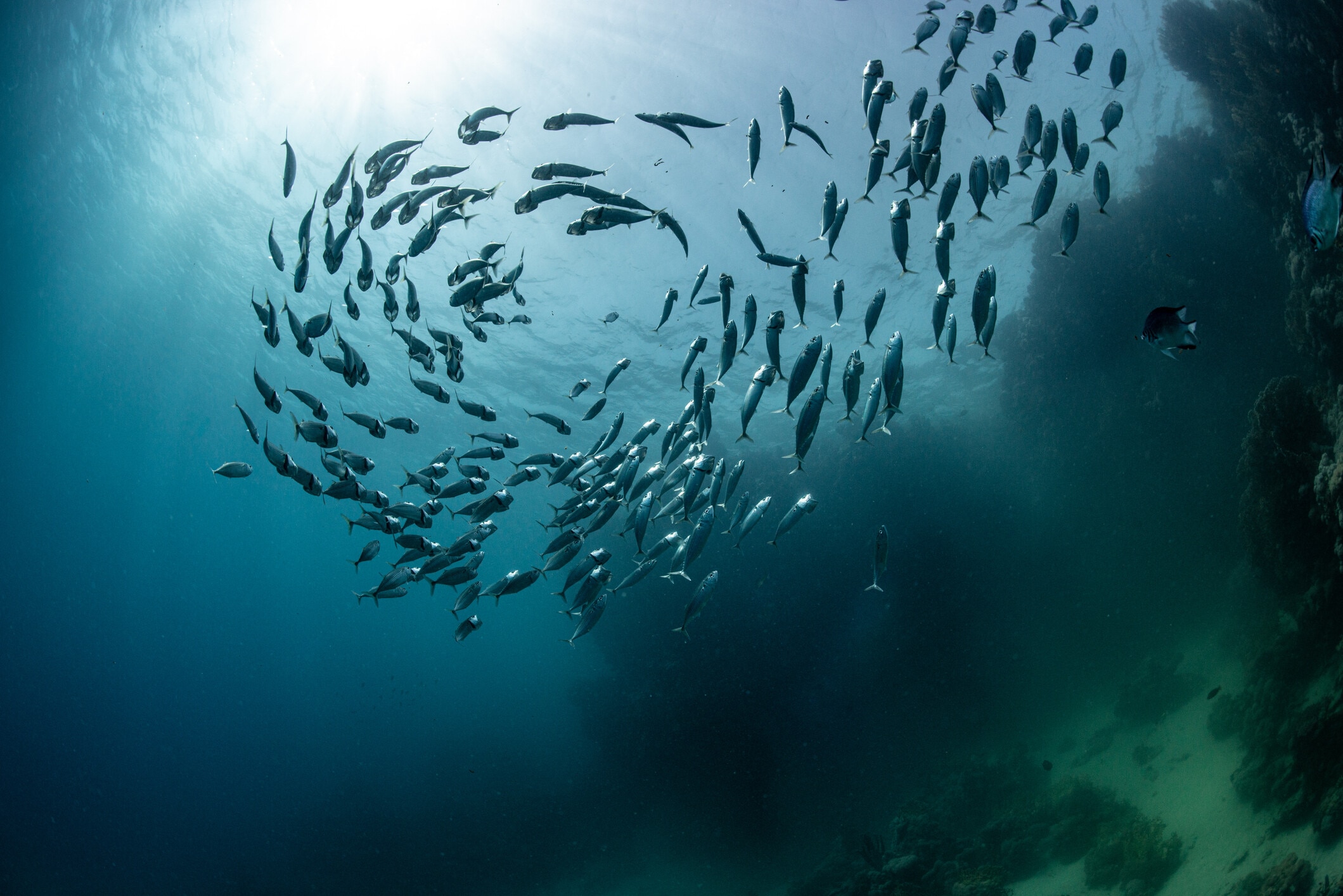
We interfere with the great hydrological cycle at our peril. Image: Getty Images/iStockphoto
Peter Thomson
United Nations Secretary-General's Special Envoy for the Ocean, United Nations- The ocean and freshwater are part of one interconnected hydrological cycle, but are often short-sightedly managed through separate policy and investment systems.
- While the ocean’s health declines as a result of anthropogenic activities, changes to the security of freshwater are already disrupting communities, economies and businesses.
- For more information, see the World Economic Forum's Year of Water campaign.
Life comes from water, the great planetary reservoir of which is the ocean. How and where our species has evolved and inhabited the planet has been dictated by the hydrological cycle, the so-called water cycle. We interfere with it, as we are now doing through pollution and anthropogenic global warming, at our peril.
Seawater and freshwater are in reality the same hydrological system obeying the ancient circularity of evaporation, transpiration, condensation, precipitation, infiltration and run-off. Sediment, nutrients and pollution flow down streams and rivers to coastal waters, where they shape fisheries and marine ecosystems. Conversely, changes in the ocean temperature and its currents create alterations in the atmosphere, thereby affecting rainfall and weather patterns on land.
We experience and depend on this interconnected system in our daily lives and economies, in everything from safe drinking water and sanitation to food security, energy systems, resilient cities, secure supply chains and healthy ecosystems. The economic stakes are also substantial. Freshwater’s estimated annual economic value alone is around $58 trillion – close to 60% of global gross domestic product. Water-dependent sectors, including agriculture, industry, energy and services, represent 80% of global trade in volume being transported by the ocean.
It is well-established now that there can be no healthy planet without a healthy ocean, and the same is true of the hydrological cycle. These trends should concern us: Climate change and harmful management practices are shifting the water cycle increasingly off balance. We are seeing some places experiencing too much water through extreme floods and accelerating sea-level rise, while others are facing too little water through increasingly intense droughts. Meanwhile, for many communities around the world, water is too polluted to use.
Water-related risks are becoming business risks. Scarcity, flooding, pollution and ecosystem decline damage communities and homes, but they also disrupt operations and supply chains, influence investment decisions and erode competitiveness. The estimated cost of neglecting water risks is $301 billion globally – while addressing them would cost less than one-fifth of that amount. Today, around 4 billion people experience severe water scarcity for at least part of the year.
From policy silos to shared resilience
Despite being inseparably linked by the hydrological cycle, ocean and water issues are too often thought of and governed as two separate regimes. As a result, climate, food, energy and biodiversity policies are too often developed with limited coordination between the ocean and freshwater systems. Apart from the short-sightedness of this siloed approach, the disconnect leaves countries and businesses poorly equipped to manage risks that cross administrative and sectoral boundaries.
Across their terrestrial land borders, 153 United Nations Member States share transboundary rivers, lakes and groundwater systems that are distinct from shared maritime boundaries. These waters account for around 60% of global freshwater flows and directly sustain more than 40% of the world’s population. Cooperation over shared water resources is therefore not only a matter of environmental stewardship; it is a foundation for peace, economic stability and resilience.
The same ethos applies to business. Water risk cannot be properly managed company by company when operations and supply chains depend on shared river basins, aquifers, coastlines and marine ecosystems. Basin-level cooperation is required to help companies share data, plan for future risks, strengthen supply chains and direct investment towards solutions that benefit communities and ecosystems.
These considerations point to multilateral cooperation having a crucial role to play, and we have several upcoming international conferences that offer opportunities to make progress. In December 2026, the UN Water Conference will be held in Abu Dhabi, followed by the UN Decade of Ocean Science Conference in Rio de Janeiro in April 2027, and then the fourth UN Ocean Conference in Busan, Korea, in June 2028.
These international gatherings provide spaces where governments, finance, scientists, civil society and business can better connect their concerns and commitments relating to freshwater and the ocean. They present opportunities to create better coordination between Sustainable Development Goal 6 on sustainable management of water and Sustainable Development Goal 14, with its goal of conserving and sustainably using the ocean’s resources. Skilful design and execution of the conferences will result in mutual benefit to both communities of interest.
It goes without saying that science and observation are central to this effort, with observation and forecasting of ocean conditions being as important to inland farmers as it is to fishers. Better-connected ocean, atmospheric and freshwater data can help governments and companies anticipate shocks, improve risk models, plan supply chains and make more informed investment decisions; thus, investment in ocean observation is a basic requirement of human security.
Integration is already delivering results
There is growing evidence that managing water as one system can deliver environmental and economic returns. Integrated sustainable aquaculture, combining the farming of appropriate fish species with the cultivation of shellfish and seaweed, can reduce coastal pollution while diversifying incomes. Water treatment, desalination, reuse and resource recovery are increasingly being brought together through circular approaches; in freshwater systems, water efficiency, ecosystem restoration, basin-level collaboration and reuse are creating resilience while reducing pressure on supplies.
Desalination is increasingly seen as an opportunity to address freshwater shortages, particularly in coastal areas. New techniques are being developed to overcome the high energy demands of desalination, and basing these techniques on renewable energy is a central requirement. Guided by scientific expertise, finding nature-positive solutions for the utilization of brine and other by-products of desalination is the other requirement.
These are not isolated environmental projects; they are investments in continuity, competitiveness and shared prosperity. In scaling these approaches, the private sector should be seen not simply as another stakeholder, but as an actor exposed to water risk and an essential implementation partner. The private sector’s contribution can extend well beyond finance to technology, data, operational expertise, market influence and delivery capacity.
Its engagement must move beyond isolated corporate philanthropy, towards commercially credible models that improve efficiency, reduce risk and create shared value. All the while, public policy and international cooperation can help by strengthening project pipelines, standards, data systems and risk-sharing mechanisms.
A cycle of momentum
The World Economic Forum’s Sustainable Development Impact Meetings, convening alongside the United Nations General Assembly High-Level Week 2026 and during New York Climate Week, can help build momentum for integrated action.
The three water-related conferences in Abu Dhabi, Rio de Janeiro and Busan present opportunities to move from commitments to implementation: scaling practical and investable solutions, advancing source-to-sea management, strengthening basin and supply-chain resilience, mobilizing public and private capital, and connecting water more systematically with climate, biodiversity, food, energy and ocean action.
If we continue to manage freshwater and ocean issues separately, we will continue to address symptoms while missing the cohesiveness of the planet’s water system. If we align science, policy, investment and implementation around one interconnected water cycle, we can reduce systemic risk and build more resilient economies, communities and ecosystems.
We believe that positive action on freshwater is positive action for the ocean. We believe that multilateral collaboration and global progress should be grounded in respect for the hydrological cycle. And we recognize that just as the water cycle never ceases, our response must be the same: circular, sustainable and beneficial for both people and planet.
Learn more through the World Economic Forum’s Year of Water campaign.
Don't miss any update on this topic
Create a free account and access your personalized content collection with our latest publications and analyses.
License and Republishing
World Economic Forum articles may be republished in accordance with the Creative Commons Attribution-NonCommercial-NoDerivatives 4.0 International Public License, and in accordance with our Terms of Use.
The views expressed in this article are those of the author alone and not the World Economic Forum.
Stay up to date:
Ocean
Related topics:


Forum Stories newsletter
Bringing you weekly curated insights and analysis on the global issues that matter.
More on Food, Water and Clean AirSee all

Inge Delobelle and Mina Guli
September 22, 2026


