Supportive policies are critical in decarbonization, and must keep pace with industry, but the private sector is the key driver of the necessary machinery to achieve net zero.
Permitting delays should be removed and collaboration between hard-to-abate sectors, like transportation, needs to be strengthened.
Through collaboration, we can harness green hydrogen and wind energy infrastructure to decarbonize transportation.
There is no single road that leads to a carbon-neutral future. More often than not, the global dialogue around decarbonization centres around policy – mostly climate policy, energy policy and, as we learned in 2022, security policy. Recent debates on climate breakdown lament COP27 for failing to deliver more ambitious climate pledges. Pledges are not translating into plans quickly enough, and those we do have are not translating into enough zero-carbon energy projects.
Supportive policy is critical in the journey to cut global carbon emissions. In the energy transition, the mission to scale-up renewable energy is often thwarted by permitting delays. In Europe, for example, there is four times more renewable capacity caught in process permissions than under construction. The only way to solve the issue is through more attention from policymakers.
Decarbonisation, however, is a game of scale, and supportive policy is not the whole story. Many of the technologies needed to solve the carbon challenge already exist, and, like the proposed wind projects still tangled in red tape, many are waiting to develop into an economy of scale.
The private sector drives the machinery of decarbonisation. Think combustion engines, transport networks, and production facilities – all components most directly commanded by the private sector and the primary spaces where climate pledges are met. Thus, building a scalable environment for sustainable technologies therefore calls for more collaboration across sectors. While a greener future has quickly become a unifying destination for both public and private spheres alike, many roads are yet to be explored.
From brown to green transport
As the industrial sector with the highest reliance on fossil fuels, transport is undergoing a significant transformative journey. Beyond the obvious technological shift from diesel-powered vehicles to electric transport solutions, there’s also the question of shifting behaviours, building competencies, reforming operations and even changing mindsets – all parallel tracks that must accelerate at equal speed.
Hard-to-abate sectors like transport are a critical frontier in the journey towards decarbonisation. They are a challenge to be solved on two fronts. Firstly, we need to scale up renewable energy capacity by removing permitting delays and strengthening the political will. Secondly, we need close collaborations between hard-to-abate sectors and renewable technology providers.
Decarbonisation is a game of scale, and supportive policy is not the whole story.
Commanding one of the largest transportation footprints in the world, Volvo Group is tackling this challenge head-on with ambitious climate targets (like achieving carbon neutrality by 2040) and an even more ambitious executional approach. The manufacturer of trucks, buses, and marine and construction solutions identified early on that building a more sustainable future for all these transport segments couldn’t be reached quickly enough by working in isolation.
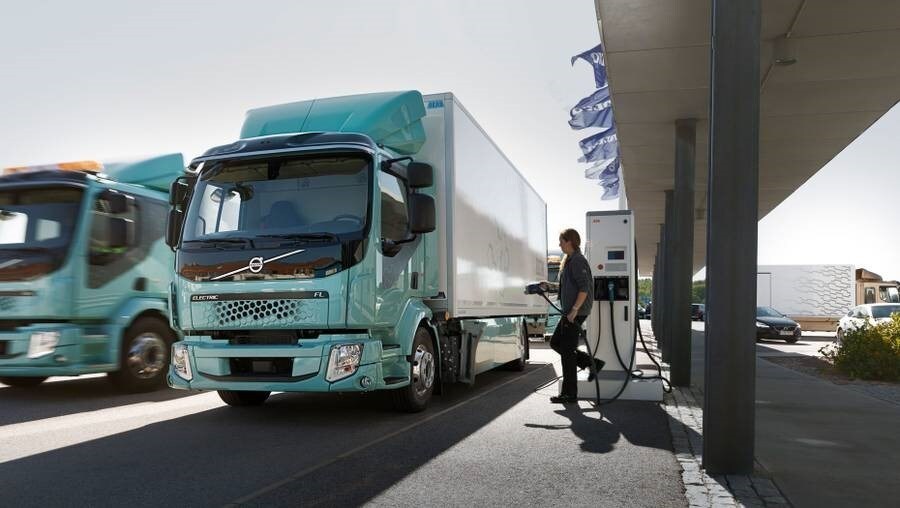
At its core, Volvo Group’s transition relies on technologies like battery electric vehicles (EVs), fuel-cell EVs and biofuels - all of which are power sources that require access to green electricity and renewable infrastructure to be truly sustainable. Building the solutions was a critical first step but securing more environmentally responsible power sources for these solutions to be quickly brought to market would require radical thinking. It was a journey that would progress slowly in isolation but could accelerate significantly with help from beyond the borders of its own business.
How is the World Economic Forum promoting sustainable and inclusive mobility systems?
The World Economic Forum’s Platform for Shaping the Future of Mobility works across four industries: aerospace and drones; automotive and new mobility; aviation travel and tourism; and supply chain and transport. It aims to ensure that the future of mobility is safe, clean, and inclusive.
Through the Clean Skies for Tomorrow Coalition, more than 100 companies are working together to power global aviation with 10% sustainable aviation fuel by 2030.
In collaboration with UNICEF, the Forum developed a charter with leading shipping, airlines and logistics to support COVAX in delivering more than 1 billion COVID-19 vaccines to vulnerable communities worldwide.
The Road Freight Zero Project and P4G-Getting to Zero Coalition have led to outcomes demonstrating the rationale, costs and opportunities for accelerating the transition to zero emission freight.
The Medicine from the Sky initiative is using drones to deliver vaccines and medicine to remote areas in India, completing over 300 successful trials.
The Forum’s Target True Zero initiative is working to accelerate the deployment and scaling of zero emission aviation, leveraging electric and hydrogen flight technologies.
In collaboration with the City of Los Angeles, Federal Aviation Administration, and NASA, the Forum developed the Principles of the Urban Sky to help adopt Urban Air Mobility in cities worldwide.
The Forum led the development of the Space Sustainability Rating to incentivize and promote a more safe and sustainable approach to space mission management and debris mitigation in orbit.
The Circular Cars Initiative is informing the automotive circularity policy agenda, following the endorsement from European Commission and Zero Emission Vehicle Transition Council countries, and is now invited to support China’s policy roadmap.
The Moving India network is working with policymakers to advance electric vehicle manufacturing policies, ignite adoption of zero emission road freight vehicles, and finance the transition.
The Urban Mobility Scorecards initiative – led by the Forum’s Global New Mobility Coalition – is bringing together mobility operators and cities to benchmark the transition to sustainable urban mobility systems.
Contact us for more information on how to get involved.
Building inroads across sectors
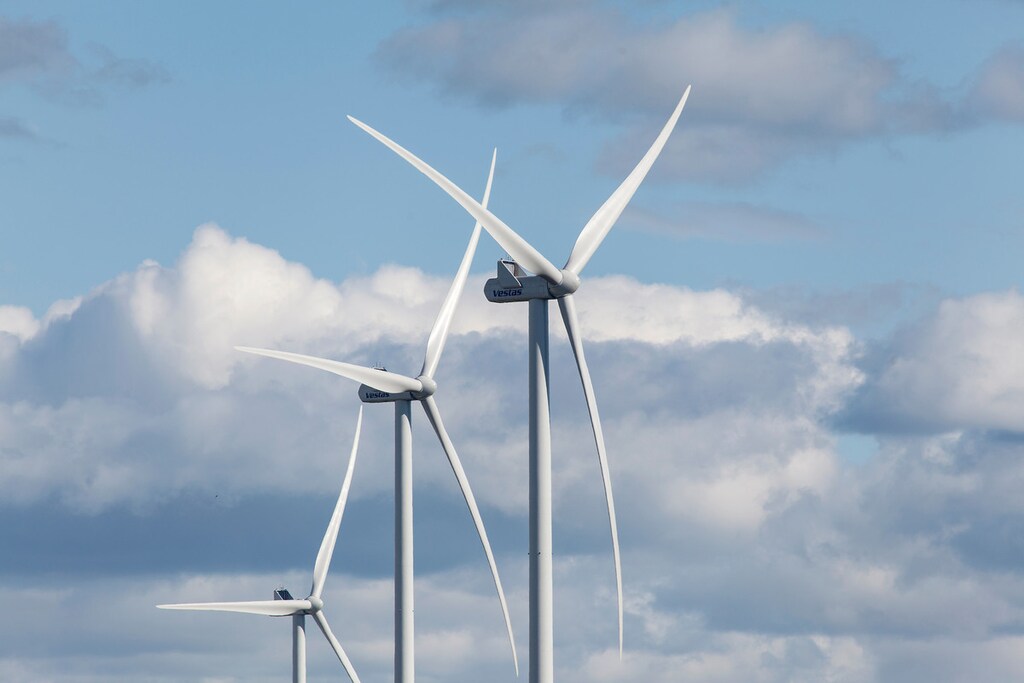
Riding the tailwinds of public support and accelerating innovation, wind energy has grown from a niche, heavily-subsidised alternative energy source to one of the most viable answers to the question of fossil fuel volatility. Having spearheaded a rapidly maturing economy of scale, Vestas presented an opportunity for Volvo Group to carve out new territory for its decarbonisation journey. By collaborating on hydrogen filling stations and access to green electricity for production facilities, with an open agreement to explore further, the partnership shows the benefits of green hydrogen and wind energy infrastructure.
Perhaps more important than sharing expertise, access to technology, or diffusing risk, the partnership accelerates the scale-up of nascent sustainable technologies. Vestas lends its insight, Volvo Group its footprint, and suddenly there forms a sandbox that matures innovation at a rate that would be difficult to surpass with policy frameworks. And while innovation can often fall to the wayside in periods of volatility, the union demonstrates the value of leadership in a challenging business environment.

Such innovation is the first step towards an even faster decarbonisation pathway: business growth. With many transport customers working towards their own carbon-neutral goals, a strong sustainability offering is no longer a niche option but a purchasing requirement. And as demand for green electricity grows across the private sector, wind energy has become the most cost-competitive technology to meet this demand. With the era of subsidies now firmly behind us, policymakers can support this growth mechanism by removing permitting bottlenecks as fast as possible.
If we are to limit carbon emissions in line with the Paris Agreement, and revive 1.5 degrees from its terminal state, the private sector must grow to become the engine of decarbonisation - an engine powered of course, by green electrons. And while a drastic scale-up of wind energy is critical to this journey, what’s missing most urgently is the fuse to light it all: permitting. Where policymakers can unblock the road to green energy abundance, cross-sector collaboration can harness its potential and bring us closer to a future where the industry can thrive without a carbon footprint.