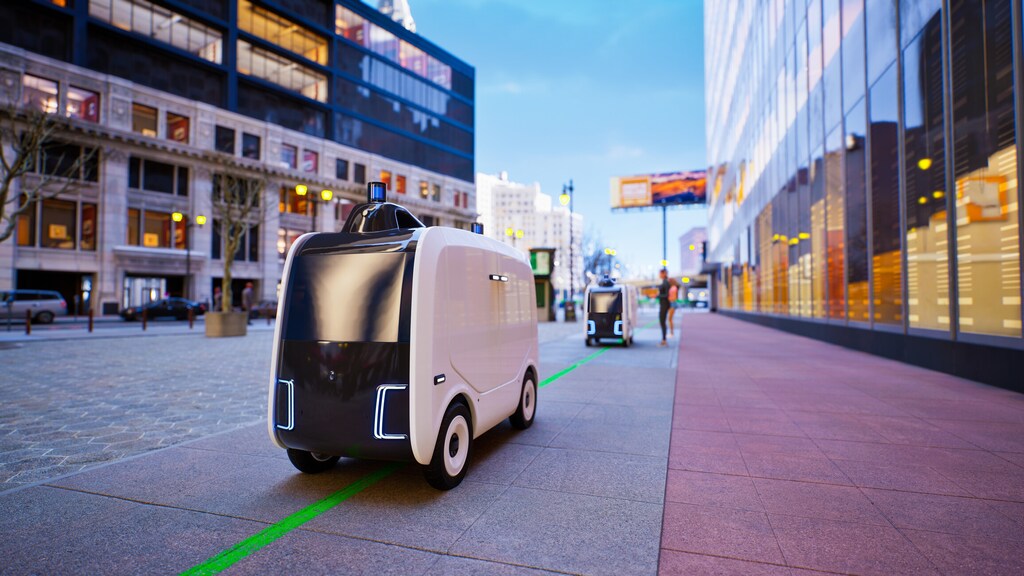
Autonomous mobility has been a human dream for centuries and with the arrival of driverless taxis, we're one step closer to this becoming reality.
Advances in autonomous mobility technologies could transform how we move, but their influence on where and how we live and work is still unclear.
Here are six issues that must be considered as we responsibly design an autonomous future for our roads and skies.
Autonomous mobility, including automated and autonomous vehicles, has been a human dream for centuries, from Leonardo da Vinci’s visionary sketches to science fiction films and the technological advances of the 20th century.
Finally, we seem to be close to this dream becoming reality. For example, after months of trials, driverless taxis can now be booked in cities such as Beijing and San Francisco.
Meanwhile, in the air mobility space, different aircraft manufacturers are working with the US Federal Aviation Administration (FAA) and other organizations worldwide to certify autonomous aircraft.
Impact on autonomous mobility still unclear
One thing is clear: autonomous mobility technologies can potentially transform how people and things move. However, their upcoming influence on where we live and work and how we interact with our surrounding environment is still unclear.
The World Economic Forum has brought together leaders from government, academia and the private sector in the Global Future Council on the Future of Autonomous Mobility to understand these aspects better.
How is the World Economic Forum promoting sustainable and inclusive mobility systems?
The World Economic Forum’s Platform for Shaping the Future of Mobility works across four industries: aerospace and drones; automotive and new mobility; aviation travel and tourism; and supply chain and transport. It aims to ensure that the future of mobility is safe, clean, and inclusive.
Through the Clean Skies for Tomorrow Coalition, more than 100 companies are working together to power global aviation with 10% sustainable aviation fuel by 2030.
In collaboration with UNICEF, the Forum developed a charter with leading shipping, airlines and logistics to support COVAX in delivering more than 1 billion COVID-19 vaccines to vulnerable communities worldwide.
The Road Freight Zero Project and P4G-Getting to Zero Coalition have led to outcomes demonstrating the rationale, costs and opportunities for accelerating the transition to zero emission freight.
The Medicine from the Sky initiative is using drones to deliver vaccines and medicine to remote areas in India, completing over 300 successful trials.
The Forum’s Target True Zero initiative is working to accelerate the deployment and scaling of zero emission aviation, leveraging electric and hydrogen flight technologies.
In collaboration with the City of Los Angeles, Federal Aviation Administration, and NASA, the Forum developed the Principles of the Urban Sky to help adopt Urban Air Mobility in cities worldwide.
The Forum led the development of the Space Sustainability Rating to incentivize and promote a more safe and sustainable approach to space mission management and debris mitigation in orbit.
The Circular Cars Initiative is informing the automotive circularity policy agenda, following the endorsement from European Commission and Zero Emission Vehicle Transition Council countries, and is now invited to support China’s policy roadmap.
The Moving India network is working with policymakers to advance electric vehicle manufacturing policies, ignite adoption of zero emission road freight vehicles, and finance the transition.
The Urban Mobility Scorecards initiative – led by the Forum’s Global New Mobility Coalition – is bringing together mobility operators and cities to benchmark the transition to sustainable urban mobility systems.
Contact us for more information on how to get involved.
The council has highlighted the following six interrelated topics that inform a responsible automated and autonomous mobility future in the air and on the ground. These are:
1. Quality of life
If we want to enhance our quality of life with autonomous mobility deployments, we need to deploy autonomous mobility solutions to meet current challenges proactively and not introduce new ones or constraints on stakeholders.
We can do this by fostering human-centred rather than technology-centred developments and deployments; for example, we can prioritise pedestrians in our cities and minimise noise disturbances from air mobility.
2. Multimodal mobility
Autonomous mobility should not be considered in a vacuum; it should connect to networks of existing high-quality transportation options such as traditional forms of public transportation, maritime, rail, cycling and walking.
We can only improve liveability in our cities by fostering synergies among the different modes in an integrated manner while reducing congestion and energy use.
3. Social equity and access
Autonomous mobility should unlock opportunities for underserved communities and not just provide benefits to be reaped by a privileged few. For example, drones can act as a gateway to increasing the quality of primary healthcare in rural areas, as piloted in the Medicine from the Sky project in India.
Having general equity statements or goals at local or national government levels for autonomous mobility deployments may not guarantee equity requirements.
In fact, these have been found to be insufficient in relation to e-scooter-sharing and bike-sharing deployments, even if these micromobility deployments are, by nature, much cheaper and more accessible.
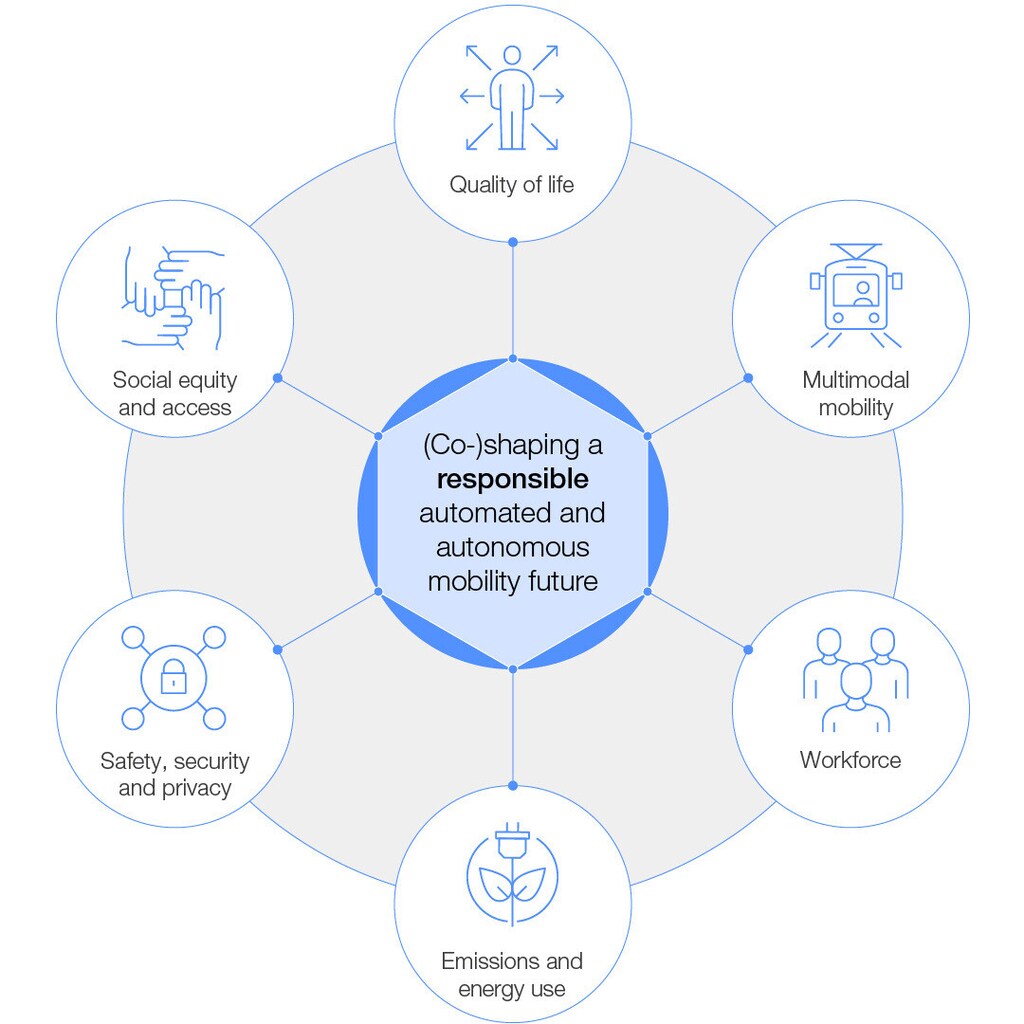
4. Workforce
Autonomous mobility technologies have the potential to create more rewarding and creative jobs. These technologies can also help mitigate the impact of the shortage of pilots and truck drivers in many parts of the world. For example, Oliver Wyman estimates North America will have a shortage of 24,000 pilots in 2026.
Contrary to popular belief, autonomous mobility developments will not necessarily lead to a reduction of the workforce needed in the mobility sector, as the technology will require the creation of new roles, like those in autonomy maintenance.
However, the required skills for such roles will differ from those in the sector today. To ensure a smooth transition, a workforce development plan that proactively addresses a sector’s reskilling and upskilling requirements needs to be put in place sooner rather than later.
5. Safety, security and privacy
Autonomous mobility should ensure safety, security and privacy within and beyond autonomous transportation systems.
Safety refers to avoiding accidental harm, i.e., errors (human or otherwise) leading to accidents. If autonomous vehicle technology mirrors safety benefits comparable to the introduction of automation into aviation, autonomous vehicles could vastly contribute to traffic safety goals.
However, human errors will not be eliminated entirely: human errors in operation get replaced by human errors in coding, so maintaining artificial intelligence (AI) becomes just as important as creating it.

Clear, actionable guidance, including standards and regulations where needed, can help policy-makers enable the safe deployment of autonomous mobility.
Security refers to avoiding intentional harm. In the context of autonomous mobility, the threat of cybersecurity attacks quickly comes to mind, so adopting comprehensive cybersecurity procedures and solutions is paramount.
Privacy refers to the management of personal information, which the public could see negatively due to the multitude of sensors and cameras in autonomous mobility.
6. Emissions and energy use
Finally, autonomy developments must be coupled with broader sustainability and energy objectives. Autonomous mobility deployments have the potential to ease the movement of people and goods further, generating growth and fostering human connections.
However, the increased ease may lead to increased emissions and energy usage beyond reasonable levels. Well-integrated, shared autonomous mobility options driven by clean fuels and green electricity can help mitigate these risks.
A previous study from the World Economic Forum found that, in the city of Boston, shared autonomous vehicles would help reduce the number of vehicles on the streets and reduce overall travel times across the city.
However, these autonomous vehicles (even if shared) would worsen congestion in the downtown area, as they would often be chosen instead of more sustainable modes.
Now is the time to design the future of our roads and skies. The six areas outlined above are the key pillars in designing a responsible, safe and efficient future of autonomous mobility.
Companies and government agencies that incorporate these pillars into their policies and operations will gain public trust, which is the key to a successful rollout of autonomous mobility in all domains.