This weekly round-up brings you key economic stories from Agenda from the past seven days.
Top stories: The value of space; The global literacy rate; Economic growth in the OECD; How financial inclusion can empower people; How Zambia improved its economic outlook.
1. What on Earth is the value of space?
Rajeev Suri, CEO of Inmarsat Global, reflects on the world's largest study of its kind to explore the public's general knowledge of space. Space is about more than just exploration or aliens, it helps connect the world through satellites.
Despite this, the study found that only 8% of those surveyed associated space with their daily connectivity needs. From planes not being able to fly safely to satellite TV ceasing to work, space plays a vital role in all of our lives. So why did 97% of respondents say they see space as a threat?
Learn more about the value of space.
2. This is how much the global literacy rate grew over 200 years
In 1820, the literacy rate of the world's population from secondary school age onward was only 12 percent. Today, the global literacy rate stands at 87%, or almost nine out of ten people worldwide.
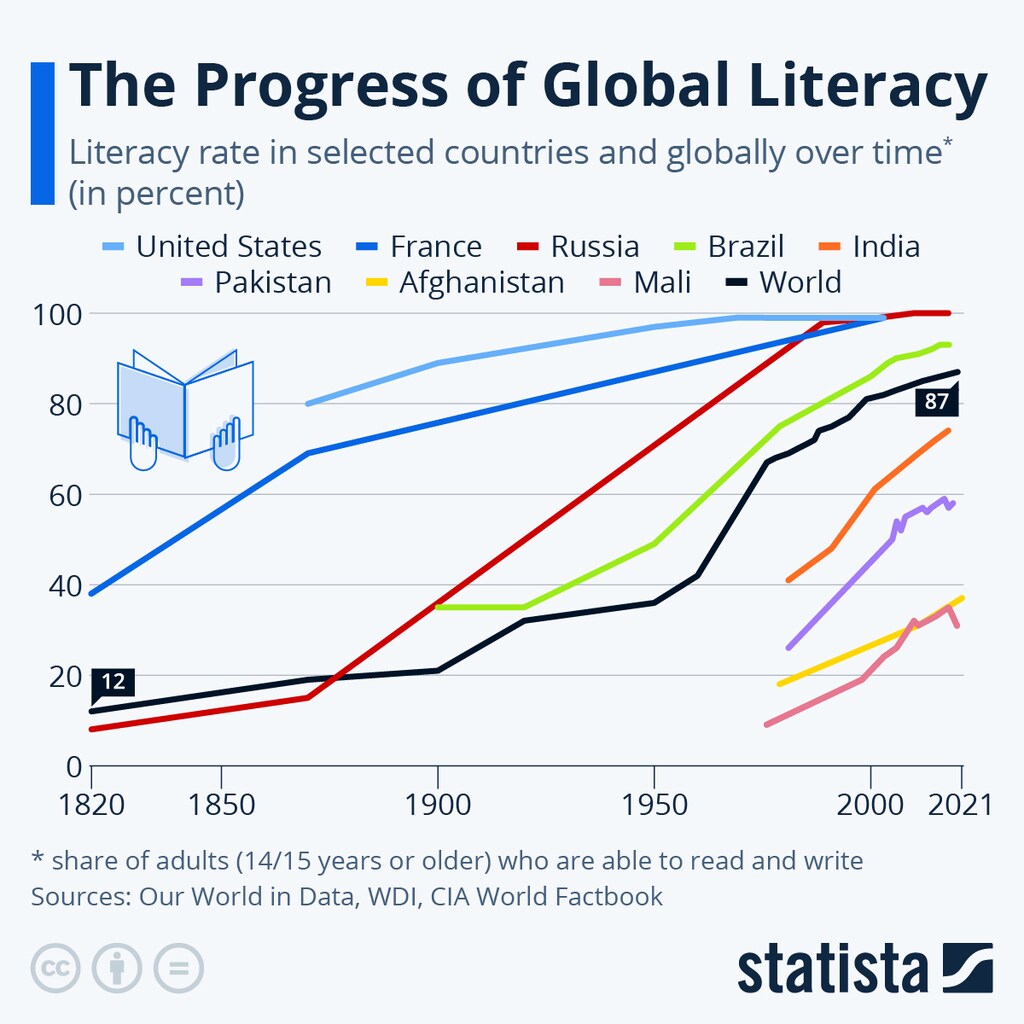
For regions with low literacy rates, it is often women who are first to miss out.
Explore literacy rates around the world.
3. Economic growth - a weak outlook for OECD countries
The war in Ukraine has hampered output in many OECD nations, slowing GDP growth in the first and second quarters of this year.
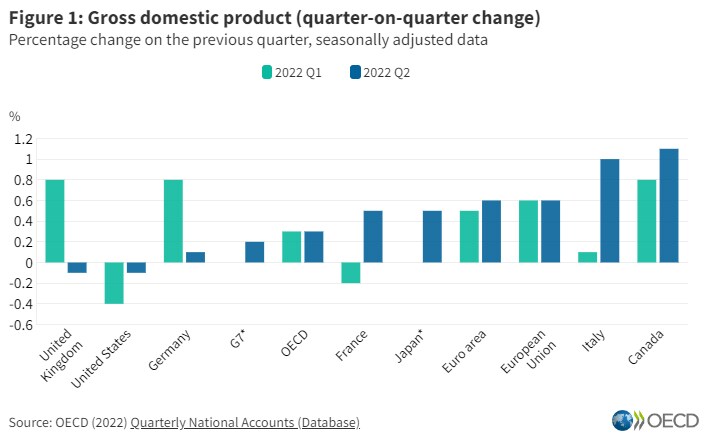
The OECD data echoes gloomy outlooks from other organizations, with the International Monetary Fund (IMF) saying in July that the global outlook had become more uncertain - “Several shocks have hit a world economy already weakened by the pandemic,” it said.
Discover more about economic growth in the OECD.
4. How 'financial inclusion' can help lift millions of people out of poverty - on Radio Davos
According to the World Bank's Findex survey, 1.4 billion adults have no access to banking. This hampers their ability to save, borrow, send money or start a business.
Leora Klapper, Lead Economist in the Finance and Private Sector Research Team of the Development Research Group at the World Bank, explained on Radio Davos why financial inclusion can be crucial in eliminating poverty and improving lives.
Learn more about how financial inclusion can empower people.
5. Here's how the Zambian Kwacha rose in the face of inflation and debt
When Zambian President Hakainde Hichilema came into office almost a year ago, sceptics called him 'the calculator boy'. Since August 2021, he has helped bring down inflation from 24.4% to 9.7% in June this year, proving his critics wrong.
The Zambian Kwacha is the best performing currency in the world against the US dollar, rallying over 18.5% from 22 January to 1 September.
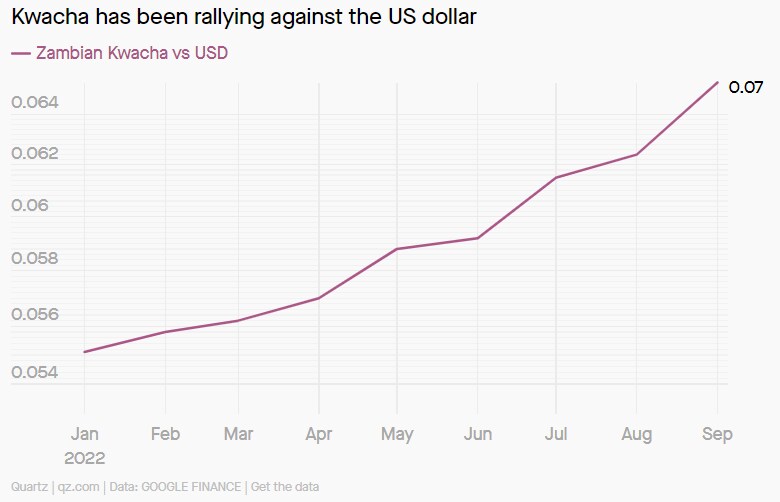
Find out how the Kwacha was able to rise against adversity.