In this daily round-up, we'll bring you a selection of the latest news updates on the coronavirus pandemic, as well as tips and tools to help you stay informed and protected.
Today's big stories include: a worldwide nursing shortage, how coronavirus is reshaping Japan, and what countries can learn from the fight against Ebola.
1. How COVID-19 is impacting the globe
There are more than 1.45 million confirmed cases of infection of the COVID-19 coronavirus worldwide as of 8 April, with more than 83,000 confirmed deaths, according to Johns Hopkins University. More than 308,000 people have reportedly recovered from the disease.
Signs of a plateau in New York and New Jersey.
UK Prime Minister Boris Johnson is in a stable condition in a London ICU.
No new cases reported in China.
2. The world needs 6 million more nurses - a World Health Organization report explains why
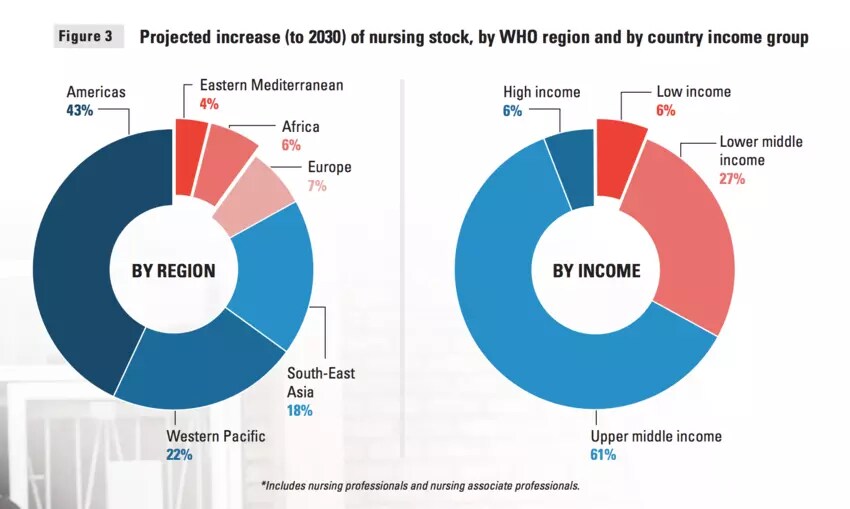
In its State of the World's Nursing report, the World Health Organization (WHO) explains that the worldwide nursing shortage has improved slightly, from a shortage of 6.6 million in 2016 to 5.9 million in 2018. Still, the agency said, the expansion is not equitable or sufficient, and given rising demand, it's "leaving some populations behind". The group called for the creation of at least six million new nursing jobs by 2030, primarily in low- and middle-income countries.
3. Why vaccines are the only real solution to pandemics
We must use lessons learnt from fighting Ebola to overcome COVID-19, says Ngozi Okonjo-Iweala, Chair of Gavi, the Vaccine Alliance. During the battle against Ebola, "approximately twice as many people died from a preventable measles outbreak". So while fighting coronavirus, leaders must maintain existing vaccine programmes.
Additionally, leaders must ensure that health systems are prepared with technologies that will help them test, trace and isolate future coronavirus cases. These efforts can manage cases until a vaccine is developed and can be equitably distributed.
"COVID-19 knows no borders," says Okonjo-Iweala. "No country is safe until every country is safe."
"COVID-19 knows no borders. No country is safe until every country is safe."
Ngozi Okonjo-Iweala, Chair, Gavi, the Vaccine Alliance
4. Japan provides a glimpse of the post-coronavirus era
Remote work has changed both business and family life. Japan is showing how these shifts can impact the wider culture, says Ryan Takeshita, Editor-in-Chief of HuffPost Japan. Japan's famous workaholic culture is beginning to transform, he writes, as companies realize that remote work is possible. In others cases, families have begun to divide up housework as both partners spend more time at home. While these changes are small, Takeshita says, "the subtle actions initiated by each individual...can serve as crucial points in envisioning the future course".
5. How one music director finds joy in a time of crisis
The pandemic offers a new chance to appreciate artists such as Beethoven, says Marin Alsop, music director of the Baltimore Symphony Orchestra. Alsop explains that Beethoven suffered and overcame extraordinary hardship, including going deaf. Still, the composer's "unwavering commitment to his artistic purpose kept him not only moving forward but pushing himself creatively like never before". In many ways, says Alsop, "I believe that his inability to hear resulted in an inner creativity that defied history and enabled him to transcend all boundaries".