This daily roundup brings you a selection of the latest news updates on the COVID-19 coronavirus pandemic, as well as tips and tools to help you stay informed and protected.
Today's top stories: Global confirmed coronavirus cases surpass 4 million; the UK is set to launch a new warning system for the virus, while outlining a plan to ease restrictions; the R number explained; and how the Fourth Industrial Revolution can help tackle COVID-19.
1. How COVID-19 is impacting the globe
Confirmed coronavirus cases have surpassed 4 million worldwide, according to Johns Hopkins University. Nearly 280,000 people have died from the virus, while over 1.3 million have recovered.
UK Prime Minister Boris Johnson is expected to launch a new five-tier warning system for coronavirus in England on Sunday, as the British government unveils plans for the gradual easing of lockdown measures.
South Korea on Sunday warned of a second wave of COVID-19, as the country reported 34 new infections.
China on Saturday reported the first coronavirus infection in Wuhan - the city where the disease was first detected last year - in more than a month.
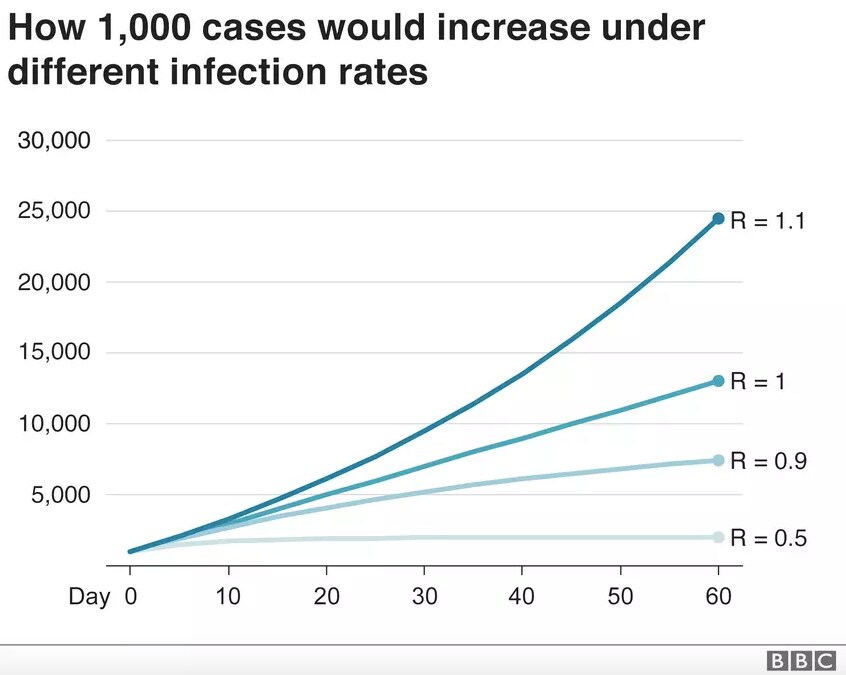
R refers to the “effective reproduction number” and is essentially a means of measuring an infectious disease’s capacity to spread. The R number signifies the average number of people that one infected person will pass the virus to.
The R number isn’t fixed, but can be affected by a range of factors, including not just how infectious a disease is but how it develops over time, how a population behaves and any immunity already possessed thanks to infection or vaccination.
3. How the Fourth Industrial Revolution can help tackle COVID-19
China and South Korea are just a couple of the countries using Big Data, AI and other emerging technologies to manage the effects and mitigate the risks of COVID-19, according to David Alexander Walcott, a World Economic Forum Global Shaper.
"Our ability to create a dynamic and interconnected framework of health data has never been more necessary," he wrote in a recent blog post for the Forum.

4. How drones are helping to battle COVID-19 in Africa
Drone company Zipline has pioneered medical deliveries to rural communities in Rwanda and Ghana. Its lightweight drones deliver vital packages to clinics up to 85 kilometres away. Trips that might have taken an entire day by car could take 30 minutes or less by drone.
Now the company is using its drone deliveries to support the coronavirus fight in Africa and aims to do the same in the US.