The global jobs sector has had an eventful 2023, as generative AI, the skills of the future and tight labour markets dominated conversations about the world of work.
These are some of the most-read jobs and skills stories on Agenda from this year.
From the four-day work week, the rise of AI, and the growing skills gap, these are some of 2023's biggest talking points.
The best countries for talent
Countries that can attract, develop and retain talent can boost their competitive edge in the global economy.
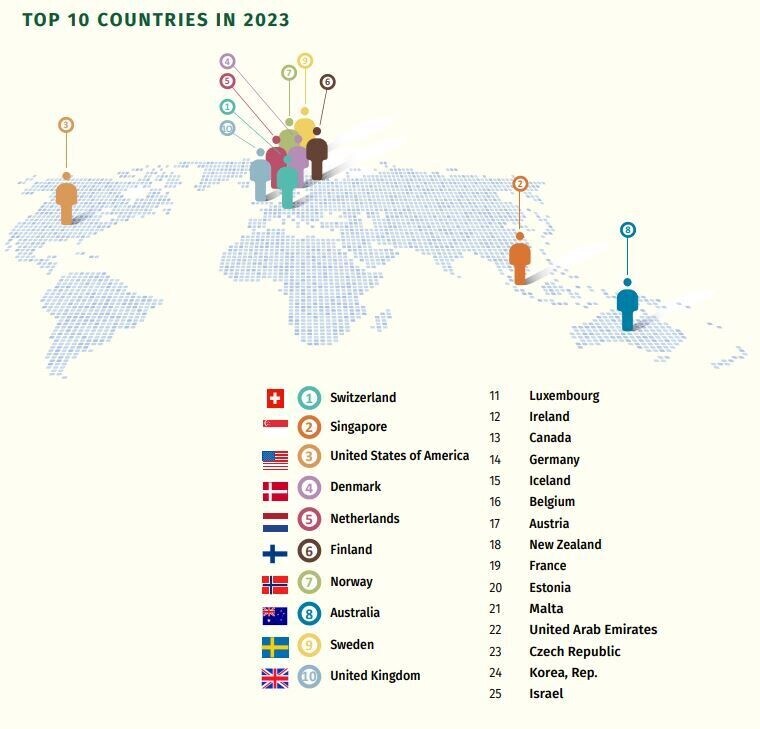
The Global Talent Competitiveness Index 2023 ranks 134 countries on their ability to attract, develop and retain skilled people.
Switzerland, Singapore and the US are the top three ranked countries for talent competitiveness.
Companies are exploring better promotion prospects and higher wages to attract more talent, according to the World Economic Forum’s Future of Jobs Report 2023.
These countries are the best at attracting, developing and retaining talent.

The most in-demand skills
The Future of Jobs report also explored which skills were most in demand, and it found that analytical thinking, creative thinking, and resilience, flexibility and agility to be the top skills of 2023.
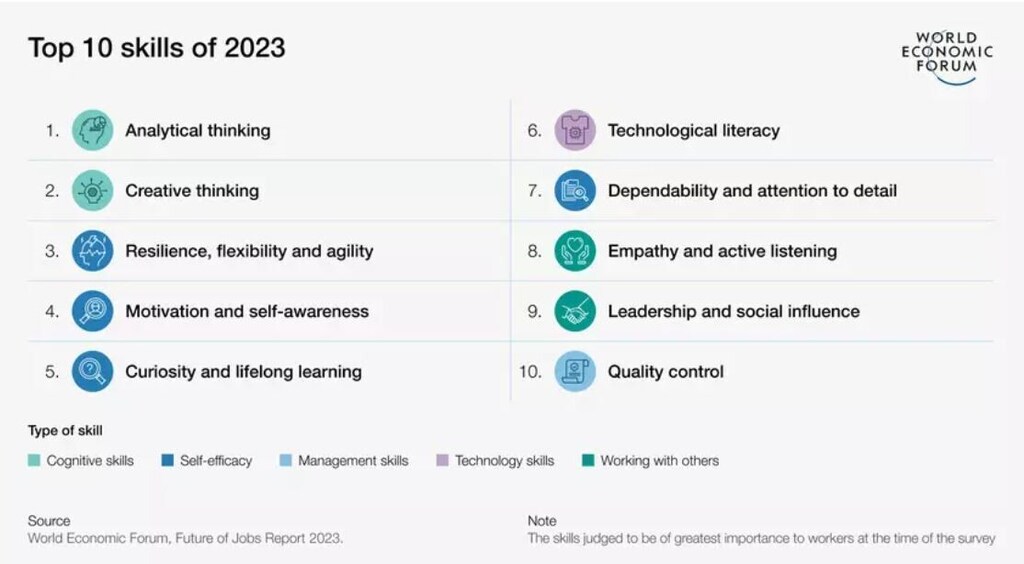
Leadership and social influence, and curiosity and lifelong learning are among other skills expected to see growing demand in future.
Between now and 2027, businesses predict that 44% of workers’ core skills will be disrupted, as technology continues to move at pace.
These are the most in-demand skills now - and in the future.

The future of work: disruptive, not dystopian
The last few years have been exceptionally disruptive to workers across the globe. The COVID-19 pandemic led to lockdowns for most except essential workers and then cautious, partial returns to work or job losses in industries that never fully recovered. This was then followed by the disruption of war in Ukraine and rapidly rising inflation, causing a decline in real wages.
Technology adoption, already accelerating before and during the pandemic, also poses a new wave of transformation, in particular around white-collar work as generative AI continues to develop.
What does the future of work look like?

4-day work week trials
Workers at more than 60 UK companies trialled a four-day work week in 2022, with the results released this year. Over 90% of participating businesses opted to continue with the four-day week, with 18 adopting it permanently.
Around 2,900 employees took part in the trial, in sectors from marketing and advertising, to finance.
"This is a major breakthrough moment for the movement towards a four day work week. “Across a wide variety of different sectors of the economy, these incredible results show that the four-day week with no loss of pay really works," Joe Ryle, Director of the 4 Day Week Campaign, said at the time.
Here are the results of four day work week trials.
Generative AI at work
The Forum's white paper, Jobs of Tomorrow: Large Language Models and Jobs, released in September, explored the tasks and jobs that will be augmented - and those that will be automated.
Those with the highest potential for automation are typically those that involve routine and repetitive language tasks, while jobs with a high degree of personal interaction or physical movement are set to be least effected.
Large language models have the most potential to benefit jobs that involve critical thinking and complex problem-solving skills, according to the report.
Here's how generative AI can impact jobs.
How is the World Economic Forum creating guardrails for Artificial Intelligence?
The Centre for AI Excellence connects leaders across sectors to make sense of the rapid evolution of artificial intelligence and its implications for economies and societies. It supports informed dialogue on opportunities, risks and trade-offs linked to AI adoption.
Through trusted spaces and collaborative initiatives, the Centre enables partners to build shared understanding and work together on responsible approaches to AI innovation and use.