By viewing forests as critical infrastructure, we can estimate their value at almost a quarter of global GDP. That means a concept of the forest economy that combines both sustainable production and the deeper benefits of such ecosystems to people and planet
Forests are critical infrastructure that can support resilient economies and thriving societies. Nearly one in three humans on the planet depend on forest goods and services for livelihoods, food and water security and nutrition. Beyond this, forests regulate water, support biodiversity and agricultural productivity, provide renewable materials and help economies adapt to a changing climate.
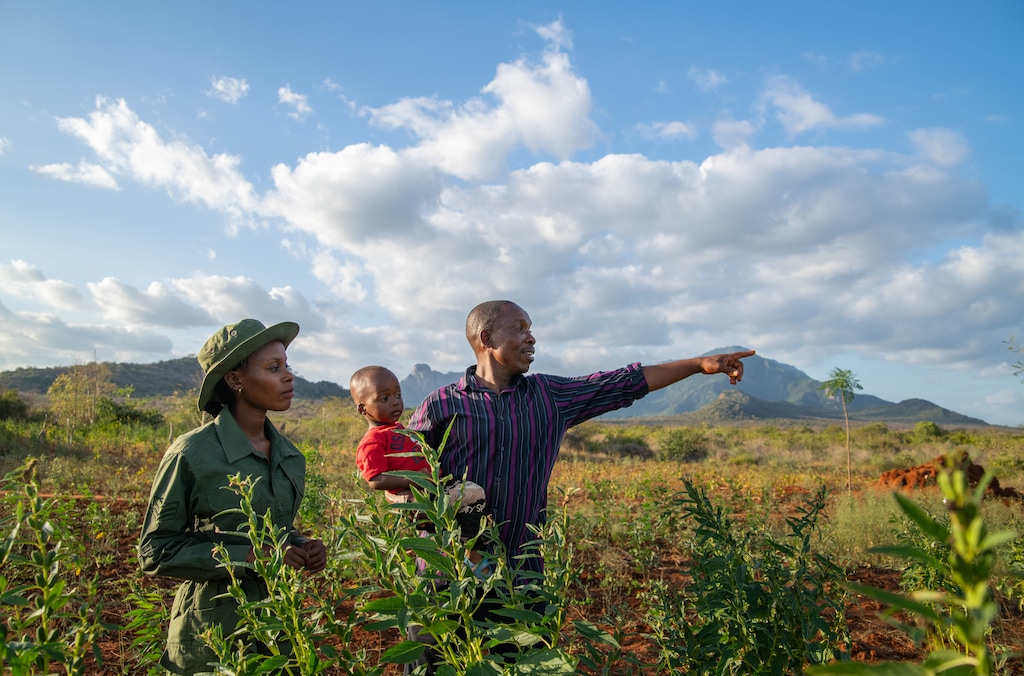
Strengthening this natural infrastructure offers both economic and social returns. Healthy, resilient forests support rural livelihoods and long-term employment, while providing essential services that benefit economies and communities far beyond the boundaries of individual forest landscapes. Today, forests economically provide for about 1.6 billion people around the world, 60 million of whom are Indigenous People.
The concept of the forest economy entails integrating sustainable production with essential ecosystem services and cultural values. It includes both the commercial forest sector, as well as wider ecological benefits and cultural heritage provided by forests, many of which remain partially priced or unpriced. This forest economy concept recognizes that there is an opportunity to invest in such landscapes, so that standing forests remain healthy while industries engaged in these landscapes operate sustainably and responsibly.
The forest resources that underpin these benefits are under growing pressure from loss and underfunding. Around 100 million hectares of forest have been lost over the past two decades – an area the size of Egypt. This loss not only affects carbon storage and biodiversity, but also weakens water systems, agricultural productivity, livelihoods and the long-term economic benefits that forests provide, including through innovation and technological transformation powered by bioeconomy solutions. UN Environment estimates the forest financing gap will reach about $216 billion every year by 2030 – much of which will need to be addressed from the private sector whose current contribution is just 9% of that amount.
Record heat, drought and wildfires across the globe show how climate pressures can ripple through landscapes, communities and economies. Against this backdrop, it becomes even more critical to continue to invest in the responsible stewardship of existing forest landscapes alongside critical conservation and restoration efforts.
The World Economic Forum convened the Global Future Council on Forest Economy to explore the conceptualization of the role and capacity of the forest economy to address challenges and opportunities related to increased demand for forest products, manage increased pressure for multiple uses of a scarce land base and address climate change, nature loss and equitable rural development.
Forests’ true value
There is a fundamental mismatch between the value forests provide and the value recognized by our economic and financial systems. Traditional economic measures and financial markets do not completely capture forests’ full importance and contribution to, for example, regulating climate and water systems, supporting biodiversity, cultural values and livelihoods.
If we account for these wider benefits, we begin to see the scale of the opportunity. While the commercial forest sector directly accounts for 3% of global GDP, the forest economy has an estimated value equivalent to 24% of global GDP; this broader figure encompasses air and climate regulation, biodiversity and other ecosystem services. A clear example of the importance of forests is their role in supporting the global food system through water, pollination, genetic resources, soils and climate regulation. Around 80% of arable land depends on rain-fed agriculture, while 75% of food crops depend on pollination.
It remains challenging to integrate conservation, restoration and long-term stewardship of forests into financial markets because of the way those markets are currently structured.

A vision for the forest economy
The forest economy can integrate sustainable production with the essential values forests provide, ensuring their full benefits are reflected in policy, markets and investment. This is the vision of the Global Future Council on the Forest Economy; achieving it will require climate-smart forest management, adaptation to changing disturbance regimes, diversification of species and forest structures, restoration of degraded landscapes and investment in long-term forest landscape resilience.
Four priorities will shape the forest economy in the decades ahead:
Create positive conditions for land use by maintaining and restoring forests.
Create positive conditions for climate-resilient forests through policy and financial mechanisms.
Ensure that economic and technological transformation is strategic, sustainable and rests on global standards.
Tie forest protection and management to employment and rights-based approaches.
Regulatory frameworks will need to be designed inclusively, ensuring that they incorporate the needs of societies who live in and depend on forests, and that they are implementable and enforceable.
The seeds of action
Action on delivering the forest economy starts with treating natural systems as long-term infrastructure assets, with future cash flows directed towards landscapes that demonstrate verified ecological improvement. Further solutions could involve integrating ecosystem-based disaster risk reduction into corporate and municipal financial planning to reduce risks from climate change and nature loss.
It also means strengthening land-tenure systems so they recognize the rights of Indigenous Peoples and local communities, empowering them as governance partners. Regional and landscape-level planning are also needed to support stable forest economies, local livelihoods and climate stability.
Emerging investment models are already showing how the value forests provide can be reflected in financial mechanisms. The Tropical Forest Forever Facility (TFFF), for example, is designed to use investment returns to reward tropical countries for conserving standing forests and the global public services they provide.
Private capital is also moving in this direction. BTG Pactual Timberland Investment Group (BTG Pactual TIG), one of the world’s largest timberland managers, recently finalized its Latin American Reforestation Strategy with $1.24 billion in commitments. The largest reforestation fund to date, it provides a model for investing in large-scale reforestation and restoration while pursuing climate impact, benefits for rural communities, biodiversity outcomes and sustainable commercial production.
The World Economic Forum’s Forest Future Alliance convenes, enables and amplifies the collaborative work of private sector and philanthropy capital providers alongside for-profit innovators, while the Forum’s Tropical Forest Alliance works as a convener and catalyst to help transition agricultural supply chains away from activities that destroy forests and natural ecosystems. Together, we seek to undertake socially, economically and ecologically appropriate conservation, restoration, stewardship and resilience in forest landscapes worldwide.
With the right policies, financial mechanisms and approaches to stewardship in place, forests can be treated as strategic natural infrastructure that attracts investment as much as other critical infrastructure. Then they can be valued for the products and services they so abundantly provide when managed sustainably.