Iceland is trying to bring back its long-lost forests, which were razed by the Vikings.
Progress has been slow, though, due to a variety of factors.
Reforestation has a number of potential benefits for Iceland, including helping offset some of the country’s carbon emissions and improving soil quality.
Hybrid trees may also play an important role in reforestation. The Icelandic Forest Service is cross-breeding the Siberian larch with a European variety that may be better suited to temperatures warmed by climate change.
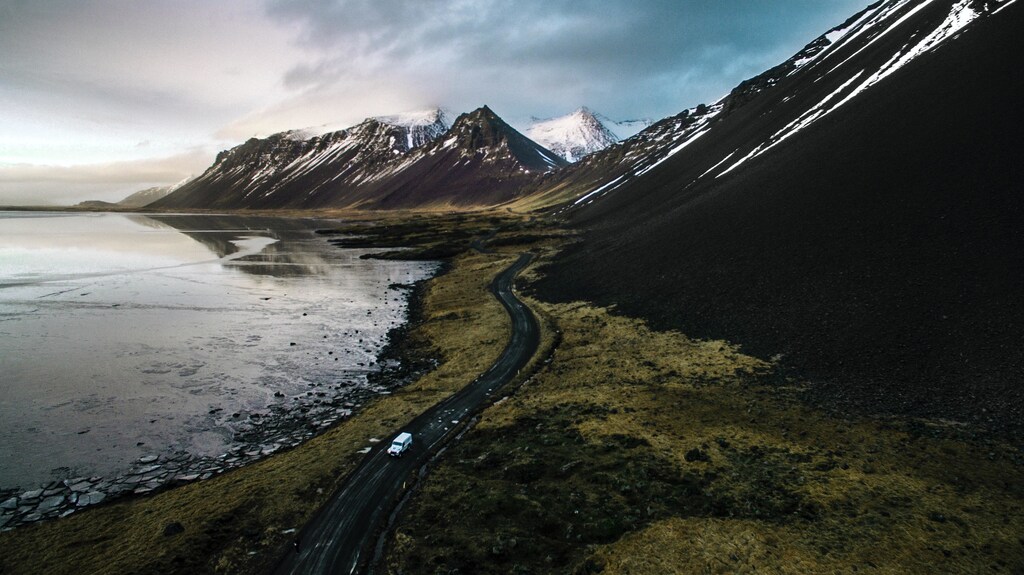
If you lived in Iceland 100 years ago, you’d probably never seen a tree in real life. They had all been chopped down by the Vikings who settled the previously unpopulated land starting in the 9th century. But more recently, the country known for its rocky, otherworldly landscapes has been trying to bring back its long-lost forests.
Progress has been slow for a number of reasons: Iceland’s weak soil is low in nitrogen, which means trees take a long time to mature, and its cooler temperatures also present a challenge for tree growth. An influx of non-native rabbits have also interfered by developing an appetite for saplings.
But recent data show Iceland’s tree-cultivating efforts are paying off. Today, forests and shrubs take up six times the amount of surface area than they did in 1990, when the country stepped up its reforestation efforts, according to the Icelandic Forestry Association. Thanks to the millions of seedlings planted each year, forest cover now stretches across 2% of Iceland.
That’s a small amount compared to the slender birches, aspens, and other trees that once flourished across an estimated 25-40% of Iceland. But it’s an indication that forest growth is finally accelerating. “We are very happy, and of course we want to continue,” Arnór Snorrason, a forester with the Forestry Research Station, told the Icelandic publication Vísir in April.
Why doesn’t Iceland have more trees?
When Vikings first arrived in Iceland more than 1,000 years ago, they quickly set about razing the forests of the island. The Norse newcomers relied upon wood as fuel and building material, and used charcoal to forge iron tools.
The Vikings also cleared forests in order to use land for crops and sheep grazing. That decision would, in the long term, prove to be a big problem for Icelandic agriculture. The country’s forest decimation, in combination with its volcanic soil, led to widespread soil erosion that made it more difficult for later generations of farmers to grow food or give their livestock sufficient plants to nibble upon.
How is Iceland taking up reforestation
Reforestation has a number of potential benefits for Iceland, ranging from improving its soil quality (and benefiting farmers in turn) to helping to ward off sandstorms and offsetting some of the country’s carbon emissions.
So far, the government’s Icelandic Forest Service and other forestry groups have had success with the country’s native birch as well as foreign trees that can adapt to the country’s frequently wet and windy climate, including Siberian larch, lodgepole pine, and black cottonwood.
Hybrid trees may also play an important role in reforestation. The Icelandic Forest Service is cross-breeding the Siberian larch with a European variety that may be better suited to temperatures warmed by climate change.
What is the World Economic Forum doing on natural climate solutions?
The world faces converging environmental crises: the accelerating destruction of nature, and climate change.
Natural climate solutions (NCS) – investment in conservation and land management programmes that increase carbon storage and reduce carbon emissions – offer an important way of addressing both crises and generate additional environmental and social benefits.
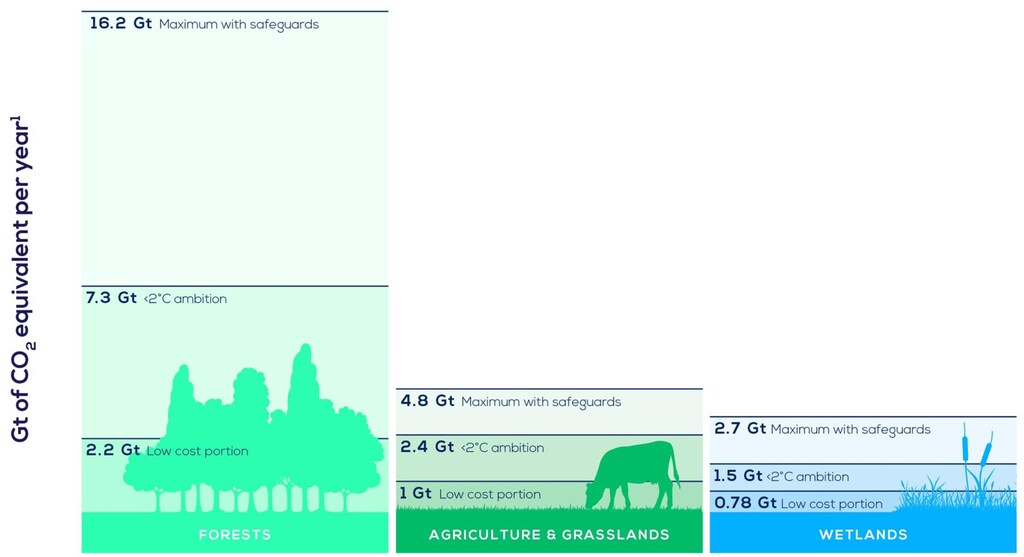
Research conducted for the Forum’s Nature and Net Zero report confirms estimates that NCS can provide one-third of the climate mitigation to reach a 1.5° and 2° pathway by 2030—and at a lower cost than other forms of carbon dioxide removal. This report builds on the recommendations from the Taskforce for Scaling Voluntary Carbon Markets, and identifies six actions to accelerate the scale-up of high-quality NCS and unlock markets through the combined efforts of business leaders, policymakers and civil society.
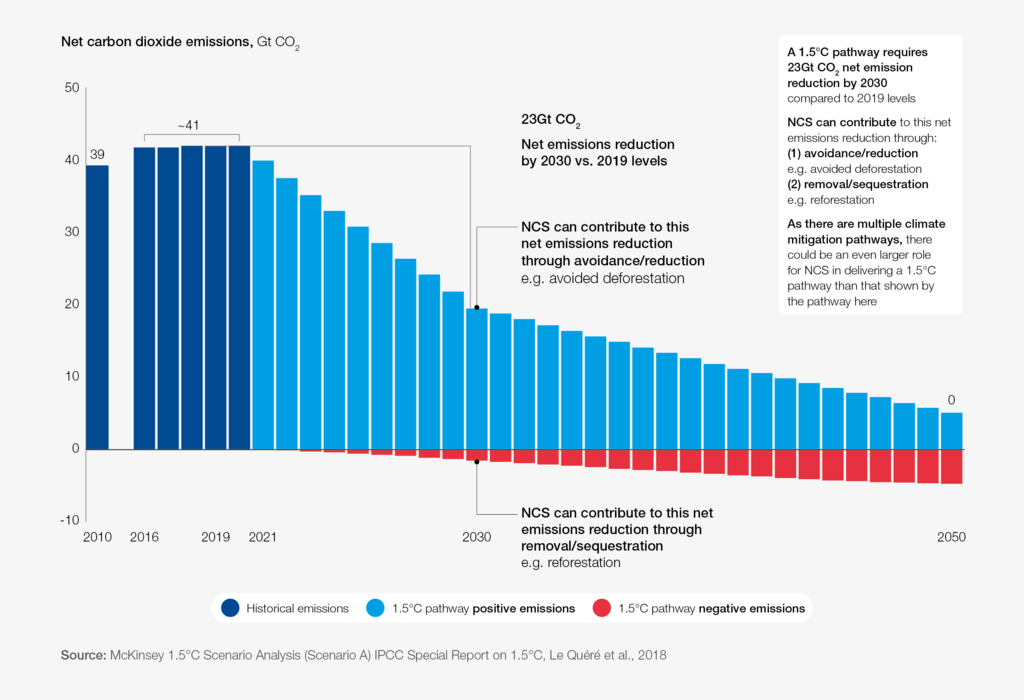
To foster collaboration, in 2019 the Forum and the World Business Council for Sustainable Development came together to establish the Natural Climate Solutions Alliance to convene public and private stakeholders with the purpose of identifying opportunities and barriers to investment into NCS.
NCS Alliance member organizations provided expert input to develop the Natural Climate Solutions for Corporates, a high-level guide to the credible use of NCS credits by businesses.
Get in touch to join our mission to unleash the power of nature.