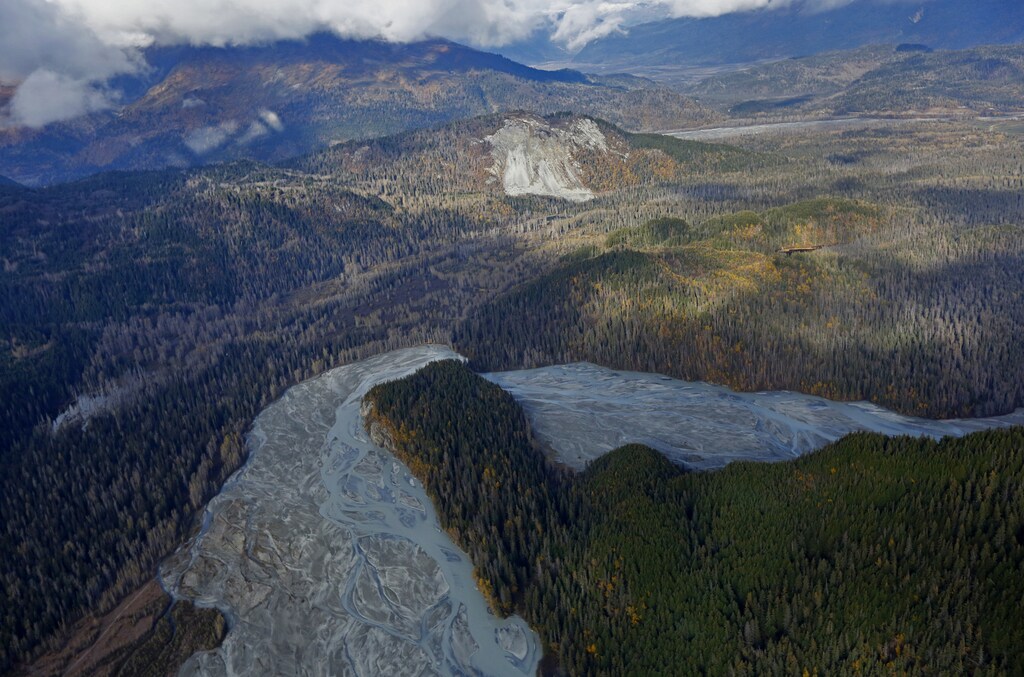
The Arctic is becoming greener, according to NASA, which has released a video showing almost 30% of land in the region turning leafier over the past 28 years.
It shows the changing Arctic as viewed from space, with green pixels depicting areas where plants have become larger or leafier than in the past. Brown pixels show less leafy matter.
Between 1984 and 2012, the US space agency tracked changes in vegetation across 4 million square miles of Alaska and Canada. As the video shows, around 30% of land became leafier, while only 3% went brown.
The Arctic is the fastest-warming region in the northern hemisphere, and climate change and its impact on the environment is believed to be causing this increase in green land.
“It shows the climate impact on vegetation in the high latitudes,” Jeffrey Masek, a scientist who worked on the study, explained.
With warmer and longer seasons for plants to grow, scientists have observed grassy tundras changing to shrub lands, with shrubs growing larger and more densely than before.
These changes are expected to have an impact on water, energy and carbon cycles, which researchers plan to investigate further, looking at local conditions to see what might be behind the changes.
Scientists believe the greening of the Arctic may increase its capacity to act as a “sink” for atmospheric carbon. The region already absorbs about 3.7 million tonnes of carbon a year.
But this might not be enough to offset the negative consequences of the shrinking of Arctic permafrost, which along with soil, holds between 37 million and 77 million tonnes of atmospheric carbon. Permafrost is expected to shrink by a quarter by 2100.
Have you read?
5 reasons to care about Arctic ice melt
Is this a new era for the Arctic?