Life depends on the water cycle – from the ocean to freshwater. Currently, there is too much water in some places, too little in others and, for many, it is too polluted to use.
The World Economic Forum’s 'Year of Water' connects topics across the water cycle and identifies innovative solutions and partnerships to build a safe and resilient future.
Learn more about the ‘Year of Water’ campaign and the wider Blue Agenda here.
Freshwater and marine systems are too often treated as separate entities, when in fact they constitute one blue thread from source to sea, part of an intricately interconnected water cycle that every economy, every person – and life itself – depends on.
'Green' water stored in tropical forests creates rain. Snow precipitation on the Rocky Mountains defines the health of the Colorado river basin. Changes to the Atlantic current affect rainfall in the Amazon rainforest. These are just a few of the ways our water systems are interdependent – and impacting each other. And those systems are increasingly under strain.
At the start of 2026, the United Nations (UN) announced that we are living in an "era of global water bankruptcy” that has fundamentally altered the global risk landscape, creating cascading societal, health and economic impacts.
The world’s water currently faces a triad of pressures:
too much (from floods and rising sea levels)
too little (from droughts, freshwater shortages and drying rivers)
and increased levels of pollution.
The question is no longer what needs to be done, but how quickly and collectively we can act.
The urgency of the situation was highlighted at the World Economic Forum’s Blue Davos in January, which launched the Forum's 'Year of Water' campaign to keep water high on the global agenda throughout 2026.
What is the 'Year of Water'?
Spotlighting solutions and innovations that can help to tackle the world's water crisis, the Year of Water aims to keep up momentum between Blue Davos and December's critical UN Water Conference.
Some of those initiatives include:
The Forum’s Aquapreneur Innovation Initiative identifies and supports early-stage solutions to global water challenges, providing promising start-ups with visibility, non-dilutive funding and access to a global innovation ecosystem. In collaboration with the Water Futures Initiative – the Forum's multistakeholder platform for the next generation of solutions and finance for water resilience – fosters public-private collaboration and advances the global water agenda through three priority pathways: fit-for-purpose finance, basin partnerships and the enabling environment.
The global coalition 1000 Ocean Startups is accelerating ocean innovation and impact investing for ocean health. Hosted by the Forum, it brings together 65 member organizations and represents $3 billion in assets under management. Together, the coalition has already supported more than 850 ocean impact start-ups tackling challenges from marine pollution and blue food to biodiversity, ocean data and coastal resilience.

A number of action-focused events anchor these initiatives throughout the Year of Water. Following Davos, the blue thread continued with World Water Day on 22 March and World Ocean Day on 8 June. Meanwhile, Climate Week NYC in September will feature the Forum's Water Futures Initiative, which will also prepare for and support the UN Water Conference in December.
The numbers behind the water crisis
"Many regions are living beyond their hydrological means, and many critical water systems are already bankrupt.” These were the words of Kaveh Madani, the director of what is known as 'the UN’s Think Tank on Water', on the release of the organization's flagship report on the global water crisis.
Over one billion people currently live in areas of high water vulnerability, according to the UN, with three-quarters of the population facing the possibility of drought by 2050. The current annual global cost of drought is said to be $307 billion.
Meanwhile, 450 billion tons of glacial ice were lost in 2024 alone and, in the same year, only one-third of river basins had “normal” conditions – that is, neither flooded nor drained – reports the World Meteorological Organization. In terms of crucial natural wetlands, the UN says that an area the size of the European Union has been erased over the past five decades.
More than 2 billion people globally still lack access to safe drinking water, according to the World Health Organization, while over 35 million people are exposed to floods, a fifth more than was the case in 1970, finds the UN.
In the past 26 years, global mean sea level has risen by an average of 3.64mm/year, with a total increase of 9.38cm. Almost a third of this is directly due to warming oceans, while the remainder is due to melting glaciers and polar ice sheets, according to Copernicus.
An economic and societal imperative
However startling the numbers, the freshwater and ocean crises are not environmental and health issues alone – they are also economic and societal ones, with consequences for security and resilient societies.
Water underpins every sector of the economy, from agriculture and food production to manufacturing, energy and advanced technologies. Its role is increasingly visible in sectors such as AI, where water is essential for semiconductor manufacturing and data centre cooling. WWF estimates that water and freshwater ecosystems generate $58 trillion in annual economic value, equivalent to around 60% of global GDP.
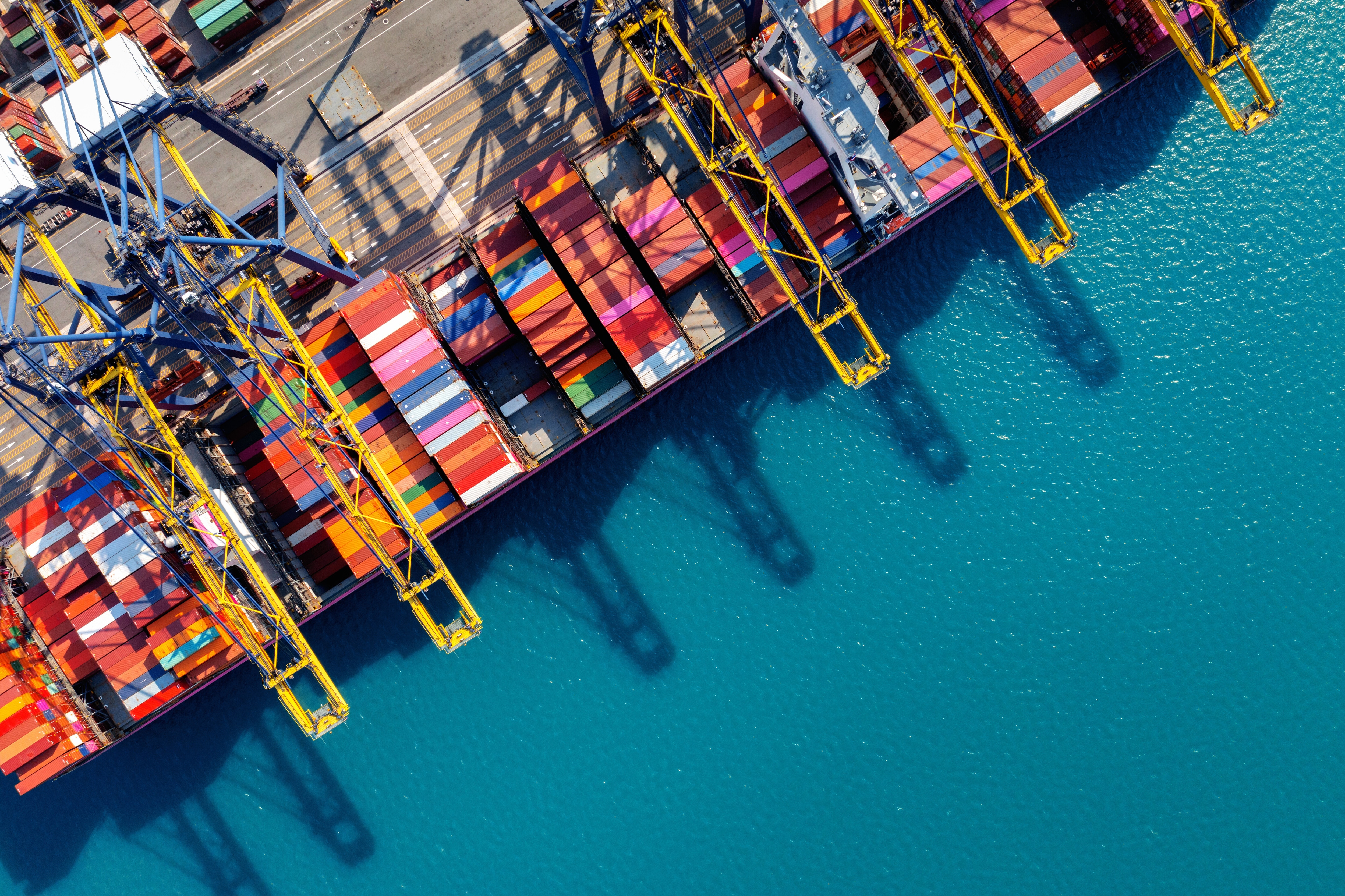
With 80% of global trade transported across the ocean, geopolitical tensions can adversely impact livelihoods, GDP and global development, says UNCTAD. Blocking waterways and ports as part of disruptions to critical infrastructure is identified as an increased risk by the Forum in its Global Risks Report 2026.
Conversely, protecting our water systems not only improves our health and security, but it also boosts growth, as the Forum’s Ocean Action Agenda briefing paper points out. The blue economy was worth $2.6 trillion in 2020 and is expected to double by 2050, proving that, when managed well, freshwater and marine ecosystems fuel businesses, nourish communities and sustain the planet's cycle.
A regenerative blue economy, in which “ocean-based economic activity helps restore ecosystems, strengthen resilience and support equitable prosperity within planetary limits”, is the next stage of the process, says a new Forum report, The Regenerative Blue Economy – Pathways to Prosperity.
How the Forum is helping to tackle the water crisis
With all this in mind, the Forum aims to drive progress across the full water cycle in the following ways:
Fit-for-purpose finance: Delivering equitable, resilient and sustainable water systems for all requires innovative financing mechanisms. Yet, the World Bank suggests that less than 2% of global investment in water is undertaken by private sector financing, underscoring the need to mobilize more private capital through appropriate pricing and risk-sharing models.
Basin-level partnerships and inclusive dialogue: Building trust across regions, sectors and stakeholder groups is key to tackling urgent water challenges and meeting global goals. That's why the Water Resilience Coalition has teamed up with the Forum's Water Futures Initiative to mobilize business leadership to support 100 priority basins globally.
Innovation and emerging technologies: Innovative water solutions are creating new pathways to resilience across local, industrial and ecosystem scales. The Aquapreneur Innovation Initiative is helping identify practical adoption pathways for early-stage water solutions, while the Water Futures Initiative advances the innovation-policy nexus by identifying collaborative public-private approaches that enable innovation and accelerate the adoption of scalable water solutions. Together, these efforts surface governance successes and practical pathways for action on water innovation.
Collaboration: The Forum’s ACT Ocean initiative supports businesses ready to spearhead a transition towards a healthy ocean and a thriving economy. Companies collaborate to share best practices and scalable innovations that reduce ocean risks and shape the future of the ocean economy. In doing so, companies identify and scale opportunities, stay ahead of emerging risks, build resilience and shape the market conditions needed for long-term value creation.
2026 is the year to act
As the American marine biologist Sylvia Earle once famously said: “No water, no life. No blue, no green”.
The full water cycle is the foundation of economic stability, food security and social resilience. And what began at Blue Davos in January – a blue thread connecting ocean and freshwater at the centre of the global agenda – must carry through every milestone of 2026.
The UN Water Conference in Abu Dhabi this December is the moment when political will, private sector leadership and multilateral commitment must converge. Just as a regenerative blue economy can create “an ocean economy that gives back more than it takes”, collective action on freshwater can restore watersheds, strengthen resilience and improve water security. Acting now can help build a connected water system, from source to sea, that sustains both people and planet for generations to come.