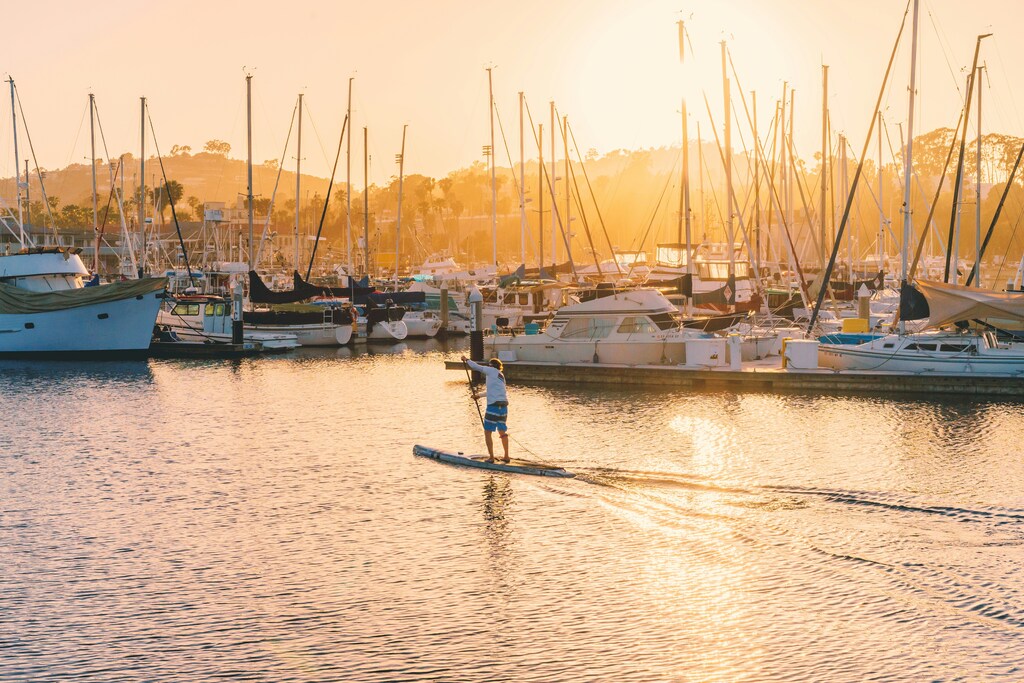
Small harbours and marinas are vital infrastructure for island economies – they support tourism, fishing and marine services – but are overlooked in blue economy strategies. Puerto Rico's post-hurricane rebuild shows why investing in them is essential to coastal recovery.
Roughly 40% of the world’s population lives within 100 km of the coast. A World Economic Forum report calls that narrow band the place where most of the regenerative blue economy will be built. It also shows how ports can become catalysts for it.
As a marina operator in Puerto Rico, I see a gap one level below the ports. The small harbours and marinas that anchor nautical tourism, fishing and marine services in island communities rarely feature in blue economy strategies. Most are still financed and regulated like holiday property rather than the infrastructure they are.
In the United States, tourism and recreation is the largest marine sector, employing 2.6 million of the marine economy’s roughly 3.7 million workers. In Puerto Rico, tourism and recreation is likewise the largest ocean-dependent sector, employing 58,839 of the island's 64,288 ocean-economy workers in 2022, according to NOAA, and ocean sectors account for about 9% of all jobs on the island.
On an island, much of that work starts at a dock.
What rebuilding Puerto Rico's marinas taught us about coastal resilience
In 2017, the two hurricanes severely damaged the marinas of Fajardo, on Puerto Rico’s east coast, where our company, Grand Caribbean Marinas, operates six today, which reopened between 2018 and 2021. The Sea Lovers Marina in Fajardo, Puerto Rico, was hardest hit and was completely rebuilt with floating concrete docks designed for Category 4 and 5 conditions, reopening as The Reserve.
These docks received their real test with Hurricane Fiona in 2022, coming through without any significant damage.
Rebuilding turned out to be less about docks than about restoring an operating ecosystem: power, communications, safe access, suppliers and the businesses that work from the water’s edge.
We are installing a floating wave attenuator with Puerto Rico’s natural resources agency and the US Fish and Wildlife Service. This will reduce wave and storm energy to protect vessels and docks while expanding usable slips and supporting coastal resilience.
By our estimate, we have invested about $50 million in rebuilding and upgrades since 2017. The network now supports about 50 businesses and roughly 1,000 direct and indirect jobs. We estimate that boating activity has grown by about 15% a year since 2021 in the total revenues generated by all the marina-related businesses across our network.
Three lessons from the Puerto Rico case apply well beyond one island.
1. Resilience is an investment, not a cost
The WEF’s report is direct on this point: “Risk management is not peripheral to the transition; it is a condition for it to succeed.” Storm-rated docks and wave protection cost more upfront. They also protect recurring revenue, help keep assets insurable and keep people in work.
The British Virgin Islands offer a telling example. When land-based resorts were wiped out in 2017, it was the marine sector – sailing, marinas and charter operations – that kept people employed. “The sailing industry carried us for nearly two years,” Clive McCoy, a senior tourism official, told Forbes. A harbour that reopens quickly is a bridge for the whole community.
2. Shared platforms need shared governance
A marina’s value depends on people its owner does not employ. Across our network, that means more than 30 charter operators, about 12 mechanics and eight restaurants, plus the fishers who share the waterfront.
It also means public bodies: environmental regulators, the municipality of Fajardo, Puerto Rico’s tourism and economic development agencies, and the police, whose maritime patrol for the island’s eastern waters operates from one of our marinas.
The report calls for polycentric governance, in which several centres of decision-making hold real authority at different scales. A working harbour already looks like that.
In Fajardo, we work with the Asociación de Pescadores de Sardinera so that commercial fishing and recreational boating can coexist. We recently renovated a boat ramp used by local fishers, and agreeing on shared hours on it has meant fewer conflicts between fishers and recreational boaters – the people who depend on a harbour need a voice in how it runs.
3. Private capital needs the right conditions
Over the past decade, less than 1% of the ocean economy’s annual value has been invested in sustainable ocean projects, according to the report.
Docks and breakwaters pay back over decades. Investors commit to them only when concessions, leases and permits are secure for long enough to match the life of the asset. The report makes a similar point about marine spatial planning, which “reduces the uncertainty that deters long-term investment.”
Where those conditions exist, capital is already moving: in 2025, a single infrastructure investor paid $5.65 billion for more than 130 marinas in the US and Puerto Rico.
Public co-investment can also go a long way. The US Boating Infrastructure Grant programme awarded $17.9 million to 17 projects in its 2026 Tier 2 round. One of our marinas received a grant from the same programme in an earlier round, alongside our own investment.
How to make marina networks part of the regenerative blue economy
Three shifts would help establish small marinas as part of the regenerative blue economy:
Governments and development banks can count small harbours and marinas as infrastructure in blue economy strategies and resilience funding as their benefits extend into the livelihoods and services of the wider community, including via jobs and land lease payments.
Regulators can offer operating rights and permitting timelines that match the life of the assets.
Operators and investors can build for the next storm rather than the last one, using storm-rated design standards and real-time weather and water monitoring, and bring boaters, fishers and small businesses into the decisions.
Each maps to the levers the WEF’s report identifies: governance, finance, human capacity and technology.
The regenerative blue economy will be built in that narrow coastal band. For many island communities, it will be built at the dock.