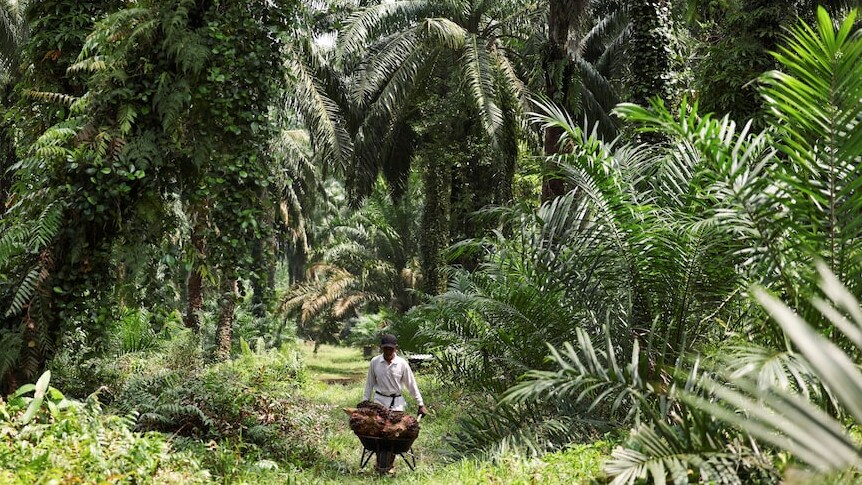
As a cornerstone of global supply chains, palm oil presents both significant economic opportunities and environmental challenges, with Indonesia and Malaysia pursuing distinct approaches to balancing industry growth and sustainability.
Palm oil is one of the world's most economically significant agricultural commodities. Producing more than 80 million tonnes annually and accounting for around one-third of global vegetable oil production, it is used in products ranging from food and cosmetics to detergents and biofuels.
A core component of global consumer goods and energy supply chains, palm oil has become closely associated with deforestation, biodiversity loss and greenhouse gas emissions linked to unsustainable production practices. These impacts threaten not only forests and ecosystems, but also the long-term resilience of the economies that depend on them.
Nowhere is this challenge more obvious than in Indonesia and Malaysia, which together account for more than 80% of global palm oil supply, significantly contributing to GDP. Generating approximately $60 billion in annual export revenue, the commodity production supports approximately 20 million livelihoods. While both countries have built global palm oil industries, they have taken different approaches to sustainability governance and certification.
The new Institutional Lessons from the Malaysian Palm Oil Board for Strengthening Indonesia’s Palm Oil Governance white paper, by the Tropical Forest Alliance, examines how stronger institutions, coordinated sustainability systems and credible data infrastructure have helped Malaysia strengthen market access and international recognition, and what those lessons could mean for Indonesia and other commodity-producing nations.
By protecting forests, improving land management and promoting responsible production practices, sustainable palm oil can help safeguard the natural capital on which agricultural productivity depends. In doing so, it supports more resilient supply chains, rural economies and exporting industries.
Data as a competitive asset
Competitiveness in palm oil production has long been determined by a familiar set of factors: production costs, yields and access to export markets. As sustainability requirements become more embedded in global trade, these factors are no longer enough to determine success.
Regulations such as the European Union Deforestation Regulation (EUDR), alongside evolving certification standards and buyer expectations, are necessitating verifiable information on land legality, traceability and greenhouse gas emissions.
Accordingly, producing countries must demonstrate that commodities are produced legally and responsibly, with credible statistics to support their claims. Institutional capacity to coordinate policy, industry compliance and generate authoritative data is therefore a strategic determinant of competitiveness.
Malaysia's centralized governance model has enabled it to become the authoritative source of industry statistics, production metrics and sustainability information, facilitating the country in engaging with regulators, trading partners and international standard-setters from a position of credibility.
Sustainability unlocks market access
As importing markets introduce new requirements for traceability and environmental performance, countries that can demonstrate compliance are likely to be better positioned to maintain and expand market access. Rather than reacting to changing regulations, leading producers can use robust sustainability systems to build confidence among buyers and trading partners.
Through Malaysia’s Sustainable Palm Oil (MSPO) certification system, the country has achieved certification coverage of 87.4% of the planted area, secured international recognition of its national standard, and obtained preferential tariff treatment under the European Free Trade Association (EFTA). Certified Malaysian palm oil can command sustainability premiums while maintaining access to key export markets as requirements evolve.
Robust institutions can help countries strengthen market credibility, maintain access to buyers and position themselves for long-term growth. While Malaysia coordinates research, certification, industry data and implementation through a single institution, Indonesia's responsibilities are spread across multiple ministries and agencies.
Sustainability drives value creation
Sustainability governance can also act as a driver of innovation and economic value creation.
Malaysia's integrated palm oil governance approach has contributed to the development of more than 700 technologies, the commercialization of 223 of them, and the creation of MYR 5.9 billion ($1.45 billion) in cumulative market value, unlocking landmark achievements such as oil palm genome sequencing.
Sustainable production can help future-proof commodity sectors against changing market conditions while also improving resilience, better positioning palm oil-producing countries to attract long-term investment. Countries that invest in credible sustainability standards are in a stronger position to navigate an evolving regulatory landscape.
Reducing barriers to participation
Despite perceptions that sustainability systems place additional burdens on producers, effective governance can reduce barriers rather than create them.
Malaysia's Sustainable Palm Oil Clusters (SPOCs) bring together groups of 400-600 smallholders, reducing certification costs from roughly MYR 15,000 to between MYR 3,000 and MYR 5,000 while providing technical support, training and access to sustainability programmes.
These structures can help ensure that smaller producers are able to participate in premium markets and benefit from growing demand for sustainably produced commodities.

Shaping the future of commodity trade
Countries with credible sustainability systems are able to participate in shaping international standards and trade frameworks. Malaysia's governance approach has helped position it as a standard-setting participant rather than a regulation-subject, enabling it to engage with evolving requirements from a position of technical credibility.
For Indonesia, the opportunity is significant. As the world's largest palm oil producer, strengthening coordination across certification and governance could help improve market access, enhance international credibility and capture greater value from sustainable production. The country's scale gives it the potential not only to adapt to changing standards, but to help shape them.
As demand for deforestation-free and traceable commodities grows, the countries that succeed will be those that can combine production strength with credible sustainability systems, trusted data, innovation capacity and effective institutions.