Nearly 90% of global trade passes through ports, where automation reshapes traditional dockworker roles and raises pressing concerns about job security.
Recent port strikes underscore the urgency of balancing automation with a just transition that protects workers while advancing climate goals.
Ports have a unique opportunity to build a sustainable, worker-centred future that supports economic growth and environmental responsibility.
When 45,000 US dockworkers walked off the job in October 2024, it wasn’t just a labour dispute; it was a wake-up call for global trade. Port workers are essential to the movement of nearly 90% of the world’s goods, connecting everything from food and medical supplies to cars and electronics to their destinations.
But as ports increasingly shift to automated systems to boost efficiency and cut emissions, these workers are left wondering what their future holds. Automation promises safer, more reliable operations, yet it also threatens to displace the very people who keep these critical systems running.
The recent strikes raise a crucial question: can ports pursue technological and environmental progress without sacrificing their workforce?
For many dockworkers, automation isn’t just a step forward, it’s a potential threat to livelihoods built over generations. A 2022 report by the Economic Roundtable found that automation eliminated 572 full-time roles across two terminals at the ports of Long Beach and Los Angeles in 2020 and 2021, a clear sign of the scale of impact on the port workforce.
However, if ports commit to using the cost savings from automation to reinvest in job creation and climate-resilient projects, this transition could bring long-term benefits to workers and communities.
In the last two years, dockworkers in Canada and the United States have called for increased wages to reflect the demands of a challenging, often hazardous work environment and limits on automation to safeguard their jobs.
The Canadian ports’ 13-day strike in July 2023 disrupted nearly CAD 9.7 billion ($7.4 billion) in trade, sparking a ripple effect across supply chains. The message from these labour actions is clear – if ports are to advance automation and climate goals, they must do so in ways that also support job security and community resilience.
A just transition for ports
So, what does a balanced approach to automation look like, and how can ports lead a just transition? By recognizing their strategic role in climate action, ports can turn investments in new technologies – including automation – into opportunities for growth that strengthen, rather than reduce, job security.
In other words, automation doesn’t have to result in net job loss; instead, it can open doors to new roles in clean energy, infrastructure and climate resilience that benefit workers and communities.
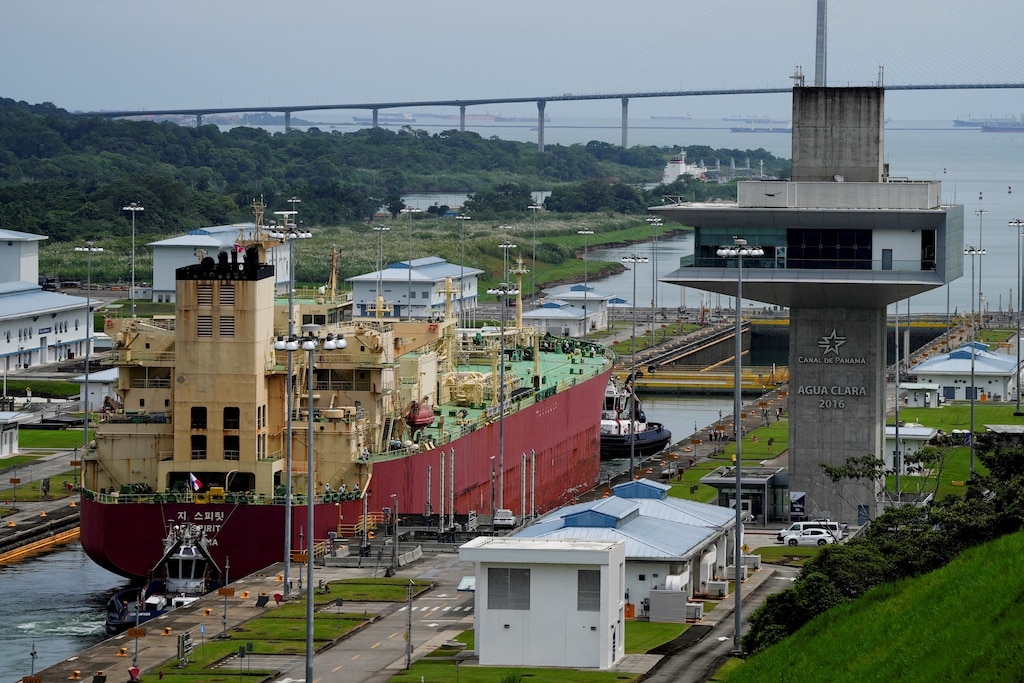
Automation is intended to optimize operations, enabling terminals to operate more efficiently and safely around the clock. By automating cranes, gates and cargo handling equipment, ports and terminal operators can streamline operations, improve cost and time efficiency and reduce the risk of human error and injury.
When coupled with electrified, low-emission equipment powered by renewable sources such as wind and solar, automated terminals can help ports reduce air pollution and greenhouse gas emissions, creating cleaner, healthier environments for workers and neighbouring communities.
In addition to these operational upgrades, automation can help ports repurpose space previously used for human-operated tasks, opening new areas for clean energy initiatives and climate-resilient infrastructure.
For example, as cleaner fuels such as e-methanol and green hydrogen emerge to decarbonize ocean-going vessels, harbour craft and rail, ports can become essential hubs for storing and distributing these fuels.
Similarly, ports are uniquely positioned to serve as clean energy manufacturing and service centres. Projects such as offshore wind development require ongoing maintenance and administration and port workers, with their existing skillsets, are well-positioned to transition into these roles with targeted retraining.
To make these new, climate-positive jobs attractive options for displaced workers, ports and terminal operators must invest in accessible and well-supported retraining programmes that align with workers’ needs. This proactive approach can provide stable, long-term roles for port workers, easing concerns about job security as ports modernize.
To ensure a successful transition, ports must prioritize initiatives that equip workers with the skills needed to thrive in a modern, climate-positive industry. By committing to robust retraining and skills development programmes, ports can prepare their workforce for emerging roles, supporting sustainable economic growth and long-term job security.

Preparing communities
However, climate action requires more than reducing pollution and emissions. Ports also play a crucial role in helping their communities adapt to climate impacts by preparing for rising sea levels, stronger storms and other challenges.
As coastal cities and their ports face increased climate risks, ports can champion sustainable projects, including nature-based solutions and infrastructure reinforcements. By combining modernization with climate adaptation, ports can enhance environmental resilience and foster economic growth that benefits workers and communities.
To achieve this transition, ports need all impacted workforces on board. This requires establishing a vision that appropriately prioritizes short-, medium- and long-term developments and considers how the workforce will transition.
In the Future of Jobs Report 2023, the World Economic Forum emphasizes this crucial balance between leveraging technology for economic progress and maintaining meaningful employment opportunities. This balance is essential for developing policies recognizing workers’ rights alongside innovation and prioritizing inclusive, sustainable growth.
With a clear vision and a strategic transition plan in place, ports and terminal operators will be better equipped to map, train and match workers from displaced to new roles.
Germany and Sweden are already developing just transition frameworks that support workers as they acquire new skills, preparing them for jobs in a modernized green economy. In Germany, a national coal phase-out plan includes robust funding for job retraining and economic diversification, ensuring workers displaced by automation or environmental policies have pathways to stable employment.
Sweden has invested heavily in lifelong learning initiatives, offering extensive training and re-skilling programmes to keep its workforce adaptable as industries transform. These initiatives highlight how proactive policies can make transitions sustainable and equitable.
As ports continue to automate and adapt to climate regulations, they have a choice: reinforce the status quo or redefine labour’s role in a transformative, sustainable future.
By addressing workers’ needs for secure, evolving roles within an environmentally responsible framework, ports can become leaders in building resilient, inclusive communities. Through a fair transition, port workers can drive positive change, strengthening the industry and more adaptable for future generations.
What is the World Economic Forum doing to promote sustainable urban development?
Cities are responsible for 75% of global greenhouse gas emissions and are home to over half of the world’s population—a number that will grow to two-thirds by 2050. By prioritizing cleaner energy, cities could contribute more than half of the emissions cuts needed to keep global warming to less than 2°c, which would be in line with the Paris Agreement.

To achieve net-zero and nature-positive cities and communities by 2050, the World Economic Forum is partnering with public and private sector stakeholders on initiatives that drive global ambition through local action. Here are just a few:
Davos Baukultur Alliance: Advancing high-quality planning, construction and management of buildings, infrastructure, and public spaces using principles based on climate resilience, sustainability and circularity in the built environment. Learn more.
Global New Mobility Coalition: Exploring new solutions to reduce congestion and emissions, enhance EV infrastructure and transform urban mobility and deliveries. Learn more.
Alliance for Urban Innovation: Connecting innovators and entrepreneurs to new markets and opportunities that reimagine and reshape quality of life and local economies. Learn more.
G20 Global Smart Cities Alliance: Accelerating intelligent, practical solutions to build climate resilience, enhance public well-being and tackle the most pressing challenges facing cities and local communities. Learn more.
Future of Travel and Tourism: Driving inclusive and sustainable economic growth while preserving cultural heritage and protecting natural ecosystems. Learn more..
Discover how you can be a part of our efforts to create more sustainable and livable cities and communities. Contact us here.