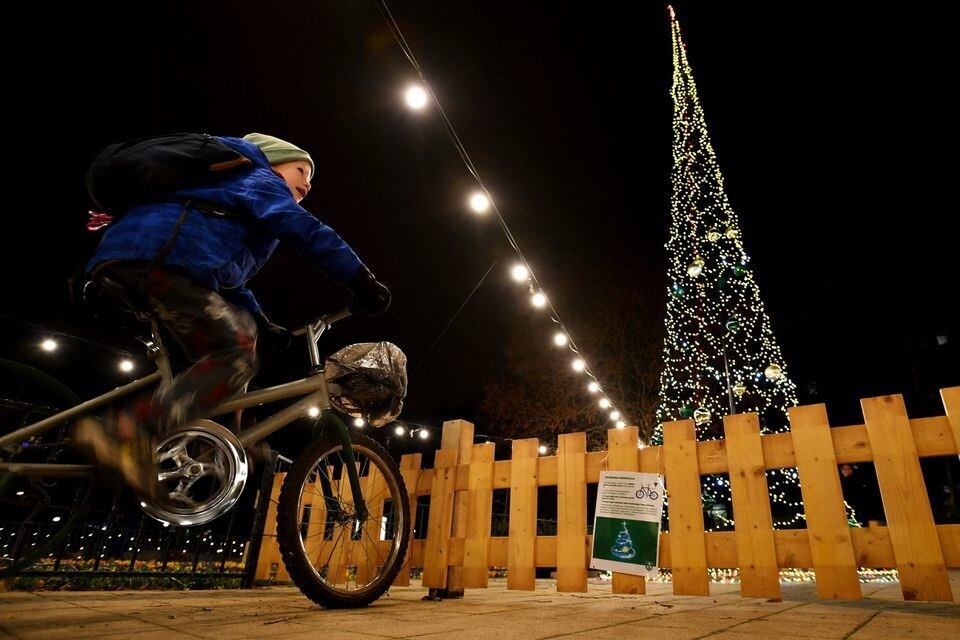
In Budapest, Hungary, there is a Christmas tree-shaped light installation that is powered by passer-by cyclists.
It's the brainchild of the city's mayor, who says that as well as encouraging exercise to keep warm in the cold weather, the initiative promotes sustainable technology.
The bicycle also charges a battery that, along with solar panels, powers up the rest of the lights around the Budapest square.
A bicycle pedalled by passers-by powers up a Christmas tree-shaped light installation in Budapest, as the local mayor applies sustainable technology to celebrate the festive season while saving on surging energy costs.
The tree only lights up fully while someone keeps pedalling really hard, which encourages families with their kids to stop and give it a try. The bicycle also charges a battery that, along with solar panels, powers up the rest of the lights around the Budapest square.
"One the one hand, we keep moving in this cold weather. On the other, we can experience how much one needs to pedal to light up a six meter-high Christmas tree decoration," said Gergely Orsi, the mayor of Budapest's 2nd district.
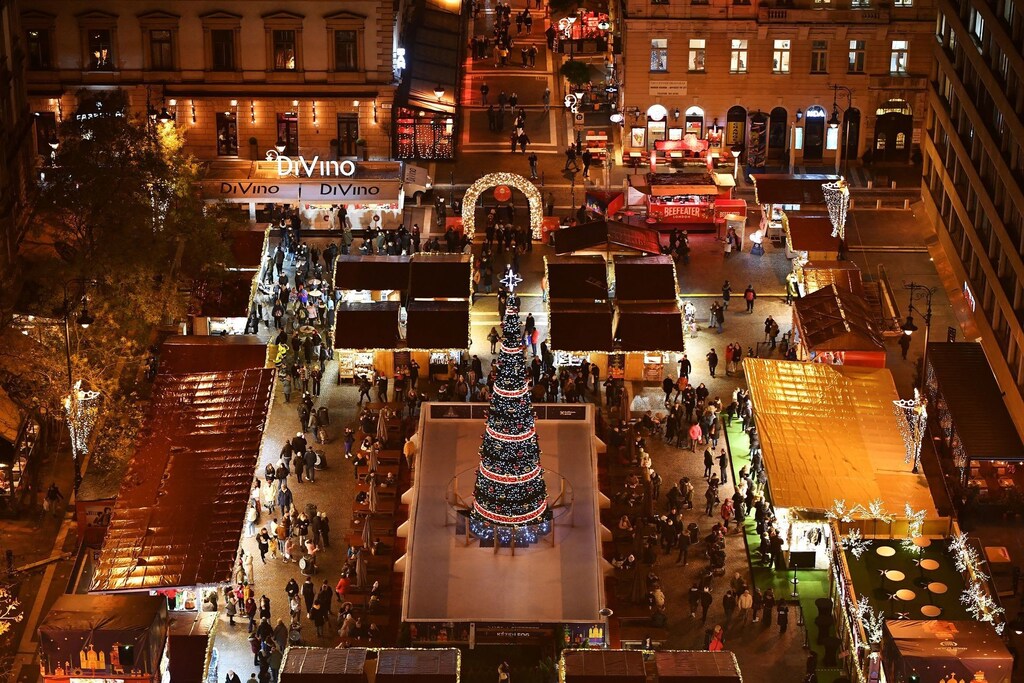
"For us, it shows an example that sustainability is the future."
His municipality decided to cancel most of the usual Christmas light decorations this year due to the energy crisis.
What is the World Economic Forum doing to promote sustainable urban development?
Cities are responsible for 75% of global greenhouse gas emissions and are home to over half of the world’s population—a number that will grow to two-thirds by 2050. By prioritizing cleaner energy, cities could contribute more than half of the emissions cuts needed to keep global warming to less than 2°c, which would be in line with the Paris Agreement.

To achieve net-zero and nature-positive cities and communities by 2050, the World Economic Forum is partnering with public and private sector stakeholders on initiatives that drive global ambition through local action. Here are just a few:
Davos Baukultur Alliance: Advancing high-quality planning, construction and management of buildings, infrastructure, and public spaces using principles based on climate resilience, sustainability and circularity in the built environment. Learn more.
Global New Mobility Coalition: Exploring new solutions to reduce congestion and emissions, enhance EV infrastructure and transform urban mobility and deliveries. Learn more.
Alliance for Urban Innovation: Connecting innovators and entrepreneurs to new markets and opportunities that reimagine and reshape quality of life and local economies. Learn more.
G20 Global Smart Cities Alliance: Accelerating intelligent, practical solutions to build climate resilience, enhance public well-being and tackle the most pressing challenges facing cities and local communities. Learn more.
Future of Travel and Tourism: Driving inclusive and sustainable economic growth while preserving cultural heritage and protecting natural ecosystems. Learn more..
Discover how you can be a part of our efforts to create more sustainable and livable cities and communities. Contact us here.
"Every year this square is decorated beautifully. We would have been sad if we did not have them this year, but I think this is an excellent compromise," a local resident, Nora, said after she had pedalled the bicycle with her young son watching.