The demand for migrant workers is increasing worldwide even as the global pool of labour is shrinking.
Migration challenges in global value chains today are deeply intertwined with sustainability and accountability imperatives.
Global companies have the power to drive meaningful change, as shown by best-practice examples.
There are an estimated 169 million international migrant workers worldwide, representing one in every 20 workers. Each year on 18 December, International Migrants Day recognizes their vital contributions to the global economy.
The day also serves as a reminder of the challenges many migrants face, including discrimination, exploitation and violations of their human and labour rights. In fact, 10 out of 17 UN Sustainable Development Goals feature targets and indicators tied to migration and mobility of labour.
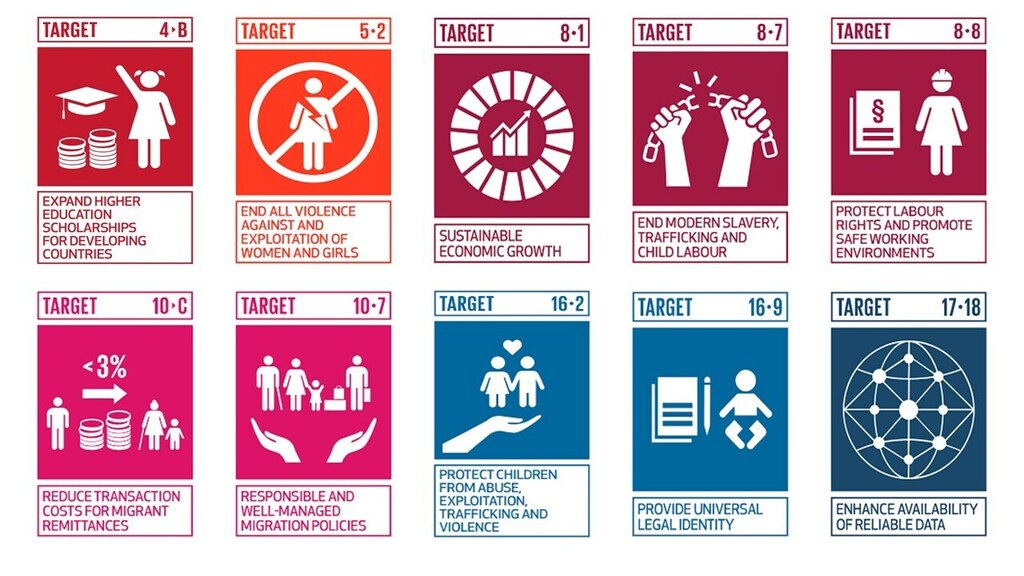
Global companies, with their significant economic power and international influence, are uniquely positioned to drive sustainable migration management and contribute to the relevant SDG targets across their global value chains (GVCs).
The global race for labour
Since the 1970s, multinational companies have largely structured their GVCs based on several criteria, including access to a strong labour pool, locating production either in distant economically developing countries (offshoring), or in nearby nations closer to their key markets (nearshoring).
In the 21st century, this has changed. In China, the supply of labour, especially cost-effective, is shrinking due to rapid economic growth. Similarly, many other Asian countries, such as Thailand and Malaysia, and Eastern European nations, such as Hungary and Poland, have experienced modernization and economic growth. These developments, combined with social changes like declining fertility rates, emigration, ageing populations and rising education levels, have significantly reshaped their labour markets. As a result, in these countries, multinational companies are facing challenges to address talent gaps and meet hiring needs with local populations alone.
For companies, relocating existing infrastructure – such as factories, natural resource extraction sites or logistics networks – away from these countries is both costly and impractical. Hence, many have turned to working with local governments to allow the recruitment of migrant workers to help address labour shortages. This has resulted in significant new migration patterns, such as Filipino workers in Hungary, Bangladeshis in Malaysia, or Central Americans in Mexico.
As the global pool of labour shrinks and global demand for migrant workers rises, it is becoming evident that there is no such thing as an unlimited global labour supply.
We coined the term “global race for labour” to highlight the growing competition among companies for migrant workers who are an integral part of GVCs.
Migration challenges in global value chains
According to James X. Zhan, Senior Director of Investment and Enterprise at UNCTAD, sustainability and accountability imperatives top the list of major forces driving changes in GVCs today. Here, we shed light on the most pressing issues and the human costs they entail:
Unethical recruitment. Up to 80% of migrant workers are recruited through intermediary agencies, with thousands of them operating worldwide. These agencies handle various tasks, such as issuing documents, conducting medical tests, organizing travel and managing workers’ accommodations abroad. Recruitment costs can be immense. For instance, a Nepalese worker seeking to migrate to Europe may pay around €7,000 to the recruitment agency. Based on Nepal’s GDP per capita, this would be comparable to someone from Europe paying approximately €150,000 in recruitment fees. To raise this money, workers often incur significant debt before even leaving their countries of origin.
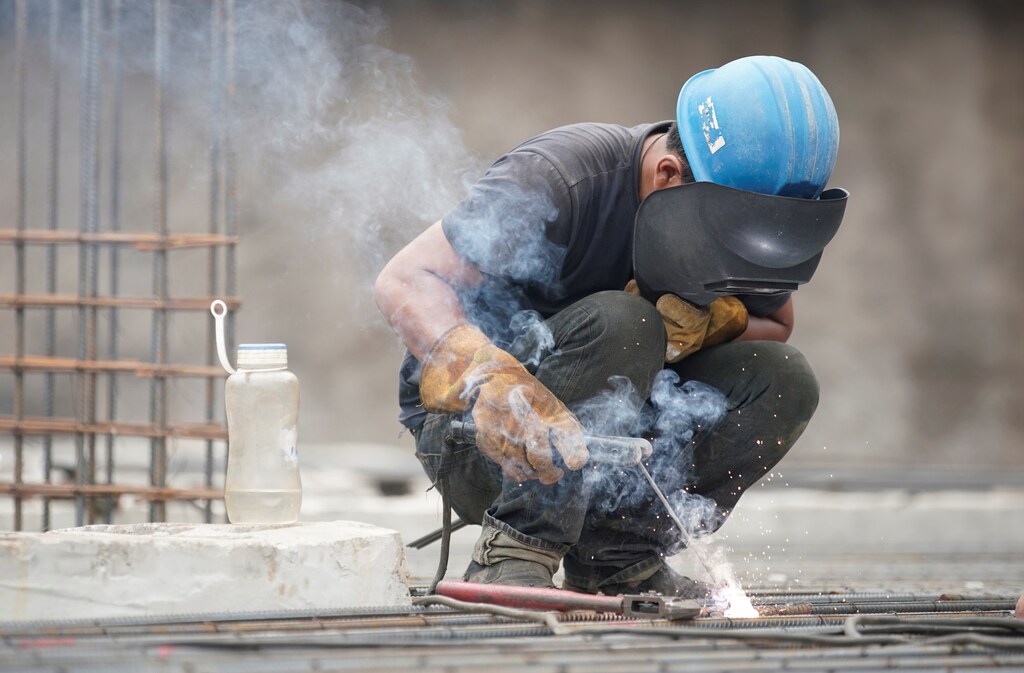
Labour exploitation. Migrant workers face various forms of precarious conditions in their workplaces. They are frequently employed in "dirty, difficult, and dangerous" (3D) jobs, often without access to information about fair wages, workplace protections or occupational health services. Many employers also take advantage of migrant workers’ readiness to work long and irregular hours.
Migrant women. Female migrants represent over 40% of the global migrant workforce. They face unique gender-related challenges, such as sexual harassment and exploitation. A particularly troubling issue is the practice of pregnancy testing, which remains legal as a requirement for applying for overseas employment in some countries. Additionally, if a migrant becomes pregnant while working abroad, she may not only lose her job and income but also risk deportation. Moreover, migrant women with children typically have no other choice but to leave their children behind, relying on others for their care.
The power of global companies
Global companies are key potential agents of change due to their economic power and reach. Their actions influence the entire GVCs that they orchestrate. They can choose which recruitment agencies to contract, determine which business-to-business relationships to foster or discontinue, and leverage their negotiating power when interacting with suppliers.
Here are some examples of best practices from companies addressing the migration challenges highlighted above.
Unilever, HP, IKEA, the Coca Cola Company, and several other big names adhere to the “Employer Pays Principle”, which prohibits charging recruitment fees and ensures the reimbursement of workers who paid such fees before their employment abroad.
VINCI conducted a comprehensive study on the employment challenges faced by migrant workers during the 2022 FIFA World Cup in Qatar. In partnership with Unilever, L’Oréal, Sodexo, Schneider Electric, Mars and Danone, the company drew on its expertise to create targeted tools for safeguarding human rights in high-risk regions. These tools are made available to other companies and applicable across various industry sectors.
Flex, HP and other leading companies have incorporated policies and labour standards related to migrant workers’ rights into their supplier codes of conduct and/or their corporate codes of conduct. These codes are disseminated throughout the entire GVCs, via trainings, guidelines, terms and conditions and other means.
Companies like Unilever have appointed chief human rights officers to oversee human rights policies, including those related to migrant workers. This practice is growing among large corporations with potential exposure to human rights risks within their GVCs.
Some companies engage consultancies specializing in due diligence assessments of business and human rights within GVCs that align their work with migration-specific SDG targets. Notable examples include Equiception, LRQA, and TwentyFifty.
How is the World Economic Forum promoting equity in the workplace?
The Future of Jobs Report 2023 found that 75% of companies surveyed expect to adopt AI, big data and cloud technologies in the next five years.
The Centre for the New Economy and Society provides a platform for leaders to share insights on the adoption and efficacy of new technologies, and the readiness of the workforce to use them. Our work includes developing insights and dialogue on growth, jobs, skills, equity and risks.
Learn more about our impact:
Gender parity: Since 2006, we have annually measured the state and evolution of gender parity in 101 economies, supporting decision-makers to identify the most effective policies to close gender gaps. In Chile, we helped establish gender parity accelerators and benefitted 728,000 women – reducing the gender gap by 37% in the participating companies.
Reskilling Revolution: With our partners, we are helping the global workforce future-proof their careers, working with over 350 organizations to provide 1 billion people with better education, skills and economic opportunities by 2030.
Disability inclusion: Working with the Valuable500, we are collaborating with the largest global network of CEOs committed to closing the disability inclusion gap. Members are making progress by increasing the adoption of digital accessibility best practices and including disability in diversity, equity and inclusion strategies.
Racial justice: We are collaborating with a global coalition of 55 organizations in 13 industries who are committed to building equitable and just workplaces for professionals from under-represented racial and ethnic identities.
Want to know more about our centre’s impact or get involved? Contact us.
There is a strong business case for responsible migration management in global companies. If managed well, labour migration can be a cornerstone of sustainable development and progress. Unlocking its potential is key to accelerating efforts to achieve the SDGs, for the benefit of all.