
The 2030 deadline to meet the UN Sustainable Development Goals (SDGs) is fast approaching, yet just 16% are expected to be achieved by then.
While the SDG financing gap is well documented, what is less widely acknowledged or visible is the regulatory gap that sits alongside it.
As well as looking at financing, governments need to examine the rules that determine whether a solution can move, cross borders and endure.
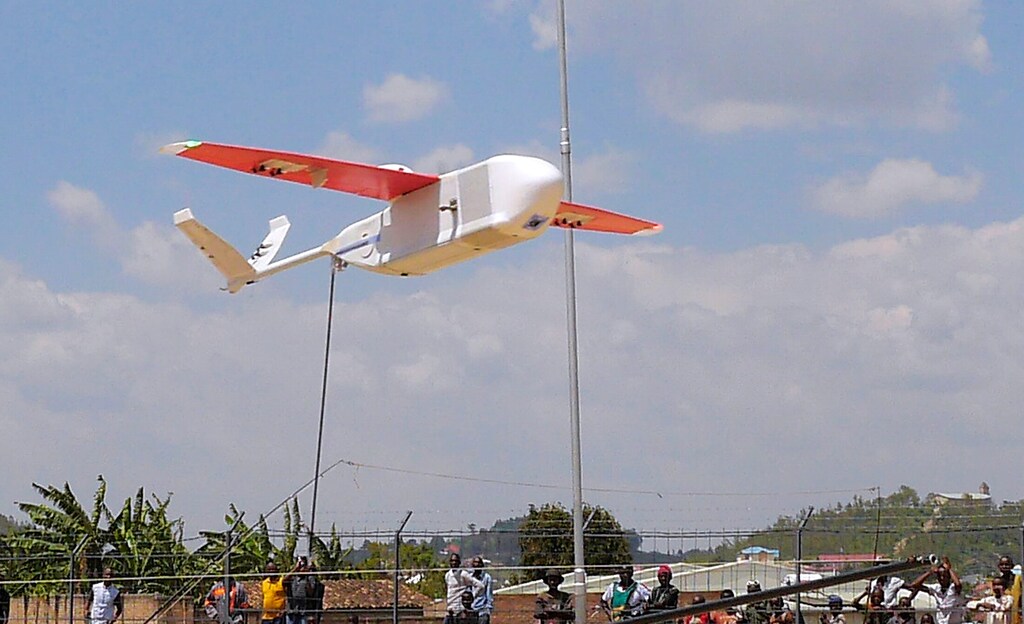
In late 2016, a small drone lifted off from a distribution centre in Rwanda carrying blood bound for a rural clinic hours away by road, one of the first flights of its kind anywhere. Within a few years, that route had grown into the most advanced medical drone corridor on the planet, moving blood, medicine and vaccines across Rwanda's mountainous countryside on demand.
What set Rwanda apart was not the technology; it was the policy choices behind it: rules that allowed the service to operate, policy-makers willing to revise them as the technology evolved, and a system capable of turning a promising experiment into infrastructure.
That part of the story tends to disappear in discussions of the United Nations’ Sustainable Development Goals, or SDGs. When progress stalls, the diagnosis usually begins with money, a financing shortfall measured in the trillions of dollars each year.
The financing gap is undeniable, but less visible is the regulatory gap sitting alongside it. Trace almost any success story back far enough, and the decisive factor was often not capital, technology or funding; it was a rule that let something work at scale.
The 2030 deadline to achieve the SDGs is now just four years away, and on most measures the world remains off track – not simply because of what governments cannot afford, but because of what they had never written the rules to permit, build or maintain.
Redesigning the rule book
Rwanda's drones show what's possible when regulators treat an old rulebook as a design problem, rather than a fixed constraint. Airspace rules written decades before delivery drones existed could have stopped the service before it began.
Instead, regulators created a way for drones to fly under authorization within controlled airspace – a sandbox in the sky – while the broader framework evolved. Ghana adopted a similar approach a few years later, building on a model already tested next door.
Looking to the UK, the Financial Conduct Authority in 2016 launched the world's first regulatory sandbox, giving fintech firms a supervised space to test new products. Firms that entered went on to raise 15% more capital over the following two years than comparable firms that entered later – evidence that regulatory experimentation reassures investors as much as it protects consumers.
Sometimes speed comes not from changing rules but from deciding that the same work need not be done repeatedly. In the East African Community, drug registration times fell from 24 months in 2012 to 8–14 months by 2017 as regulators harmonized requirements and relied more on one another's assessments. The standards themselves didn't disappear, the duplication did.
Other problems require countries to coordinate around a shared regulatory and financial framework.
The Caribbean Catastrophe Risk Insurance Facility (CCRIF), for example, pools hurricane and earthquake risk across Caribbean governments, enabling them to collectively purchase coverage and receive rapid payouts when disasters strike.
Its innovation was not simply a new insurance product, but the institutional rules that made regional risk-sharing possible: common parameters for assessing disasters, agreed conditions for triggering payouts and arrangements that allowed funds to move quickly across borders. Risk too costly to insure country by country becomes manageable when countries align their rules and act together.
Why regulation lags across the world
Look across these examples and a pattern emerges: that regulation tends to fall behind less because of government competence than because of how regulatory systems themselves are built.
The first is a mismatch in clock speed. Technology can change in weeks, while laws take years to pass. Governments have developed several ways to close that gap, including sandboxes and controlled testing environments, which create room to learn and adjust without waiting for a full legislative cycle.
The second is geography. Rules stop at borders even when the problems they govern do not. Governments have begun addressing this through tools such as regulatory harmonization and shared assessments. A medicine approved in one country may face a similar review in the next, not because the science changed at the border, but because the authority to decide did.
Then there is scale. Governments can address this by pooling exposure and creating shared institutions, as CCRIF does, while tying payouts to predetermined triggers so that no political decision is needed after every natural disaster. This also addresses an additional confounding challenge as rules are easy to write in a crisis but creating durable institutions are not.
Taken together, these examples expose a blind spot in how development is usually discussed. The focus falls overwhelmingly on what is missing – more capital, more technology, more capacity. All are necessary, but they don't explain why some solutions spread while others remain pilots. Money can put a solution on the table; rules determine whether it can move, cross borders and endure.
How to accelerate action on the SDGs
There is an obvious question hanging over these successes: would they work anywhere else? Rwanda, the UK, East Africa and the Caribbean each benefited from circumstances that cannot simply be reproduced. A regulatory model that succeeds in one market may fail in another.
What can travel is the instinct behind them, each began with a constraint that looked fixed, and treated it as something that could be redesigned. Regulation cannot make hard constraints disappear, but how governments work within them can change what becomes possible.
The larger question is whether governments are looking hard enough at the rules standing between solutions that already exist and the people they are meant to reach.
Just 16% of SDG targets are projected to be achieved by 2030, according to the latest assessment. As world leaders gather in New York for the UN General Assembly, the instinct will be to reach for a bigger number, more aid, more concessional finance, another pledge stacked on the last one.
Money will be indispensable. But the cases above suggest another question that is considerably more affordable and perhaps more overlooked. Which stalled solutions are waiting for capital, and which are waiting for someone to change the rules that determine whether they can scale?
That work rarely produces a headline or makes for an exciting announcement. It means revising an aviation rule, trusting another regulator's judgement, pooling risk, or designing a system that keeps delivering after political attention moves on.
But with less than four years remaining to achieve these global goals, the next breakthrough on the SDGs may not be a new technology or another billion-dollar pledge. It may be a rule, rewritten in time.