A recent Ipsos survey has measured support for globalization and trade in 25 countries around the world.
A majority think that expanding trade is a good thing, but more also agreed than disagreed that more trade barriers were needed.
The survey also showed that support for the benefits of globalization had fallen since 2019.
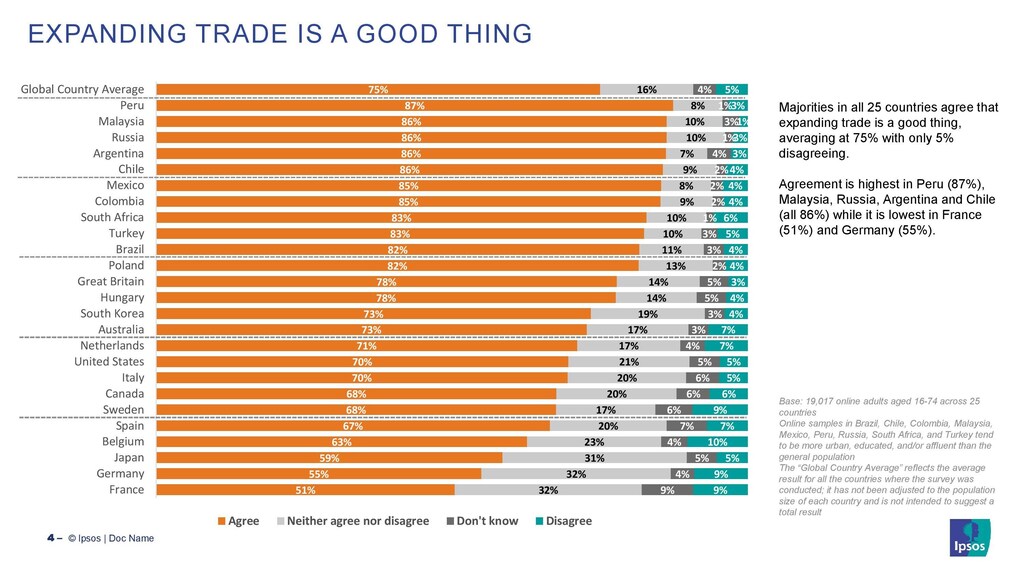
Most people think that expanding trade is a good thing, according to a recent Ipsos-World Economic Forum survey of adults in 25 countries around the world.
But support for globalization has declined - with half of people unsure of its benefits and a third advocating for trade barriers.
On average three-quarters of those surveyed thought that expansion was a good thing, with just 5% disagreeing. Support was strongest in Peru and lowest in France.
“International trade and investment can grow economies, reduce poverty, improve healthcare and empower people worldwide," says Sean Doherty, Head of International Trade and Investment at the World Economic Forum.
"However, changes caused by trade can be disruptive and painful, and can sometimes undermine local reforms. The seeming contradiction in survey results is understandable: people want more of the good and less of the bad of globalization.
"To grow the gains and achieve fair outcomes for all, governments need to listen to local priorities and work together on policies related to the environment, jobs, tax, the digital economy and other issues which reach across borders.”
Support for more trade - and trade barriers
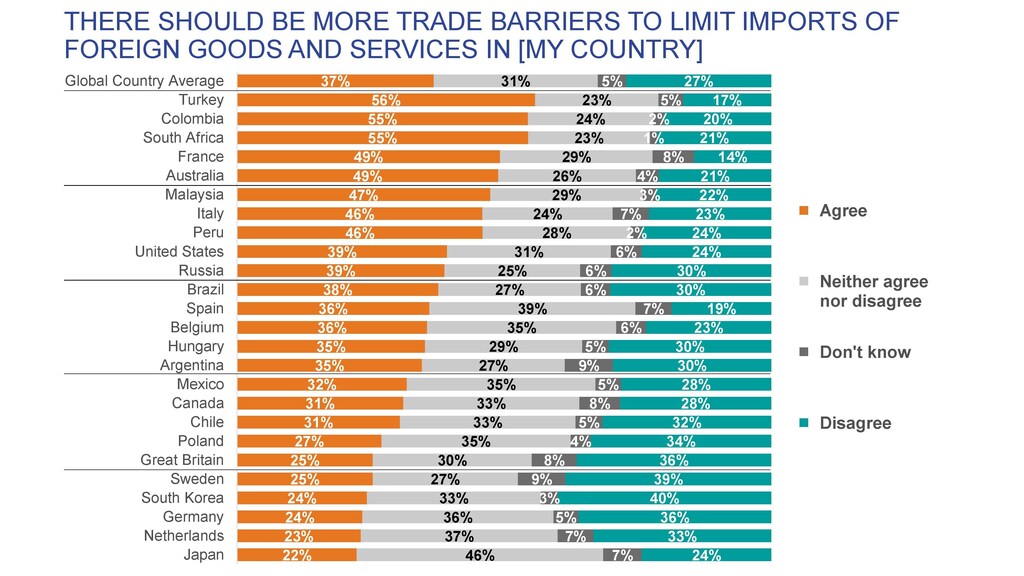
Despite this widespread support for increased trade, more people agreed there should be more trade barriers to limit the import of foreign goods and services into their country than disagreed.
Some 37% agreed there should be more barriers compared to 27% who disagreed. Around a third were neutral or didn't have an opinion.
"People want more of the good and less of the bad of globalization"
Sean Doherty, Head of International Trade and Investment at the World Economic Forum
Support for globalization falls
Around half (48%) of those surveyed agreed that globalization is a good thing for their country. Just 13% disagreed, with the remaining unsure or neutral.
Positive assessment of globalization was highest in Malaysia (72%) and lowest in France (27%).
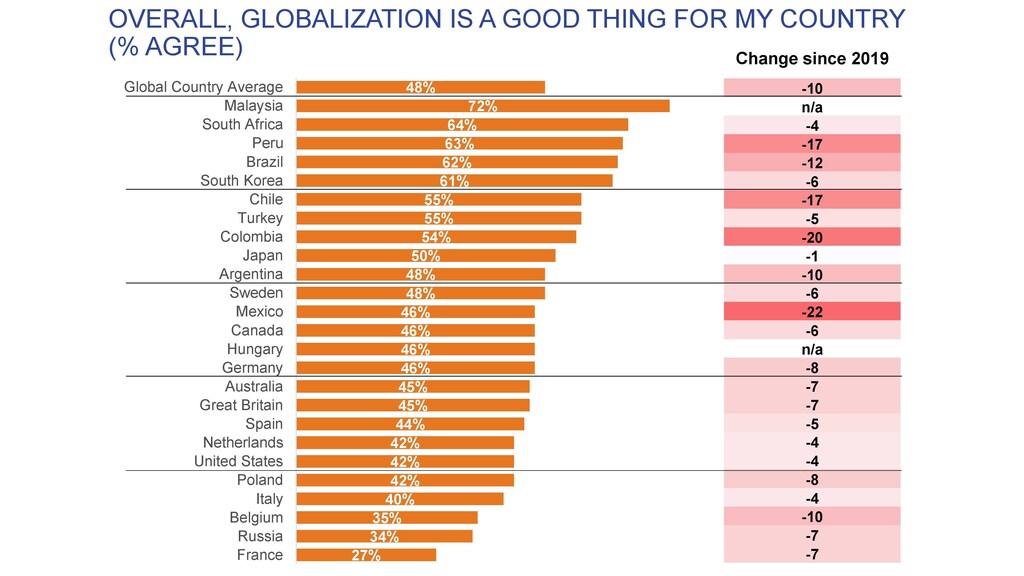
In all of the 23 countries where this question was asked in 2019, fewer now agree that globalization is a good thing. The drop in support was highest in Mexico, Colombia, Chile and Peru.

These findings are the result of a survey of 19,017 adults aged 16-71 in 25 countries around the world. The survey was conducted between 26 March and 9 April.
Sustainable Development Impact Summit
These issues will be addressed at the Forum’s upcoming Sustainable Development Impact Summit. The virtual four-day event is hosted alongside the United Nations General Assembly and brings together global leaders from business, government, and civil society.
It will focus on new technologies, policies and partnerships to advance cooperation, accelerate progress, and highlight tangible solutions to our global challenges.