Generative biology: Immense opportunity but how should security play catch up?
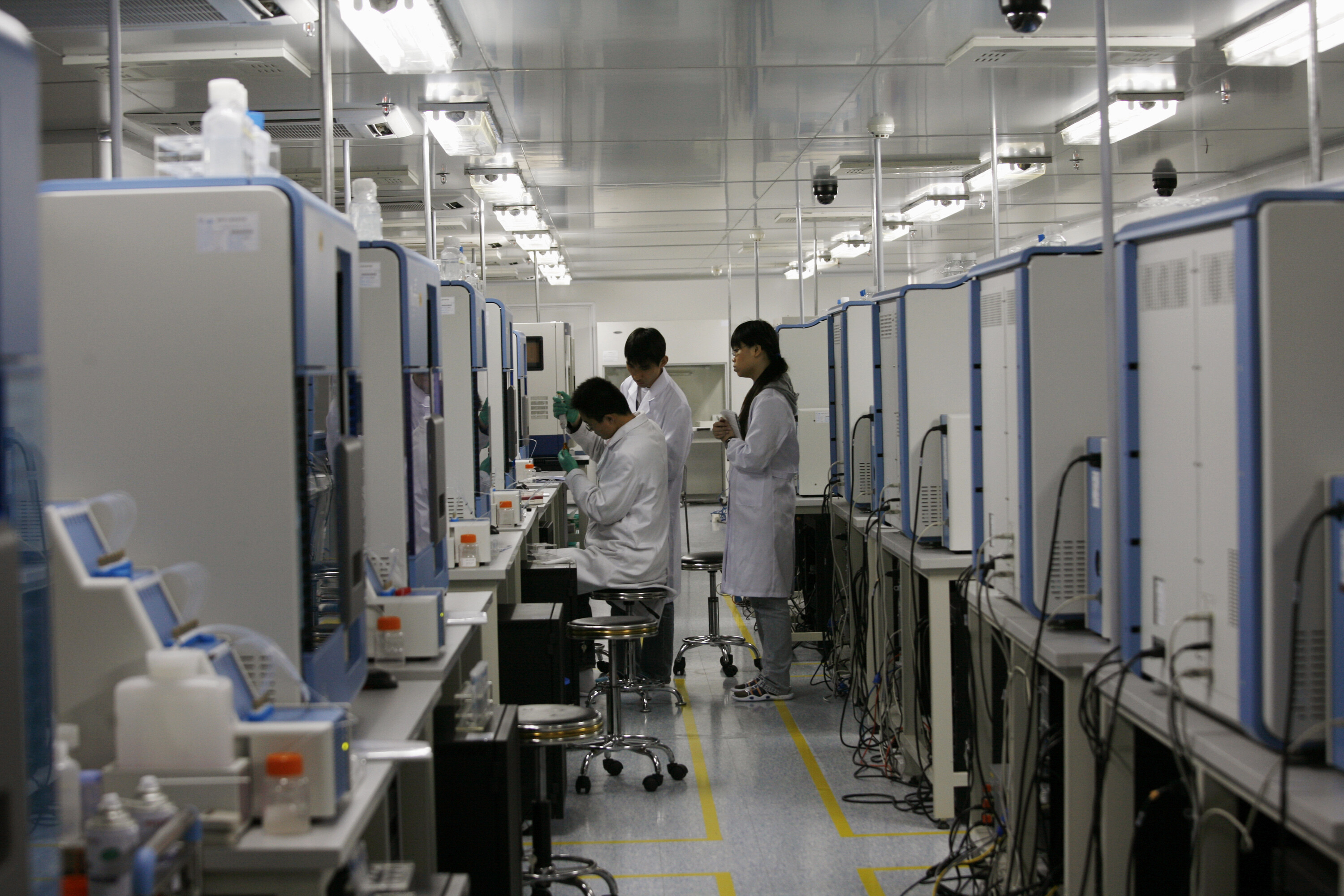
Generative biology goes beyond synthetic biology but with opportunity comes risk. Image: REUTERS/Bobby Yip
Hoda Al Khzaimi
Associate Vice-Provost for Research Translation and Entrepreneurship, New York University Abu Dhabi- Generative biology goes beyond synthetic biology by integrating artificial intelligence, automation and computational design to create novel biological systems at digital speed, resulting in breakthroughs across sectors.
- In addition to opportunities, generative biology also presents risks, including cybersecurity breaches and supply chain fragility, with oversight and governance lagging behind.
- Equity and security must evolve together – ensuring equitable access to safeguards, managed data-sharing systems and robust governance frameworks are critical.
Generative biology is not a rebrand of synthetic or engineering biology. It reflects the accelerating convergence of biology with computation, automation and artificial intelligence (AI).
Unlike synthetic biology’s focus on modular assembly of DNA or proteins, generative biology uses computational design tools, AI models and automated platforms to generate novel biological systems at scale.
As India Hook-Barnard, CEO of the Engineering Biology Research Consortium, a member of the Global Future Council on Generative Biology, noted: “Both fields have always integrated advanced computation, data science and design tools. What is new is that advances in artificial intelligence and automation are accelerating this trajectory, enabling biology to operate at digital speed and expanding the scope of real-world solutions.”
With generative biology a moving target, how the field is framed will shape the opportunities taken, risks prioritized and governance models adopted. This fluidity means governance is playing catch-up.
The opportunity playbook
Generative biology is already delivering tangible impact. In health and medicine, Google DeepMind’s AI system, AlphaFold, has predicted the three-dimensional structures of over 200 million proteins, revolutionizing drug discovery and enzyme design.
Biotech therapeutics company Generate: Biomedicines has raised $273 million and secured a $1 billion partnership with Novartis to advance AI-designed antibody therapeutics.
In food systems, companies such as Perfect Day and Impossible Foods use engineered microbes to produce dairy and heme proteins, enabling alternatives to conventional livestock. In climate and chemistry, US-based LanzaTech converts carbon emissions into ethanol, while Solugen develops enzyme-driven processes to replace petrochemicals.
In energy and materials, algae are being engineered for biofuels and yeasts for bioplastics, offering scalable bio-based alternatives.
As Jaime Yassif, vice president at the Nuclear Threat Initiative and member of the Global Future Council on Generative Biology, noted: “There is tremendous upside potential for human health, vaccine development, and bioeconomy growth. But we must promote the benefits while also guarding against accidental or deliberate misuse.”
Blindspots: Where the risks lie
Generative biology rests on digitally integrated infrastructure, including genomic databases, DNA synthesis services, automated labs and cloud analytics. This can help accelerate discovery but also creates systemic risks.
As Yassif warned: “Medical countermeasure manufacturing facilities and bio surveillance databases are often connected to the internet but not hardened against hacking.”
Data and infrastructure vulnerabilities remain a first concern. Traditional cybersecurity threats – e.g. hacking into disease surveillance systems or medical countermeasure manufacturing facilities – can have severe consequences, as shown in tabletop exercises at the Munich Security Conference.
Another priority is safeguarding distributed benchtop DNA synthesis devices, particularly ensuring that screening systems cannot be hacked or bypassed.
Alongside these systemic risks, specific technical demonstrations have also underscored the fragility of digital-bio interfaces. A University of Washington study showed that malware could be encoded into synthetic DNA and executed via sequencing software.
Reviews continue to highlight weaknesses across the next-generation sequencing (NGS) workflow, from sample preparation to cloud storage. Portable sequencers, especially in field deployments, in many cases lack integrity checks, raising risks of data manipulation.
Automation and supply chain risks are a second cluster. Robotic systems create new attack surfaces and adversarially engineered DNA has been shown capable of triggering malware in automated workflows. Fragile supply chains for reagents and devices further compound the risks.
Emerging AI threats are a third cluster of risks that arise at the convergence of AI and biology. Research warns that advanced AI models could lower barriers to misuse by enabling harmful designs, scaling access to dangerous knowledge or undermining bio-defence measures.
Technical demonstrations have shown that these systems are vulnerable. Adversarial feature-importance attacks can sharply reduce model accuracy, while poisoned datasets lead to inflated false positives and negatives.
Another widely discussed concern is that AI might help evade DNA synthesis screening; however, these systems are showing resilience. Also, AI is being used more to support than drive drug discovery, by analyzing large datasets, mapping pathways and repurposing medicines.
These dual-use dynamics highlight both the promise of accelerated innovation and the urgent need for safeguards.
Finally, there are gaps in dual-use and governance. Tools developed for cancer therapies or sustainable fuels could be misapplied to design toxins or pathogens. Oversight remains weak: the Global Health Security Index finds that 94% of countries lack systems to govern dual-use biosecurity risks.
The pace of technological change also far outstrips governments’ ability to keep up. Globally, there are still no coordinated red-teaming frameworks, vulnerability databases or managed-access systems.
These blind spots – data insecurity, automation risks, adversarial AI and dual-use potential – are systemic threats with cascading consequences for health, food, climate resilience and economic stability.
The trust and equity paradox
Generative biology also faces a paradox: openness fuels innovation but amplifies dual-use risks. The COVID-19 pandemic highlighted the fragility of global systems when equity and security are misaligned: wealthy nations stockpiled doses, while lower-income countries waited months.
Yassif noted that ensuring equitable access to biotechnology and AIxBio capabilities while developing protections against accidental and deliberate misuse is a very high priority: “Without that, we risk reinforcing inequities even as we try to strengthen security.”
Intellectual property disputes also slowed vaccine sharing. Genomic data silos restricted access to datasets critical for agriculture and climate research. Supply chain fragility in lab automation created geopolitical dependencies. Together, these inequities amplified vulnerabilities.
Hook-Barnard stresses: “Security and innovation are not a trade-off. Having systems of managed access and data sharing actually accelerates collaboration, because people can innovate with confidence.”
Building collaborative guardrails
De-risking generative biology requires broad collaboration. Cybersecurity experts can adapt tools such as zero-trust architectures, adversarial testing and vulnerability scanning to strengthen bio-digital systems.
Biology practitioners are deploying safeguards such as the Common Mechanism for DNA Synthesis Screening to detect and block malicious orders.
Governments can reinforce safeguards through managed-access frameworks, liability incentives and funding compacts but far more comprehensive oversight is needed for dual-use research and cyber/infrastructure risks.
UNESCO has underscored the urgency of balancing openness with safeguards in genomic governance, while the OECD projects the global bioeconomy could reach $1.3 trillion annually by 2030.
Funders and journals also hold strong levers by conditioning grants and publications on security standards, a model already reflected in the International Bio Funders Compact, which integrates biosecurity into life science research funding.
Metadata tagging of DNA orders can strengthen traceability and reduce misuse but it must be part of a wider oversight system.
While generative biology is advancing faster than the systems designed to secure it, the field is still young enough for proactive measures to be embedded.
The next decade will determine whether generative biology matures as a trusted pillar of health, food, climate, and energy or whether vulnerabilities undermine its promise.
Don't miss any update on this topic
Create a free account and access your personalized content collection with our latest publications and analyses.
License and Republishing
World Economic Forum articles may be republished in accordance with the Creative Commons Attribution-NonCommercial-NoDerivatives 4.0 International Public License, and in accordance with our Terms of Use.
The views expressed in this article are those of the author alone and not the World Economic Forum.
Stay up to date:
Artificial Intelligence
Related topics:


Forum Stories newsletter
Bringing you weekly curated insights and analysis on the global issues that matter.
More on CybersecuritySee all

Tal Goldstein and Giulia Moschetta
March 31, 2026