Six forces shaping the future of the regenerative blue economy
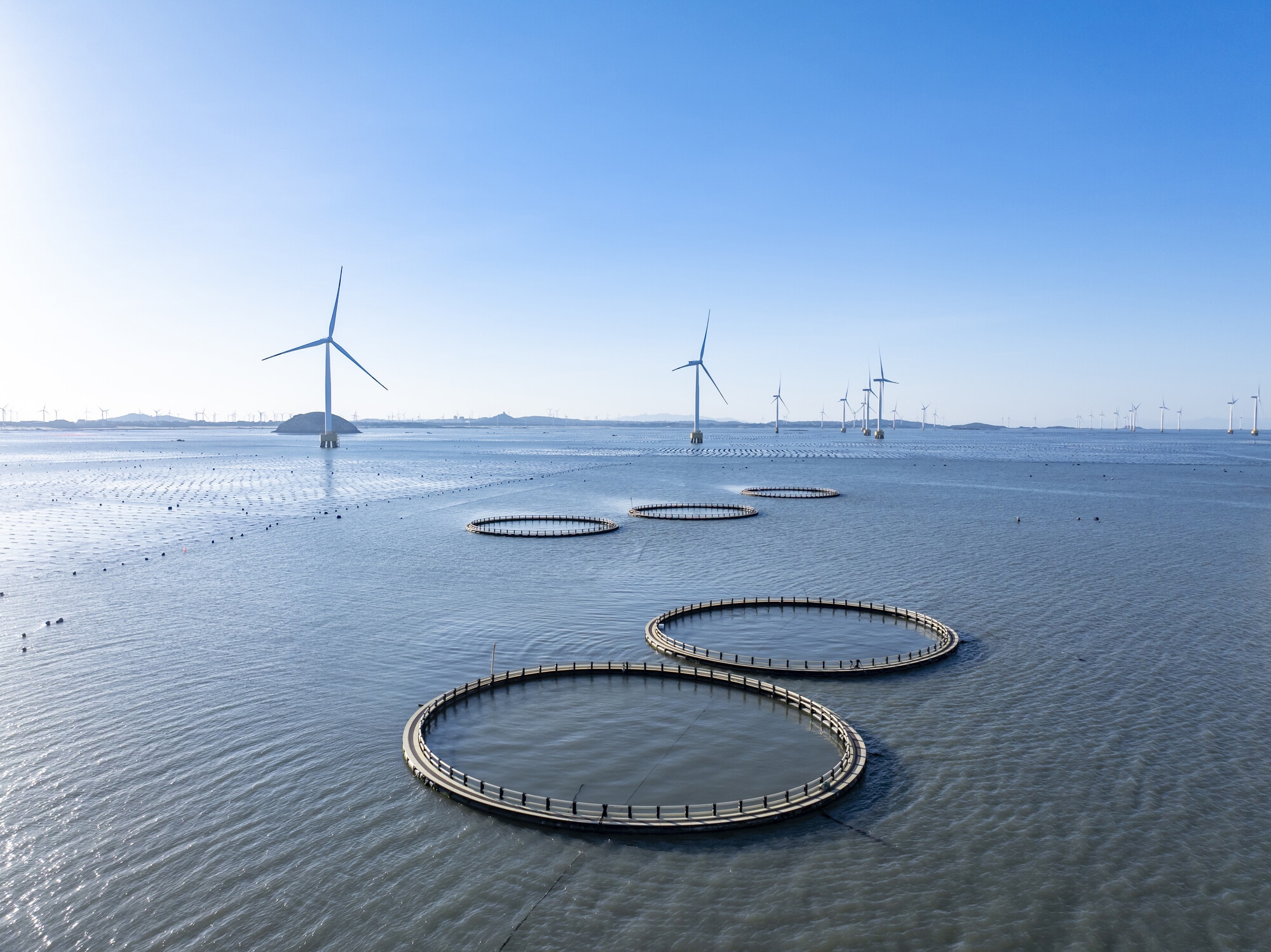
The regenerative blue economy asks how ocean industries can actively restore ecosystems, rebuild fish stocks, strengthen coastal communities and generate long-term economic value in the process. Image: Getty Images
- The ocean can deliver carbon emissions reductions, while supporting food security and livelihoods for frontline and Indigenous communities who bear the heaviest costs of the climate crisis.
- New technologies, international frameworks and blended finance structures are accelerating the regenerative transition, but fracturing multilateralism, ecological tipping points and a financing gap threaten to stall progress.
- The World Economic Forum's The Regenerative Blue Economy: Pathways to Prosperity report outlines how we can restore ecosystems, strengthen resilience and support equitable prosperity within planetary limits.
The ocean is our most powerful and most undervalued ally in the fight against climate change. It has also never been more politically contested. Melting Arctic ice is redrawing shipping routes and opening new theatres of great power competition and threatening the livelihoods and cultures of Indigenous communities who have stewarded those waters for millennia.
Offshore energy is reshaping the geopolitics of European security. Fisheries agreements are now negotiated alongside trade deals and defence partnerships. Once the domain of environment ministries, the ocean has taken on a more significant presence on the global stage, even as the communities living on the frontlines of overfishing, ocean warming and rising seas remain largely absent from those conversations.
Have you read?
At the same time, how we think about the ocean economy is changing. For years, the dominant framing was sustainability: doing less harm, managing resources more carefully, slowing the rate of decline. That framing is giving way to something more ambitious.
The regenerative blue economy goes beyond sustaining what remains. It asks how ocean industries can actively restore ecosystems, rebuild fish stocks, strengthen coastal communities and generate long-term economic value in the process. Crucially, it also asks who governs that transition and who captures its benefits.
Regenerative blue economy shaped by forces beyond the ocean
But the regenerative blue economy does not emerge in a vacuum. It is shaped, driven and in some cases actively obstructed by forces operating well beyond the ocean sector itself.
Some of those forces are opening new possibilities: falling technology costs, maturing financial instruments and growing recognition among governments that ocean health and human security are inseparable.
Others are pushing in the opposite direction: fracturing international cooperation, accelerating ecological breakdown and a persistent misalignment in the types of capital required to heal the ocean.
Setting the right level of ambition, directing investment effectively and designing interventions that will work in practice all require an honest accounting of both these forces.
6 factors guiding the regenerative transition of the blue economy
Here are the three most significant tailwinds accelerating the regenerative transition, and the three headwinds most likely to stall it.
Tailwinds accelerating the regenerative transition
1. The ocean is becoming a geopolitical priority
There is a growing recognition of the ocean as a climate ally: not merely a passive victim of warming, but an essential part of the solution. From the tropics to the Arctic, ocean governance now commands attention from energy, defence and foreign affairs ministries, not just environment agencies.
Energy security concerns are accelerating offshore renewable deployment across Europe and Asia in ways that climate policy alone could not have achieved. But elevated strategic attention to the ocean has not yet translated into elevated concern for the communities most vulnerable to its changing state.
At the international level, the Agreement under the United Nations Convention on the Law of the Sea on the Conservation and Sustainable Use of Marine Biological Diversity of Areas beyond National Jurisdiction (BBNJ Agreement) establishes the first global framework for governing marine biodiversity beyond national jurisdiction. Meanwhile, the World Trade Organization's (WTO) Agreement on Fisheries Subsidies has set a precedent by prohibiting subsidies linked to illegal fishing and overfished stocks.
2. Monitoring technology is reaching communities that need it most
The cost of ocean observation has fallen dramatically. Satellite-based vessel monitoring, drone surveillance, environmental DNA sampling and artificial intelligence-assisted fish population analysis are all becoming accessible at price points that were inconceivable a decade ago.
Community rangers in remote archipelagos can now document illegal fishing with the same speed and accuracy as national coast guards. Beyond monitoring, the declining costs of photovoltaic energy, solar-powered cold chains and electric fishing vessels are transforming what is possible for small operators.
Technologies previously exclusive to industrial actors are becoming accessible at the scale of the fishing village, removing barriers that have long excluded coastal and Indigenous communities from the governance and economic benefits of the sea they steward.
3. Blended finance is beginning to fill the gap
The flow of philanthropic funding into ocean-climate action has grown substantially in recent years. The blue bond market is maturing, debt-for-nature swaps are allowing coastal states to redirect resources into ocean conservation, and blended finance structures are beginning to bring private capital into restoration projects that would not otherwise attract investment.
There is also growing recognition that community-led ocean stewardship consistently outperforms top-down conservation. But recognition has not yet translated into practice: decisions about who governs and who benefits from the ocean remain largely made without the communities who depend on it most.
Headwinds likely to stall the regenerative blue economy
4. Multilateralism is fracturing at the worst possible moment
The regenerative blue economy depends on international cooperation, and that architecture is under serious strain. US political opposition to environmental regulation is weakening the policy frameworks the transition depends on, with active efforts at the International Maritime Organization threatening to unravel decarbonization processes that took years of diplomatic effort to build.
The Arctic is becoming a theatre of major power competition as melting ice opens new shipping routes and resource extraction opportunities. Deep-sea mining is threatening to fracture some of the most effective coalitions for ocean protection. For hundreds of millions of small-scale fishers across the Global South, the ocean is not an economic abstraction: it is food, identity and livelihood. For the governments that represent them, fishing revenues and licensing fees are significant contributors to national income. The economic case for restraint remains hard to make without credible alternatives.
5. Ecological tipping points cannot be managed away
The ocean is approaching climatic thresholds beyond which even well-governed ecosystems cannot withstand pressure. At two degrees of warming, most of the world's coral reefs are projected to experience annual bleaching events incompatible with recovery. The Arctic Ocean is projected to experience its first ice-free summer as early as the 2030s.
No amount of local conservation, however well-designed or funded, can protect a reef or an ice shelf from temperatures that exceed its biological tolerance. Fish stocks are shifting poleward as ocean temperatures rise, disrupting the governance regimes and community economies built around their historical distributions.
For many ecosystems, the window for management-led regeneration is already closed. Conservation remains essential, but it cannot substitute for the emissions reductions we have collectively failed to make — or for the carbon removal we now cannot avoid.
Here too, the ocean will be a vital ally. The gigaton-scale carbon removal the IPCC tells us we need is almost certainly out of reach without harnessing the largest carbon sink on the planet. We cannot clean up the mess we have made without it.
6. Capital is flowing in the wrong direction
Despite growing momentum, capital flowing into regenerative ocean activity remains a fraction of what is needed. Blue bonds have too often been used to refinance existing debt or support conventional infrastructure under a blue label, providing the appearance of environmental ambition without credible substance.
The wave of departures from the Net Zero Banking Alliance by some of the world's largest banks in 2024 and 2025, leading to its shutdown, reflects a broader pattern of financial institutions prioritizing short-term political risk over long-term climate goals. Impact investors, meanwhile, struggle with the patient timescales and modest near-term returns that come with ecological recovery.
Closing the financing gap requires not just more capital, but fundamentally different capital, including philanthropic funding, blended finance structures and mission-aligned investment willing to operate on the timescales that ocean recovery demands. The stakes, encompassing food security, climate stability and the livelihoods of hundreds of millions of people, could not be higher.
Don't miss any update on this topic
Create a free account and access your personalized content collection with our latest publications and analyses.
License and Republishing
World Economic Forum articles may be republished in accordance with the Creative Commons Attribution-NonCommercial-NoDerivatives 4.0 International Public License, and in accordance with our Terms of Use.
The views expressed in this article are those of the author alone and not the World Economic Forum.
Stay up to date:
Ocean


Forum Stories newsletter
Bringing you weekly curated insights and analysis on the global issues that matter.
More on Economic GrowthSee all

Malte Kosub
September 11, 2026


