Southeast Asia’s AI-driven data-centre expansion is outpacing electricity infrastructure, creating grid bottlenecks and sustainability challenges. That means ASEAN must strengthen its cross-border interconnections and green electricity markets.
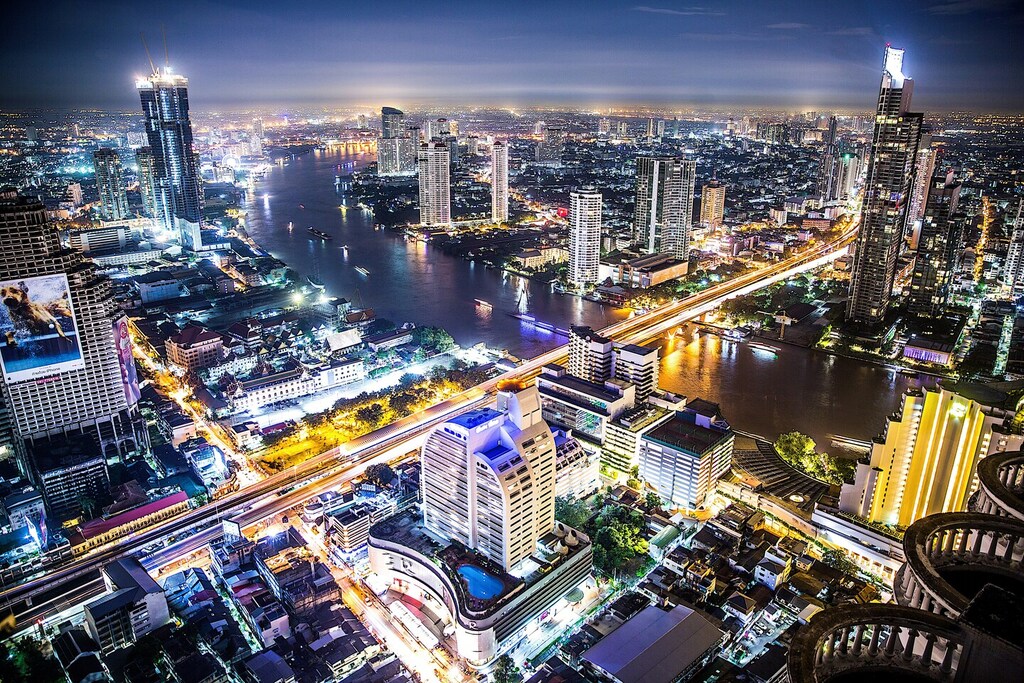
Thailand's Eastern Economic Corridor illustrates the growing mismatch between data-centre expansion and electricity infrastructure. The region has a planned data-centre pipeline of 2.87 gigawatts (GW), concentrated in Chonburi, Rayong and Chachoengsao.
While this represents announced, approved and under-construction projects rather than operational capacity, it signals the scale of potential future electricity demand.
Local substations are already approaching capacity, and facilities requiring more than 50 megawatts face connection timelines exceeding 18 months.
Within Singapore, constraints on land, power and water have pushed growth in the market into the surrounding region. In Johor, Malaysia, for example, available land and proximity to Singapore – where artificial intelligence (AI)-related projects are booming – are drawing campus-scale projects.
The three tracks of compute expansion, grid construction, and generation development do not run at the same speed. Debates around AI usually start with chips and algorithms; however, for the Association of Southeast Asian Nations (ASEAN), the binding constraint is increasingly electricity. How much a project needs, where and when it connects, and whether its green attributes can be verified.
Closing that gap does not have to depend on building a more local grid, as clean power from resource-rich areas can be moved to load centres through cross-border links.
This problem is described in the theme of Singapore International Energy Week (SIEW) 2026: “Connecting Energy Systems, Powering Tomorrow.” Future systems must connect grids, computing, cooling and markets and cross-border links are the most basic part of that connection.

Why power system capacity has become a priority in Southeast Asia
Load density has changed. Thailand’s Board of Investment reported receiving 36 data-centre projects in 2025 and its draft 2026-2050 plan projects 8,611 MW of data-centre demand by 2050.
Demand is also stacking onto thin grids. The IEA’s Southeast Asia Energy Outlook 2024 put the region’s electricity demand at over 1,300 TWh, with per-capita use varying more than thirtyfold across the region. Concentrated new load falls hardest where grids are weakest.
What’s more, energy security is at stake. Fossil fuels accounted for approximately two-thirds of ASEAN’s installed generating capacity in 2023, so serving new loads mainly with coal or gas risks lock-in and exposes tariffs to fuel prices. In Thailand, the constraint is not total capacity – reserve margins exceed 25% – but local deliverability in the Eastern Economic Corridor.
Finally, green requirements go beyond annual certificates to hourly matching and verifiable records. In 2025, the technology sector signed about 40% of corporate renewable purchase power agreements, according to the International Energy Agency (IEA).
How ASEAN can build its energy supply
There are three uncertainties determining ASEAN's plan for increased power:
Requested energy capacity may not materialize as operators over-book and build in phases.
Equipment and approvals are lining up, with tighter supplies of turbines, transformers and chips.
Verification rules for green attributes are still sparse.
With these barriers in mind, plans should be tested against a range of load scenarios.
There are six routes towards energy supply.:
Plan early: Load forecasts, substation assessments, connection studies and expansion schedules should precede commitments and planning should extend from national grids to cross-border corridors and regional alignment. Thailand now screens applicants with a connection deposit and a water-management plan.
Coordinate generation, grid and storage: The Electricity Generating Authority of Thailand is investing THB 31 billion to reinforce the Eastern Economic Corridor network, and plans 24.3 GW of solar and 14.5 GW of storage. Generation, grid and load timetables must be aligned.
Treat storage as a reliability asset: IEA analysis published in 2026 found that AI data centres have large, rapid demand swings that can stretch on-site gas generation, making on-site batteries critical for next-generation AI data centres.
Improve efficiency inside the data centre: Operators should start efficiency plans with cooling and water in the tropics. Thailand now makes a water-management plan a condition of connection, while Singapore faces land, power and water limits. IEA data shows energy per AI task falling fast in these situations while total consumption climbs.
Make green attributes verifiable: China and Laos completed their first cross-border green-power trade in April 2026, and launched joint feasibility research on green electricity and green certificates. Trading rules decide a corridor's value, so access, capacity allocation and settlement matter as much as steel and cable.
Treat regional exchange as a supply solution: The ASEAN Centre for Energy's AIMS III study has identified 18 priority interconnection projects . Financing generation and transmission investment to achieve the ASEAN Power Grid vision by 2045, however, would cost about $800 billion, while th energy transition investment gap by 2030 sits at an estimated $68-170 billion. In several economies, limited renewable potential and land or water constraints cap local generation, while the region's 74 links, about 18.75 GW, remain mostly at 110 kV. ACE identifies potential to upgrade the Ban Hat–Stung Treng interconnection from 230 kV to 500 kV.
What cooperation opportunities exist for ASEAN on energy supply
Within ASEAN, each of the six pathways could reach fruition with the right cooperation projects in place:
To plan early: Grid, substation and connection studies, including regional interconnection can help answer questions on connection timing.
To coordinate generation, grid and storage: Create packaged campus power solutions combining generation, connection and storage.
To provide reliable storage: Assess storage, demand response and virtual power plants for reliability, backup and ancillary services.
To improve data centre efficiency: Conduct energy audits, cooling and water optimization and testing, and certification of green data centres.
To improve green markets and finance: Co-design cross-border green power, mutual recognition of certificates, carbon-data verification and long-term purchase power agreements, between markets, regulators, certifiers and financiers, with multilateral banks scaling up ASEAN Power Grid financing.
To scale regional exchange: Conduct pre-feasibility and planning studies, corridor engineering and support for wheeling charges, capacity allocation and settlement design.
Chinese energy companies can contribute grid, renewable and storage experience adapted to local conditions, moving from equipment supply to integrated solutions.
ASEAN's AI competitiveness depends less on the number of servers than on whether the region can build reliable, low-carbon power systems that attract financing and move clean power to where it is needed.
To realize its desired power capacity, the region must put data-centre load into national planning and align it with regional interconnection planning; make cross-border green power and certificate recognition verifiable; and use ASEAN and Lancang–Mekong platforms to design corridors, rules and products jointly. Focusing on these priorities will connect energy systems in practice.