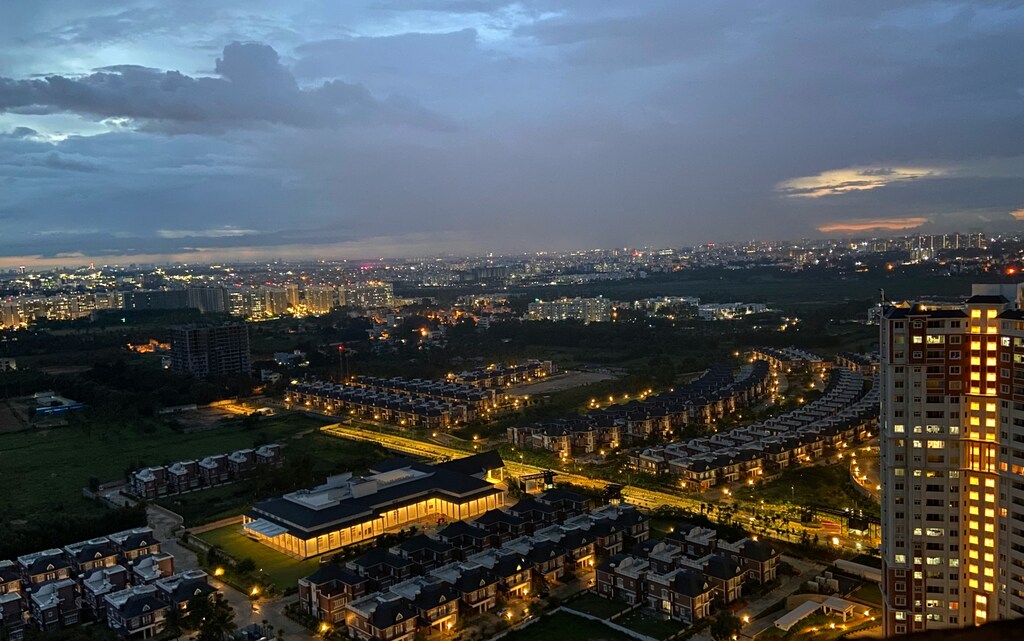
Bengaluru provides a case in point that urban innovation thrives when rooted in local challenges and shaped by community needs. Its experiences offer valuable lessons for global leaders seeking to build cities that are more resilient, inclusive and sustainable for future generations.
Cities worldwide are searching for new ways to improve quality of life while addressing increasingly complex challenges, from climate adaptation and water scarcity to mobility, waste management and infrastructure resilience.
The 14 winners of the Yes/Bengaluru Challenge offer a glimpse into a different model of innovation, rooted in local context, driven by public-private collaboration and designed to solve real-world challenges. Together, they reflect a growing recognition that the best solutions for cities often come from those closest to the problems.
Bengaluru in India provides a compelling example of how innovation ecosystems can thrive when entrepreneurs, civic leaders, researchers, investors and communities work toward shared goals.
As cities around the world seek to accelerate sustainable and inclusive growth, the lessons emerging from Bengaluru's innovators offer insights that extend far beyond the city itself.
We asked each innovator the same question:
What is one lesson Bengaluru has taught you about how cities can foster innovation that improves people's lives, and what can leaders in other cities learn from that experience?
Here is what they told us.
Climate and water resilience
Cities cannot thrive without reliable access to clean air, clean water and resilient infrastructure. These innovators are demonstrating how local knowledge, scientific insight and emerging technologies can strengthen urban resilience in the face of climate and environmental pressures.
Aurassure
The lesson: Climate resilience begins with local intelligence
Bengaluru has reinforced the importance of building solutions alongside the cities they serve.
As a company developing artificial intelligence (AI) powered environmental intelligence solutions, we've seen firsthand how a collaborative ecosystem, bringing together government, industry and innovators, can accelerate the adoption of technologies that improve urban resilience and quality of life.
The city's openness to piloting new ideas and embracing data-driven decision-making has been instrumental in helping us demonstrate real-world impact.
The biggest lesson for other cities is that innovation flourishes when governments create pathways for collaboration and opportunities to test, validate and scale emerging technologies in response to local challenges.
Urdhvam Environmental Technologies
The lesson: Water resilience starts with strengthening the infrastructure we already have
Bengaluru demonstrates that meaningful innovation often emerges from addressing a clearly visible local challenge. The city has faced declining groundwater levels, drying lakes and a growing number of failed borewells, creating an urgent need for sustainable water solutions.
So, we developed BoreCharger, a patented groundwater recharge technology to revitalize existing low-yield or dry borewells cost-effectively. The solution requires no major civil construction, making it simple to implement and maintain.
Although Bengaluru receives nearly 900 mm of annual rainfall, much of it goes uncaptured or unused; BoreCharger enables dry and underperforming borewells to function as recharge structures, channelling rainwater into aquifers and helping restore groundwater reserves.
ECOSTP Technologies
The lesson: Nature often provides the blueprint for resilient urban systems
Bengaluru’s water stress, rapid urbanization and infrastructure gaps created the conditions for entrepreneurs, researchers, citizens and institutions to collaborate on practical, scalable solutions.
Our nature-based wastewater treatment technology emerged directly from the city’s need for decentralized, low-energy sewage systems that could function effectively in dense urban environments without heavy chemical or power dependence.
Unfortunately, few of the more than 3,000 decentralized sewage treatment plants in Bengaluru are working. We addressed initial scepticism by using the technology in our office; over five years, the “no moving parts” plant operated with minimal maintenance costs, which helped build trust in its performance.
Bengaluru taught us that cities become powerful innovation hubs when they allow real-world experimentation and collaboration to shape sustainable urban futures.
Circular economy and sustainable materials
The transition to more sustainable cities will require rethinking how materials are sourced, used and reused. These innovators are transforming waste streams into valuable resources while creating more circular and regenerative urban systems.
Plastics For Change
The lesson: Inclusive innovation creates value for both people and the planet
Bengaluru taught us that the most powerful innovations emerge from local challenges.
By transforming difficult-to-recycle plastic waste into durable, cement-free paving blocks, we've shown that environmental problems can become opportunities, creating value from waste, supporting livelihoods and building more resilient cities.
Zerocircle
The lesson: Local innovation can help solve global environmental challenges
Bengaluru is a bustling hub for food delivery in India. This also makes it an important place to rethink food packaging. Every day, millions of orders move through the city. Along with them comes a growing waste challenge that isn't always visible. Hidden plastic layers and food-safe coatings still sit inside many packaging materials assumed to be paper.
That presented an opportunity to redesign these materials from the ground up.
What makes Bengaluru unique is its appetite for experimentation, bringing together researchers, founders, brands and policymakers to test new ideas and scale what works. That's exactly how material innovation moves from the lab into everyday life.
Sustainable Innovative Materials (unWOOD)
The lesson: Circular economies are built by reimagining the materials around us
The places where we live, work and interact shape how we see problems and opportunities and Bengaluru has been a powerful influence. As the Silicon Valley of India, it has created a culture where every challenge is viewed through the lens of innovation and problem-solving.
What makes the city special is its ecosystem of entrepreneurs, mentors, investors, institutions and supporters who help ideas grow into impactful ventures.
I often say that the most effective solution for a city will emerge from within that city. While successful innovations can scale elsewhere, every city has unique challenges shaped by its climate, infrastructure, culture and resources.
Our journey with unWOOD reflects this belief. Bengaluru's harsh outdoor conditions and the abundance of plastic waste inspired us to develop a durable material from waste plastics. Supported by Bengaluru's collaborative ecosystem, an idea evolved into a scalable business creating environmental, social and economic impact.
Felis Leo Widgets (Nexus Power)
The lesson: Tomorrow's energy solutions can emerge from today's waste streams
Bengaluru taught us that urban innovation thrives when a city embraces cross-sector ecosystems to solve regional challenges. Nexus’s journey began by addressing two critical issues: severe air pollution and massive agricultural waste.
By utilizing crop residue to manufacture fast-charging, bio-organic and biodegradable batteries, we found a way to bridge rural supply with urban clean mobility needs. Bengaluru’s vibrant hub of sustainability enthusiasts, tech pioneers and early adopters provides the ultimate sandbox to test and scale this integration.
The lesson for global leaders is clear: do not view urban challenges in isolation. True urban resilience happens when cities actively build conduits to their surrounding rural economies. By turning regional waste into urban green infrastructure, cities can foster circular economies that drive both ecological sustainability and economic inclusivity far beyond their borders.
Mobility and infrastructure for growing cities
As urban populations grow, cities must find ways to move people, goods and services more efficiently. These innovators show how better infrastructure, smarter systems and community-centred approaches can improve urban mobility and quality of life.
Namma Yatri
The lesson: Cities work best when innovation serves communities first
When infrastructure exists but remains disconnected, the real innovation is integration.
Bengaluru has metro lines, thousands of buses and over 250,000 auto-rickshaw drivers embedded in every neighbourhood. Yet commuters default to private vehicles because no single platform connects these modes into one usable journey: separate apps and tickets, and no real-time visibility or reliable first- and last-mile link.
That fragmentation, specific to Bengaluru's scale and informality, shaped Namma Transit. Built within Namma Yatri, India's first open, zero-commission ride-hailing platform, it unifies autos and metros into a single plan-book-pay-track experience, empowering drivers as the network's connective tissue and bringing public agencies in as genuine partners.
The lesson for leaders elsewhere is not only to build but to connect. Cities that integrate what already exists, equitably and openly, create transport systems that are inclusive, resilient and truly sustainable, as well as efficient.
Pulse Energy
The lesson: The future of mobility depends on making existing systems work smarter
Bengaluru taught me that innovation thrives not when a city builds everything itself but when it builds the rails others can run on.
At Pulse Energy, we connect over 10,000 electric vehicle chargers across more than 200 operators on a single open protocol, so a fleet doesn’t have to bet on one network or one vendor; it gets one interface to the entire ecosystem.
That’s why fleets choose us: we don’t lock you into our grid; we give you access to all of it. The lesson for other cities is that the leaders who win are those building the open standards that let innovation, competition and access compound. They treat public infrastructure as a platform and not a product.
Dextra Square
The lesson: Sustainable infrastructure succeeds when innovation meets practicality
Bengaluru taught us that the most powerful catalyst for urban innovation is not policy or subsidy but decision-makers who evaluate boldly.
When we introduced Shinestar GFRP rebars – a corrosion-free and lightweight alternative to steel rebars with an 80-plus-year lifespan – we expected resistance to change. However, we found developers such as DS Max and organizations such as Swiggy, willing to adopt the solution the moment the operational, financial and long-term case was clear.
That culture of pragmatic openness to change separates cities that talk about innovation from cities that operationalize it.
For leaders building tomorrow's urban infrastructure, the lesson is to invest as much in building a confident, forward-thinking procurement culture as you do in the infrastructure itself, because the material you choose today determines the city you inherit in 50 years.
Smarter urban services and public health
The quality of urban life often depends on the systems people rarely see – from sanitation and wastewater management to environmental restoration and public health infrastructure. These innovators are making essential urban services safer, cleaner and more effective.
Solinas Integrity
The lesson: Technology should make essential services safer, smarter and more humane
Bengaluru has taught us that innovation is most impactful when it is rooted in solving real urban challenges. As one of India’s fastest-growing cities, Bengaluru faces significant water management issues, including ageing infrastructure, water losses and increasing pressure on limited water resources. These challenges have highlighted the need for smarter and more proactive approaches to managing critical underground assets.
For Solinas, Bengaluru has been an important city where we have supported utilities in addressing these challenges through robotic inspection technologies that help assess pipeline health, identify issues early and enable data-driven decision-making. Our work here has demonstrated how technology can help cities improve water efficiency and service delivery.
The key lesson for other cities is that innovation thrives when governments, researchers, startups and citizens collaborate to solve shared problems. Bengaluru’s openness to new ideas and pilot-driven approach has created an ecosystem where impactful solutions can be tested, refined and scaled.
Neo San
The lesson: Better urban systems should improve both sustainability and dignity
Bengaluru, like most rapidly urbanizing cities, is growing faster than its infrastructure can support. Most growing cities now share this gap. What Bengaluru taught us is that any solution built for the city as a whole has to work for everyone affected by the problem: citizens, waste workers, industries, government and the large informal sector that physically handles much of the city's waste.
It took time and patience but it’s been important to listen to build something that sustains over time. Everyone has experienced a slightly different part of the problem and it’s our role to understand the larger story from these different parts.
Decentralized solutions that tackle problems locally are essential as cities grow. They scale more easily and reduce complexity by solving problems at a million small touchpoints, rather than magnifying the logistics and complexity that large centralized facilities demand.
However, these systems must be inclusive rather than prescriptive and co-created with every stakeholder rather than imposed on them. Neo San was built on exactly this: compact, on-site waste treatment that any building or community can adopt and run themselves.
Scrapify Ecotech
The lesson: Restoring urban ecosystems requires technology that works at the local level
One lesson Bengaluru has reinforced is that cities become true innovation hubs when governments, startups, academia, industries and communities actively collaborate to solve real urban challenges. During our engagement with Bengaluru's innovation ecosystem, we observed how the city creates opportunities for startups to validate technologies through pilots, mentorship and industry partnerships rather than limiting innovation to laboratories.
This approach validated the development of our AI-powered autonomous waterbody restoration solutions, designed to address the growing challenge of plastic pollution and degraded urban lakes faced by many Indian cities.
The key lesson for other city leaders is to create open innovation ecosystems where local problems drive technology development, public agencies enable real-world testing and successful solutions can be rapidly scaled. Such collaboration builds more sustainable, resilient and citizen-centric cities while accelerating climate action and economic growth.
What Bengaluru's innovators teach the world
Although these innovators operate across different sectors and technologies, several common themes emerge.
First, innovation is most powerful when it is rooted in local realities. The challenges facing cities, from water scarcity and congestion to waste management and climate adaptation, are often highly context-specific. Solutions designed with communities, rather than for them, are more likely to succeed and scale.
Second, many of these innovators are not seeking to replace existing systems entirely. Instead, they are improving and adapting infrastructure already in place, making cities more efficient, resilient and inclusive.
Third, successful innovation ecosystems depend on collaboration. Bengaluru's experience demonstrates the value of partnerships across government, business, academia, investors and civil society in helping promising ideas move from pilot projects to meaningful impact.
These lessons are increasingly relevant for cities everywhere. As leaders seek new approaches to shared global challenges, Bengaluru's innovators demonstrate that some of the most powerful solutions emerge not from importing ideas but from cultivating local talent, local partnerships and local leadership.
The future of urban innovation may not be built elsewhere and deployed locally. It may be built locally and scaled globally.