With global electricity usage expected to rise by 1,100 TWh annually through 2030, making better use of existing assets and delivering new infrastructure will be essential.
Across the world, electricity systems are being asked to accommodate growing demand while remaining reliable and affordable. Many of the technologies that could help are already in use, from sensors that reveal available network capacity to arrangements that let large customers adjust their electricity consumption. What remains less straightforward is how to turn promising examples into everyday practice.
The scale of the challenge is considerable. Global electricity demand is projected to grow by around 1,100 terawatt-hours (TWh) annually through 2030, while more than 2,500 gigawatts (GW) of renewable, storage and large-load projects have stalled in grid connection queues. New infrastructure will be essential, but the pace of change also raises questions about how existing assets are used.
The World Economic Forum’s Enabling the Electricity Era: From Proven Solutions to Execution at Scale white paper, developed in collaboration with Accenture, identifies 10 priority actions across three connected areas: making better use of existing networks, connecting large users on terms that support the system, and delivering new infrastructure more effectively. Together, they address the rules, data, finance and delivery conditions that help proven solutions spread.
Finding room in the networks we already have
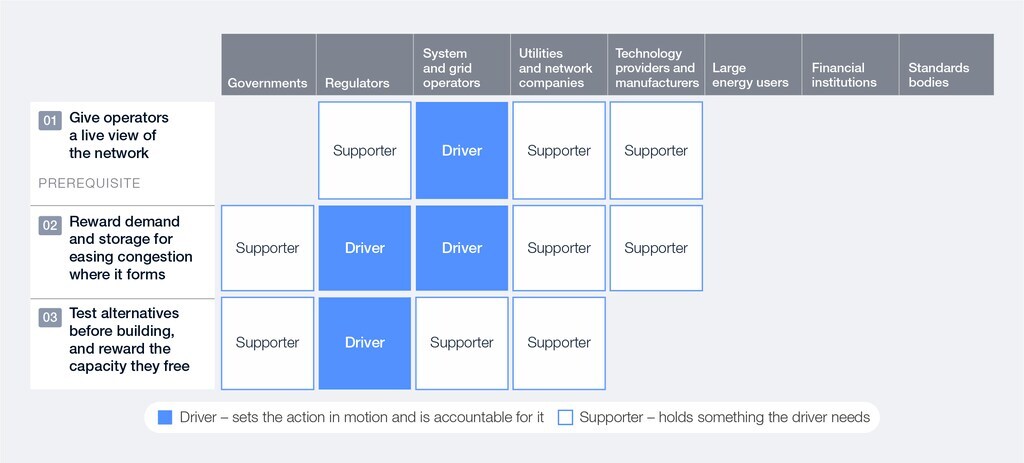
Electricity networks need spare capacity to remain secure when equipment fails. Where conservative assumptions and limited operational information leave usable headroom idle, a live view of the network is a practical starting point. Measurements from lines and substations help operators identify constraints and assess what their assets can safely carry. For example, in the US state of Minnesota, Great River Energy has installed sensors to measure actual transmission conditions rather than relying solely on assumptions.
Visibility can then underpin local rewards for flexible demand and storage that ease congestion where and when it forms. Great Britain offers a practical example: in 2024, distribution networks contracted a record 9 GW of flexibility and activated 22 gigawatt-hours (GWh), with estimated savings to bill payers exceeding £383 million ($503 million).
Making these options routine also means testing flexibility, storage and grid-enhancing technologies before building new lines and rewarding utilities for the capacity those alternatives demonstrably release.
Rethinking how large users connect
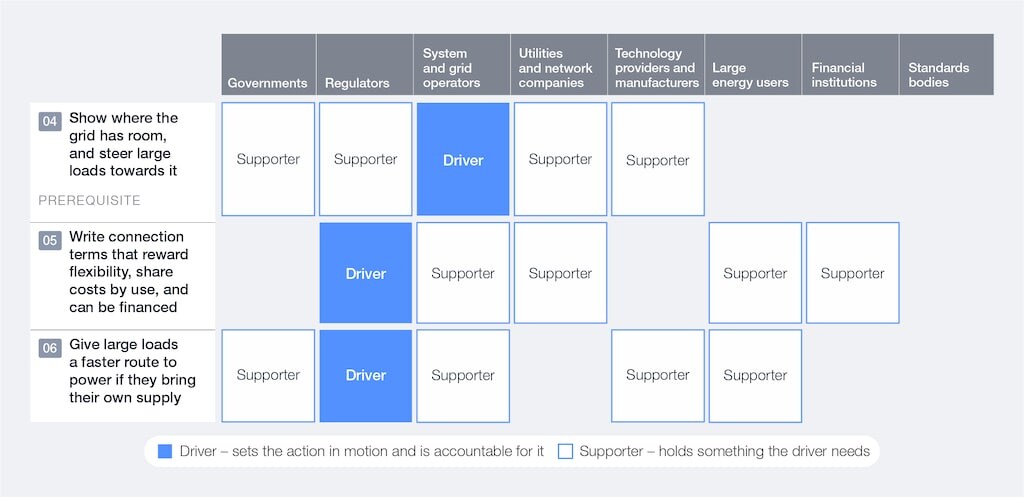
Large electricity users bring a different challenge. A data centre may be built in one to three years, while the grid needed to serve it can take five to 15. The facility’s impact depends not only on how much power it uses, but also on where it is located and whether it can adjust demand when the network is under pressure.
One response is to publish available grid capacity early enough to guide where new demand is located. Japan’s 'welcome zone' maps show developers where networks may be able to accommodate large loads more readily. Another way is to write connection agreements that reward verifiable flexibility, allocate network costs fairly and set curtailment terms clear enough for projects to secure finance.
The Netherlands illustrates how these elements can work together. Under time-dependent transport rights, participating users retain full contracted access for at least 85% of annual hours, accepting possible restrictions at other times in exchange for lower tariffs.
Dutch electricity transmission system operator TenneT estimated that the arrangement could make about 9 GW of additional high-voltage capacity available. A further route is to allow large users to plug in sooner with their own generation, storage or connection infrastructure, while continuing to pay fairly for the shared grid services they use.
Making essential infrastructure easier to deliver
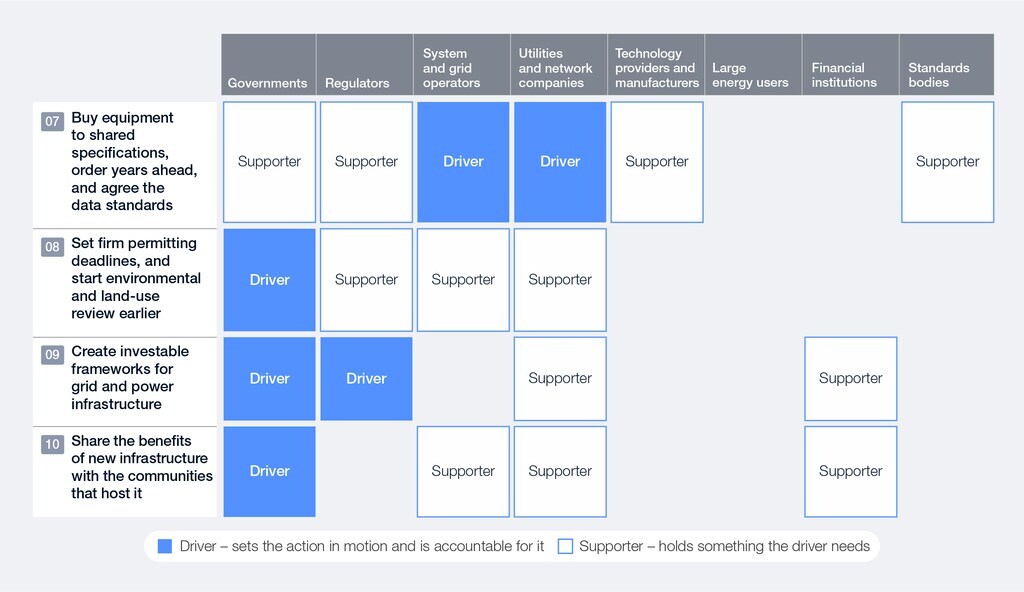
Using existing assets more effectively can create breathing room, but it does not replace the need to build. Around 80 million kilometres (km) of power lines will need to be added or replaced by 2040. Equipment shortages, lengthy approvals, financing constraints and local opposition can each slow a project, even when the technical solution is clear.
More predictable delivery starts with shared equipment specifications, common data standards and firm orders placed years ahead, giving manufacturers greater certainty. France’s RTE, for instance, placed a multi-year order for around 5,200 km of high-voltage underground cables with five European suppliers. In addition, firm permitting deadlines and earlier environmental and land-use reviews can reduce avoidable delays, provided authorities have the capacity to meet them. Chile’s 2025 reform provides an example of parallel rather than sequential permitting.
Projects also need investable frameworks: predictable revenues, clearer risk allocation and financing suited to local conditions. India’s POWERGRID Infrastructure Investment Trust shows one approach to recycling capital from operating transmission assets.
Finally, sharing lasting benefits with host communities can make local engagement part of delivery from the outset. In Australia's New South Wales, landholders receive payments over 20 years for hosting transmission lines, in addition to standard compensation.
From individual successes to common practice
These changes are closely connected. Better network data cannot procure flexibility if not widely used by operators; equipment ordered early does little for a project held up by permits; and financing cannot resolve concerns from communities that were never meaningfully involved.
The WEF white paper brings these dependencies together through five enabling conditions: regulation and market design, bankability, digital foundations, delivery capability and inclusive deployment.
The priorities will differ from one market to another. What the examples suggest, however, is that progress depends less on any single breakthrough than on decisions that reinforce one another. For governments, regulators, operators, investors, manufacturers and electricity users, the opportunity is to make approaches that already work easier to adopt, finance and repeat.