3 ways to redesign work to solve the supply-chain talent crisis
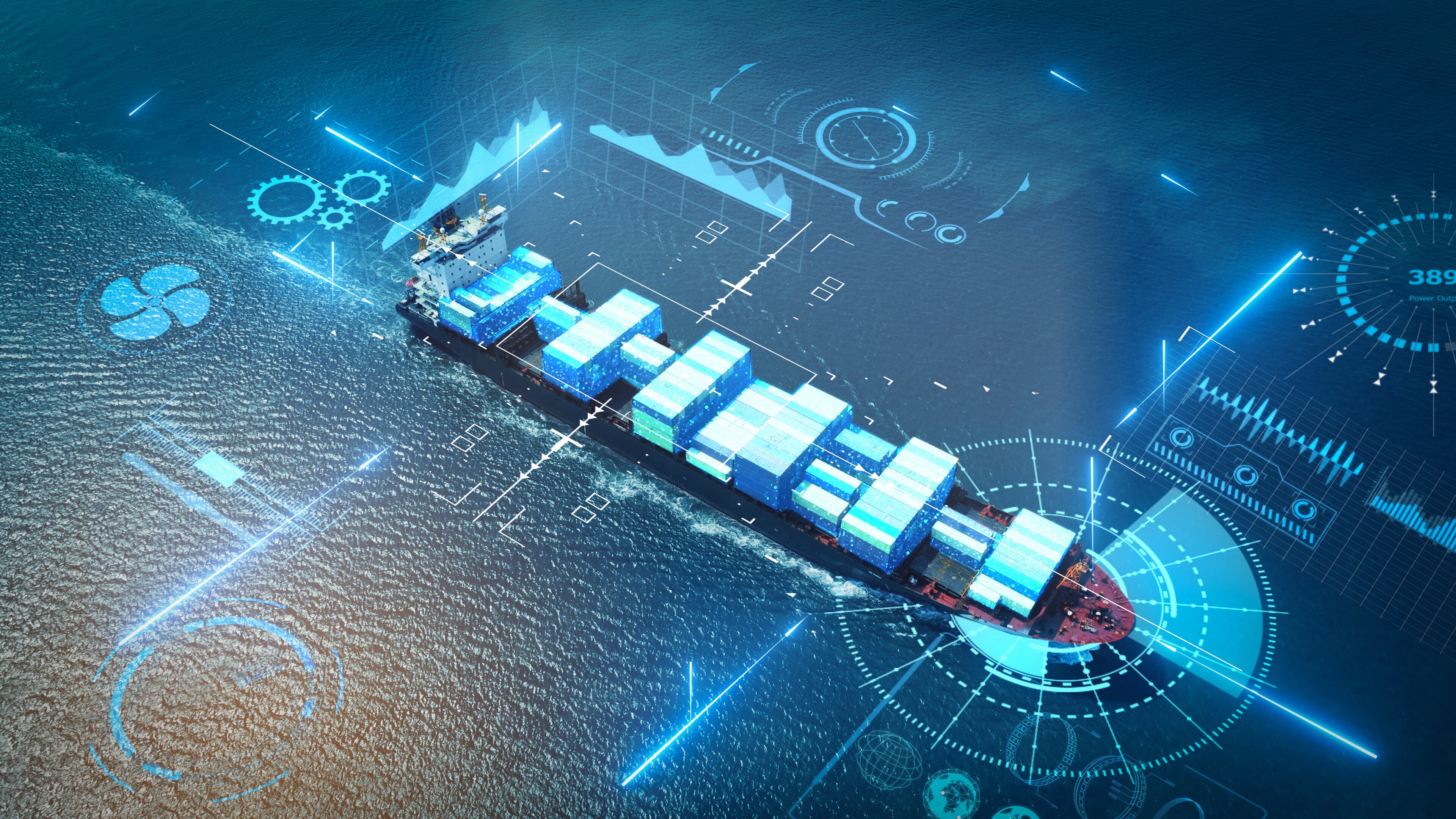
US supply chain work is projected to increase by 19% between now and 2035. Image: Getty Images
- Rapid changes in supply chain economics is creating job growth in the US – but a shortfall of available talent remains.
- Technology can help close this gap if it's deployed to complement, not replace, human capabilities.
- The World Economic Forum's Human-Machine Collaboration Framework offers a three-step roadmap to augmenting supply chains.
Several forces are reshaping supply chains: economic growth, nearshoring, agentic commerce, faster delivery, a wider supplier base, and rising compliance demands. New Accenture research states that the cumulative effect of these forces will raise demand for supply chain work by 19% between 2026 and 2035, the equivalent of adding 1.34 million jobs to the US supply chain workforce alone. That workforce is projected to grow about 3.2% on its own, leaving a shortfall of nearly 1.1 million jobs. A gap this size can constrain output, raise costs and slow responses to any disruption.
Technology can close the gap, but not on its own
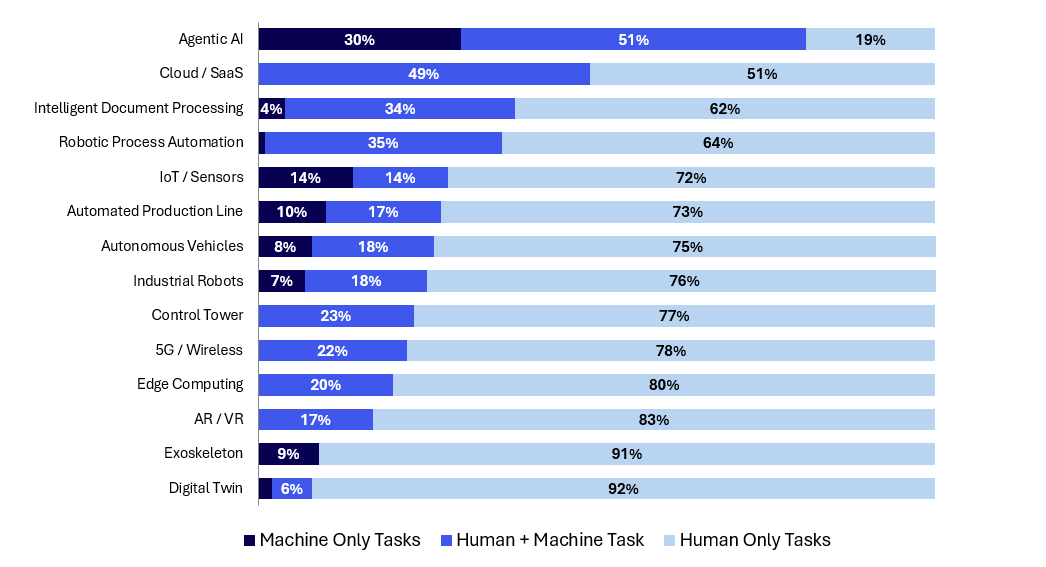
The Human-Machine Collaboration Framework reports that the companies that invest in people alongside technology see productivity gains nearly three times higher than those that sideline the human factor. This suggests that technology delivers the greatest value when it complements, not substitutes, human capability. Deployed together, technologies like agentic artificial intelligence (AI), robotics and the internet of things (IoT) can turn 48% of routine, high-frequency work into machine-only work and shift more than half of all supply chain tasks into shared human and machine work.
Across every technology analyzed, shared work between humans and machines consistently outweighs machine-only work (see infographic below). Agentic AI is one of the more powerful technologies of our time, expected to shift 30% of tasks to machine-only work and a further 51% to joint human and machine work.
Realizing technology's potential depends on the workforce: Technology performs as intended only when skilled people operate and oversee it. New technology creates demand for new skills and erodes the value of legacy ones; Accenture forecasts that, across 15 core supply chain occupations, workers in routine-execution roles could see up to 67% of their current skill value decline over the next decade; and as much as half of the skills needed by 2035 do not appear in current job profiles.
The Human-Machine Collaboration occupations such as purchasing manager, procurement clerk and truck driver are expected to face the steepest task redistribution because a significant share of their work involves routine execution, administration, validation, coordination, and tracking. Early investment in training can help such frontline roles to build the technical and behavioural skills needed, alongside their existing tacit knowledge of operations and processes, to transition to augmented roles.
Three moves for supply chain leaders
Closing the supply chain talent gap requires leaders to redesign the work, the workforce and the workstation simultaneously, sequenced alongside technology deployment, not after it. The first priority is task-level analysis: mapping which tasks in each role will be automated, which will be augmented and where human judgment remains critical. The second is understanding how human work changes as a result: which skills decline, which remain anchored, and which net-new capabilities the redesigned roles will require. The third is redesigning work around the optimal human-machine division of responsibility, so that people and systems scale together rather than competing for the same tasks.
From recommendation to action
The World Economic Forum's Human-Machine Collaboration initiative (HMC), developed in partnership with Accenture, gives leaders a roadmap for all three moves. The HMC offers a forward-looking view of how workflows, jobs and skills are expected to evolve across manufacturing and supply chains as advanced technology is deployed.
Consider, for example, a transportation planner whose job is to plan and coordinate the movement of goods through a supply chain. The HMC initiative shows that today, transportation planners focus on freight booking, route monitoring, managing shipments and delays, data entry and documentation management. As advanced technologies are deployed, machines may take over much of that routine work, freeing the transportation planner of tomorrow for higher-judgment, higher-value work, like setting objectives and guardrails for transportation planning agents, creating governance policies for AI agents, validating agent-generated plans, resolving complex exceptions from weather or capacity shocks, and approving the shifts that balance costs, service quality and emissions.
As a result, transportation planners' skill sets could shift from execution-focused skills, like scheduling and data entry, toward higher-order ones such as exception management, governance of autonomous systems, and critical evaluation of machine-generated recommendations.
Technology also adds entirely new tasks to existing roles: the transportation planner of tomorrow will govern the AI agents performing the work, validate their outputs and intervene when autonomous decisions exceed defined authority. This is work that did not exist before the technology arrived.
A few new roles emerge as well; the HMC initiative profiles a supply chain intelligence analyst whose work is built around interpretating AI-generated demand, supply and inventory signals, translating them into actionable insights, narratives and exception flags for decision-makers. The analyst would also monitor AI-generated planning outputs, validate data quality and KPI deviations, anticipate supply and demand risks, and escalate exceptions that exceed defined policies or thresholds. In this way, the role helps ensure that autonomous planning systems remain accurate, aligned with enterprise priorities and subject to appropriate human oversight.
How the Forum helps leaders strengthen manufacturing and supply chain resilience
The forward-looking view provided by the Human-Machine Collaboration Framework initiative makes preparation possible. Leaders can compare workflows across their supply chain and manufacturing functions to anchor expectations for how work may evolve in their own operations and guide investments towards opportunities with the greatest relative return on investment. Knowing which tasks will anchor human work, together with the skills those tasks demand, also allows companies to proactively build outcome-oriented hiring and training plans.
Job profiles in the HMC initiative, grounded in the work of tomorrow, give companies a strong starting point to contextualize them to their own operations, so they can define their future jobs and prepare their workforce to stay competitive and resilient.
Don't miss any update on this topic
Create a free account and access your personalized content collection with our latest publications and analyses.
License and Republishing
World Economic Forum articles may be republished in accordance with the Creative Commons Attribution-NonCommercial-NoDerivatives 4.0 International Public License, and in accordance with our Terms of Use.
The views expressed in this article are those of the author alone and not the World Economic Forum.
Stay up to date:
Supply Chain, Logistics and Transport


Forum Stories newsletter
Bringing you weekly curated insights and analysis on the global issues that matter.
More on BusinessSee all

Aiman Ezzat and Bart Valkhof
September 15, 2026