Infrastructure built today is being planned around climatic conditions that no longer exist. To prevent cascading failures across energy, water and food systems, we must stop evaluating projects in isolated silos and treat climate adaptation as an essential precondition for the energy transition.
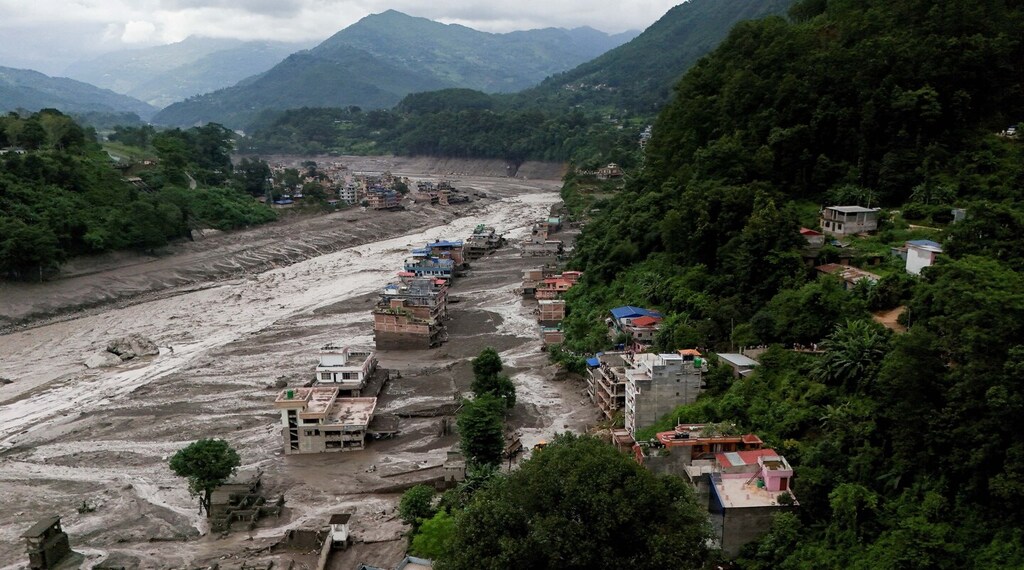
In Nepal’s Trishuli River valley, an engineer stands inside a hydropower tunnel buried by floodwaters, weighing whether to rebuild. Whatever is decided there commits the next 40 years to a set of assumptions about how much water comes down that valley – and when.
It is a scene playing out across the globe, exposing a dangerous flaw in how we approach the green transition: infrastructure built today is being planned around climatic conditions that no longer exist.
The trap of isolated planning
Part of the difficulty is how narrowly we describe the transition. We speak of the energy transition as a simple shift in supply, when it is actually a simultaneous restructuring of energy, water and food systems. Hydropower depends on water; desalination on electricity; irrigation on both. Our targets for carbon, capacity, cost and jobs can describe individual assets accurately while completely missing what happens between them.
When we evaluate projects in isolation, interdependence transforms from an abstract concept into simultaneous stress. In a hotter world, drought reduces hydropower output just as irrigation demand spikes, while extreme heat pushes electricity grids to capacity while straining crops and livestock. Three vital systems end up competing for dwindling resources under conditions today’s infrastructure was never designed to handle.
What simultaneous stress looks like on the ground
The Trishuli valley shows what this looks like in practice. As floods moved through Nepal in August, a preliminary assessment recorded impacts to 13 hydropower projects, one solar plant, two transmission lines and roughly 1,806 hectares of agricultural land, alongside roads, settlements and water infrastructure. The disaster affected energy, water and agriculture almost immediately, erasing those category frontiers on the ground.
Zambia shows what follows once several of those systems come under pressure at once. The 2024 drought was the country’s driest agricultural season in more than 40 years. It cut available electricity by around a third in a hydropower-dependent system, and devastated maize production, leaving 5.8 million people facing crisis-level hunger. The shortages did not arrive equally at every door. Mining, better able to secure alternative supply, was comparatively protected, while households, small businesses and public services bore the brunt of deeper disruption. Structural weaknesses predated the drought, but the drought produced scarcity and determined who felt the consequences the most.
Why current metrics fail: The relocation of risk
The root of the problem is how we measure progress. Transition progress is still assessed sector by sector: megawatts, emissions, investment, jobs, affordability and access. These measures say little about whether resilience in one part of the nexus creates vulnerability elsewhere. A project can secure electricity by consuming scarce water; it might protect industrial supply while leaving households to feel the full impact of shortages. Against its own metric, it succeeds. Across the nexus, the risk has simply relocated.
India’s solar irrigation programme shows this pattern at scale. Subsidized pumps cut diesel costs, improve access to reliable irrigation and raise farm productivity. Sunlight also eliminates much of the marginal cost of pumping, driving rampant groundwater extraction. In India’s 2024 national assessment, 751 groundwater units were classified as overexploited.
Research also suggests emissions savings may be lower when farmers continue operating existing diesel or electric pumps alongside solar ones. When aquifers do not refill, an intervention credited with delivering clean energy, higher rural incomes and irrigation access can end up draining the water beneath all three.
A framework for system-wide resilience
Three questions could begin to close this gap:
Continuity: When one part of the system is under stress, can essential energy, water and food services still be delivered?
Distribution: When they cannot all continue, who absorbs the shortage?
Recovery: How quickly, affordably and equitably can those services return?
For decades, mitigation and adaptation have been organized as parallel tracks, with adaptation managing impacts that emissions reductions cannot prevent. A hotter world makes that distinction harder to sustain. Adaptation is a precondition for mitigation. If drought undermines low-carbon electricity, heat drives grids past capacity or water scarcity constrains clean industry, the transition may not survive to deliver its mitigation. Underfunding adaptation leaves the systems on which mitigation depends exposed.
Put simply, climate action cannot be addressed in isolation. The transitions ahead require strategies that combine mitigation, resilience and adaptation, while recognizing how climate, water, land, energy and societal needs interact. Choke points must be anticipated, and nexus points made resilient to multiple stresses. This will require better data, increasingly supported by AI, as well as collective action across industries and societies. It will also require financing and insurance that reflect the risks associated with transition investments. These are the sustainability-management tools of the near future.
What this means for capital and planning
Treating adaptation as a precondition changes what a transition plan must embed before capital moves. Investments should reflect projected hydrology and heat, and be stress-tested for an overshoot world. Plans should track continuity, distribution and recovery alongside conventional transition metrics, with shortage-allocation rules agreed in advance. Social license is also at stake: communities repeatedly absorbing water shortages, experiencing failed harvests or having to live in dark homes have little reason to support another project.
The international conversation is beginning to move in this direction. The Just Transition Work Programme addressed adaptation and climate resilience in 2025, and food security, agriculture and oceans in April 2026. The challenge now is to connect them. Delivery will depend partly on whether the systems through which the transition runs can hold.
We have spent decades asking how the energy transition can help stabilize the climate. We have barely begun asking whether the transition can survive the climate through which it has to pass. So long as we evaluate progress in narrow silos, we will keep measuring success against yesterday’s climate.
The Global Future Council on Energy Nexus shares ideas and examples through its Energy Nexus Insights series, comprising blogs, articles and infographics; guides for public- and private-sector decision-makers; and sector analyses.