Greek output per head fell by a quarter in the six years following the global financial crisis. It kept falling well after other European countries began to recover…

Greece has much higher debt and deficit than any other European country…

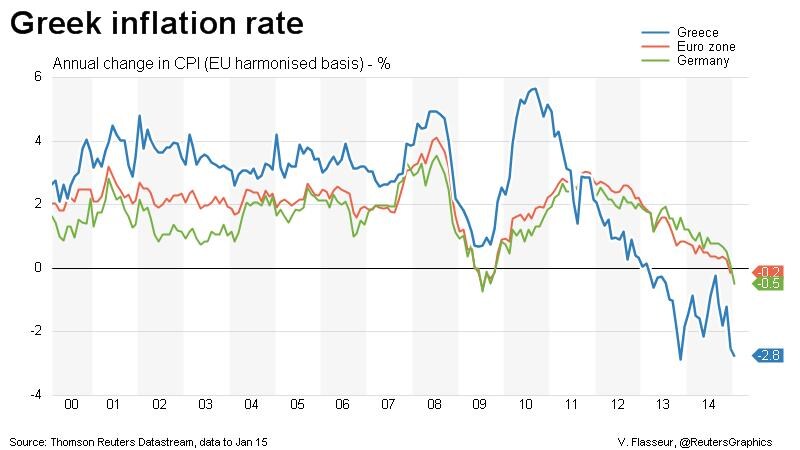
It has had real deflation over the last year. When prices fall, there is no incentive for people to buy today – why not wait until tomorrow?

Meanwhile, Greece has the highest level of unemployment in Europe, at over 25%. One in two young Greeks is unemployed…

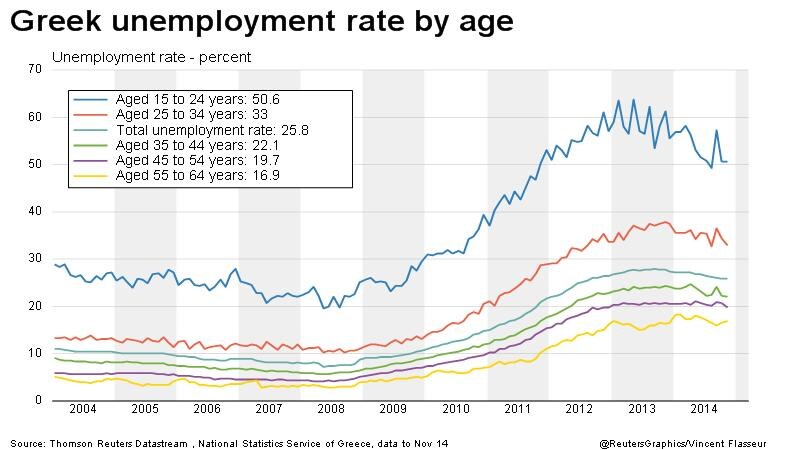
One reason for high unemployment is the cost of labour, which rose in Greece by more than 50% during the 00s, faster than any other country in Europe…

The Greek government has to pay much more than any other country in Europe to borrow money…

Greek government bonds are considered riskier and are higher priced than any other European governments’…

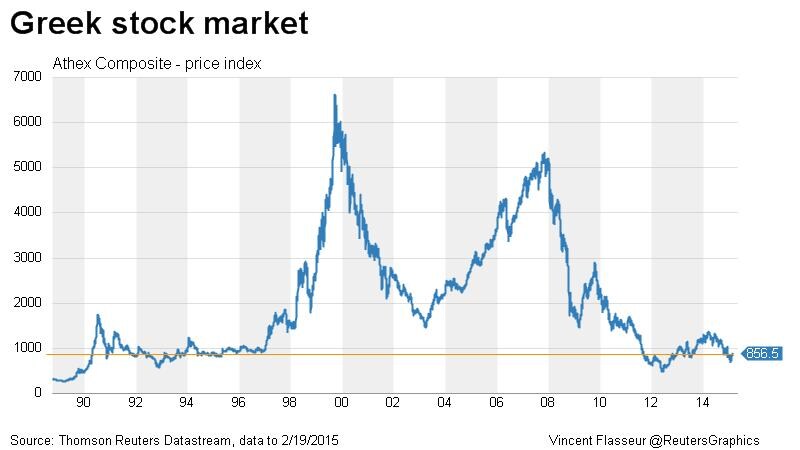
Its stock market has plummetted by one third in the last 12 months…

To early 1990s levels…
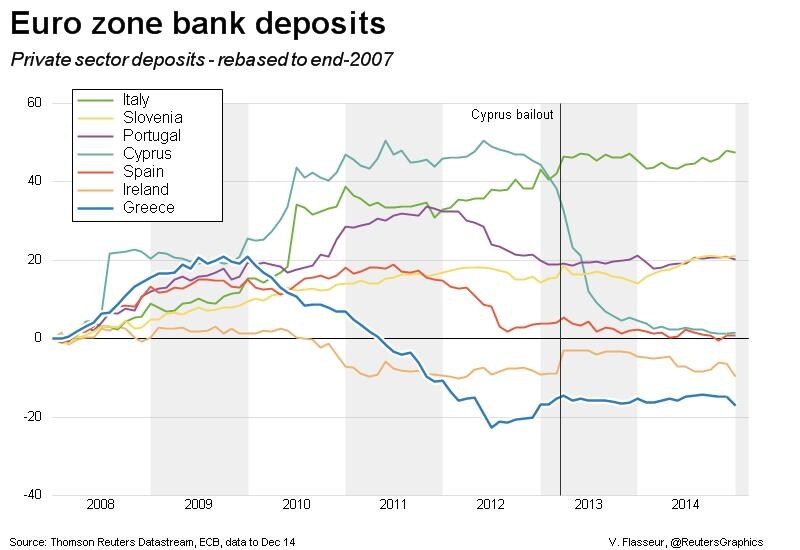
The country has been drawing down on its cash reserves since the crisis…

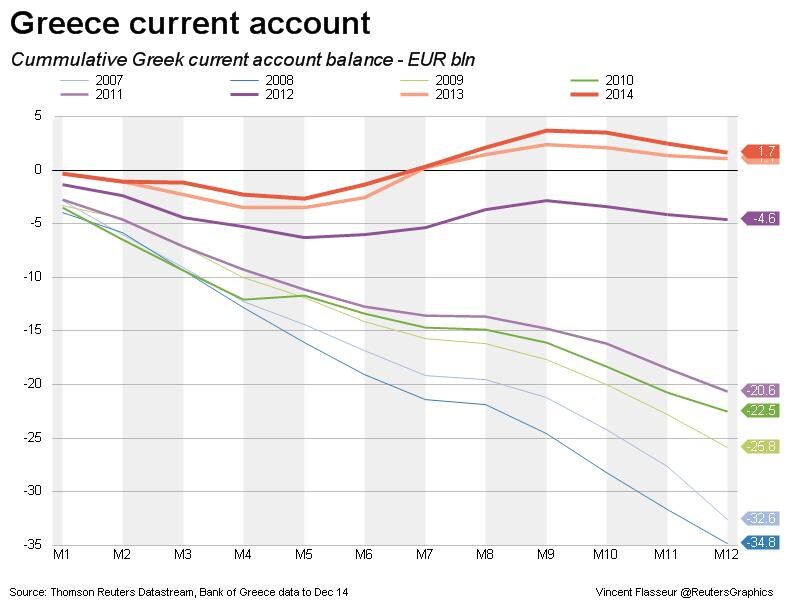
And the difference between the country’s savings and its investment has yawned…
And, the European Central Bank has lent the country enormous sums…

Published in collaboration with Thomson Reuters Datastream, @ReutersFlasseur and @ReutersGraphics
Author: Mike Hanley is Senior Director, Communications, at the World Economic Forum.
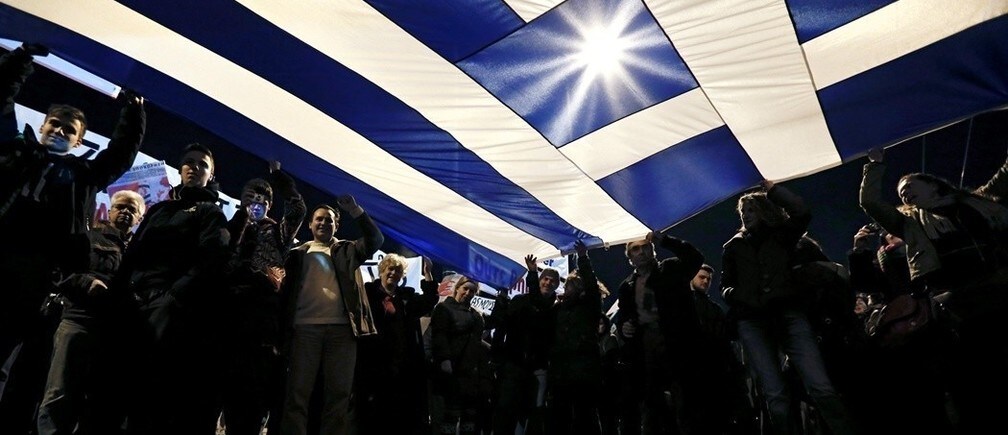
Image: Protesters hold a giant Greek national flag during a demonstration in front of the parliament in Athens February 15, 2015. REUTERS/Alkis Konstantinidis