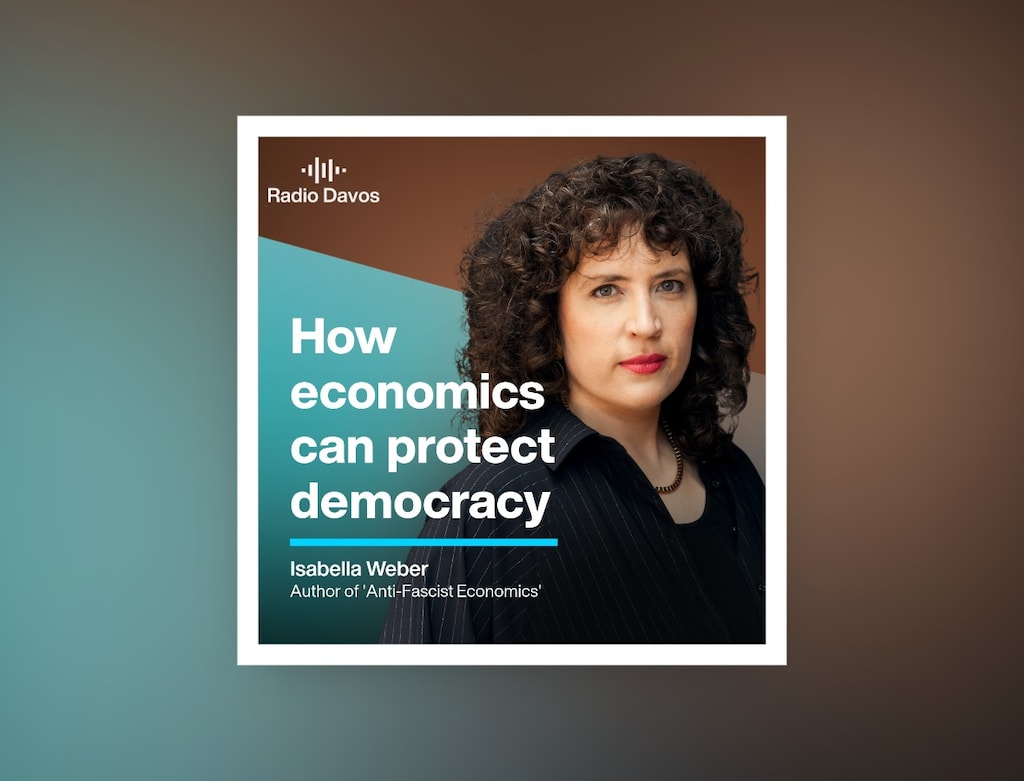
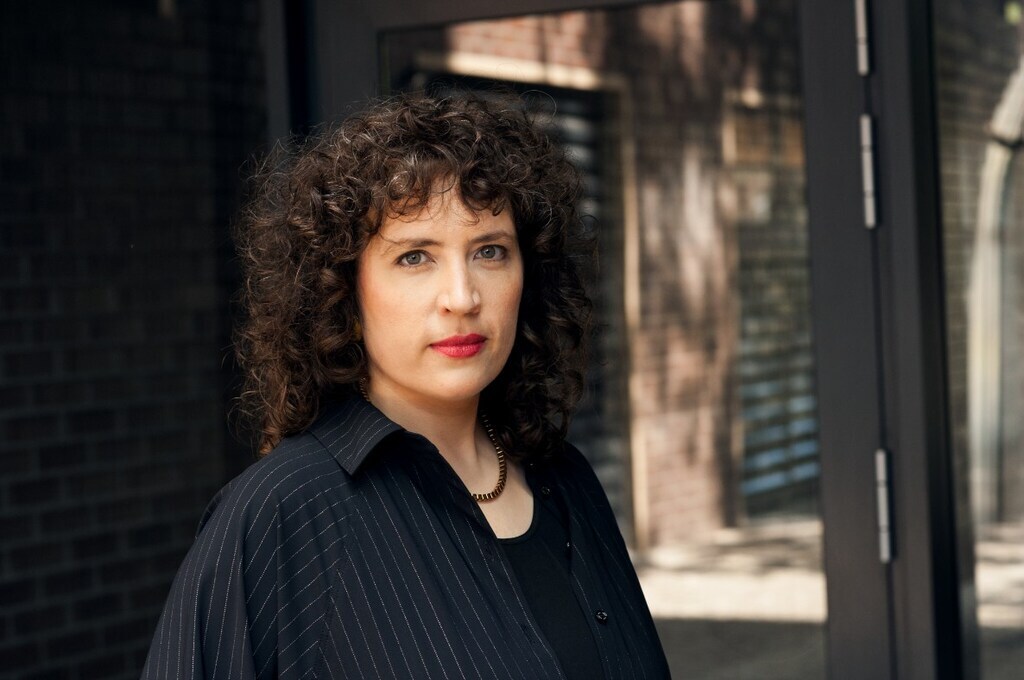
Isabella Weber joined the Radio Davos podcast to discuss ways to ensure democracies endure detailed in her new book, Anti-Fascist Economics: In Defense of Affordability, Dignity, and Democracy. Beware the virus carried by “market fundamentalism.”
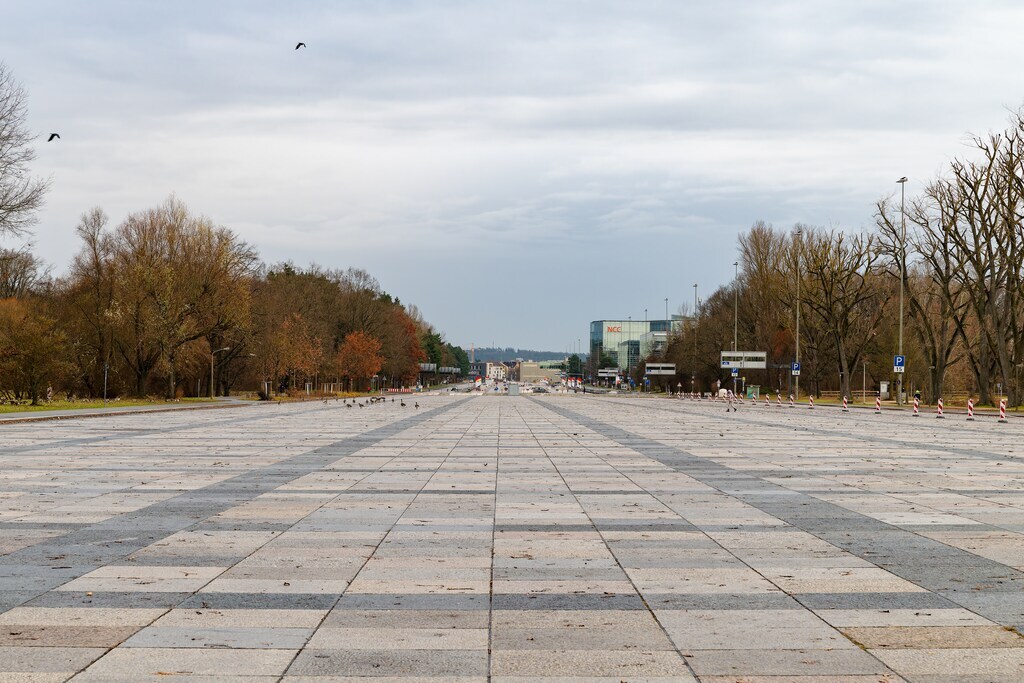
Isabella Weber grew up in a city stamped with a parade route for Nazis, and dotted with empty lots where buildings were destroyed after the rallies ended. Those vestiges of Nuremberg, Germany’s past informed what she now calls her first civic duty: anti-fascism.
For an economist like Weber, that means shining a light on the roots of populist rage and the devastation that can result. Going beyond simple supply and demand curves to consider where “the public should have a say,” as she put it during her recent appearance on Radio Davos – before it says it can’t take it anymore.
Weber's new book, Anti-Fascist Economics: In Defense of Affordability, Dignity, and Democracy, explores the “casual acceptance of existential pain” behind a lot of economic policymaking. It’s a timely read. Affordability can seem like an increasingly distant memory, and central bankers are turning to countermeasures liable to make things feel much worse before they get better. Meanwhile frustration with the cost of living continues to affect elections; this week’s midterm elections in the US are Exhibit A.
Weber, an associate professor of economics at the University of Massachusetts Amherst, tweaked the sensibilities of her peers several years ago during debates about managing inflation during COVID-19. Her pitch for strategically applied price controls drew ugly rebukes (and a subsequent apology). Recalling that reaction induced a pause during our interview for the podcast – as she found the right words to frame her fellow economists’ predictable discomfort.
Now, in many ways, events have caught up with Weber. The suspense animating her book is fed by every glance away at a headline about protests against soaring prices in France, or similar unrest in Italy, or the ascendance of a far-right party in Germany with a “patriotism” agenda, due in no small part to economic grievances.
Much of what Weber details in her book could actually be described as conservative – in the sense of harkening back. The aim is to “recover a way of thinking,” she writes.
There’s “countervailing powers,” for example. John Kenneth Galbraith’s 20th-century concept holds that rising corporate influence will be offset by more organized and empowered workers. Weber says that balance was broken by the “Volcker shock,” when America’s chief central banker pursued a blinders-on cranking up of interest rates at the end of the 1970s to quell inflation. Some results, in her telling: mass unemployment, a debt crisis in the Global South, and the loss of a US economic agenda that included pursuit of full employment (“actual civil rights”).
Then there’s the World Food Board. It was an idea that lived briefly in the wake of a devastating world war: stock up globally on staples like wheat, to stabilize prices during the next catastrophe. Instead, national policies became the priority. It’s another example of falling short of the kind of international cooperation that can help ensure essentials remain affordable, according to Weber – though the idea is as timely now as it was then.
Food is just one particularly important item that’s become more out-of-reach lately. “Needs are not vibes,” Weber writes. Political leaders who insist on telling people things aren’t as bad as they seem, despite clear evidence to the contrary, are playing with fire.
Some of the biggest economic thinkers to puzzle over how to safeguard democracy get a mention in Anti-Fascist Economics. Karl Polanyi, who explored the “fascist virus” carried by “market fundamentalism,” is prominent (he fled from authoritarianism twice). So is Friedrich von Hayek. His warnings about corrosive government interference in free markets ultimately won the 20th century’s contest of ideas – aided by a cartoon published by General Motors.
Big challenges are on the horizon. As more people age out of the workforce, AI upends things for those who remain, and governments are squeezed by mounting debt, the resources to ensure affordability may become harder to find. “We need a new idea that puts a floor under people’s livelihoods,” Weber said. Even ideas not-so-new might be worth a second look.
In her book, she describes winning a scholarship during her university studies from a foundation funded by a famed industrialist. Weber only realized years later that the man was also a convicted Nazi war criminal. Just more evidence that it’s easy to go with the flow of an economy without necessarily realizing what’s been pushing it forward – or what else might be possible.