Tomorrow, the Eurogroup meets to discuss the Greek government’s plan to reach an agreement with the Country’s public creditors. The sense of urgency has certainly increased over the last weeks, as Eurogroup Jeroen Dijsselbloem rejected a short-term financing arrangement until June, saying February the 16th is a hard deadline for asking a programme extension. Moreover, the year ahead is one of heavy debt redemptions, for Greece.
The Country’s financing needs for 2015 come mostly from repayments to official creditors. Summer will be especially challenging, as 6.7 bn of ECB’s SMP bonds come to maturity before September. Repayments to the IMF amount to 9.8bn for the whole year, with the largest tranches coming in March, June and September (see tables for details).
Between now and the end of March, Greece has to repay around 2.3bn to the IMF and to roll over about 5.7bn of Treasury Bills. T-Bills – which amount to 14.5bn in total for 2015 – are mostly held by domestic banks. A fraction had reportedly been acquired in previous months by foreigners, who appear unwilling to roll it over, at least until the Greek political situation becomes clearer.

Source: IMF; Datastream
APPENDIX
detailed schedule of repayments and roll-over
TABLE 1 – Outstanding T-Bills and Bonds redemptions

Source: Datastream
TABLE 2 – Repayment schedule to IMF

Source: IMF
This article was originally published on Bruegel Blog. Publication does not imply endorsement of views by the World Economic Forum.
To keep up with Agenda subscribe to our weekly newsletter.
Author: Silvia Merler is an Affiliate Fellow at Bruegel, with research interests in international macro and financial economics, central banking and EU institutions and policymaking.
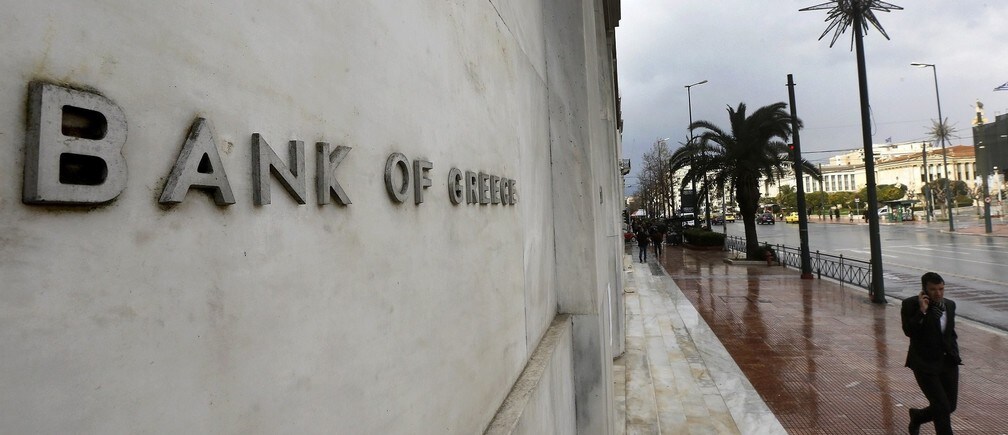
Image: A man walks by the headquarters of the Bank of Greece in central Athens February 10, 2015. REUTERS/Yannis Behrakis